The 50/30/20 budget rule Canada has helped millions of people take control of their money – and here’s the surprising part: surveys consistently show a majority of Canadians don’t follow any formal budget at all. If tracking every latte feels exhausting, this simple percentage-based budgeting method might be your answer. In this guide, you’ll learn exactly how the 50/30/20 rule works, how to adapt it for Canadian taxes and accounts like your TFSA and RRSP, and whether it actually makes sense in 2026’s economy. Let’s turn your cash flow from chaotic to stress-free.
What Is the 50/30/20 Budget Rule Canada and How Does It Work?
The 50/30/20 rule is a budgeting method that divides your after-tax income into three simple categories. Instead of tracking every single expense, you work with percentages – making it perfect for busy Canadians who want financial control without spreadsheet headaches.
The Three Categories Explained
Here’s how your money gets divided each month:
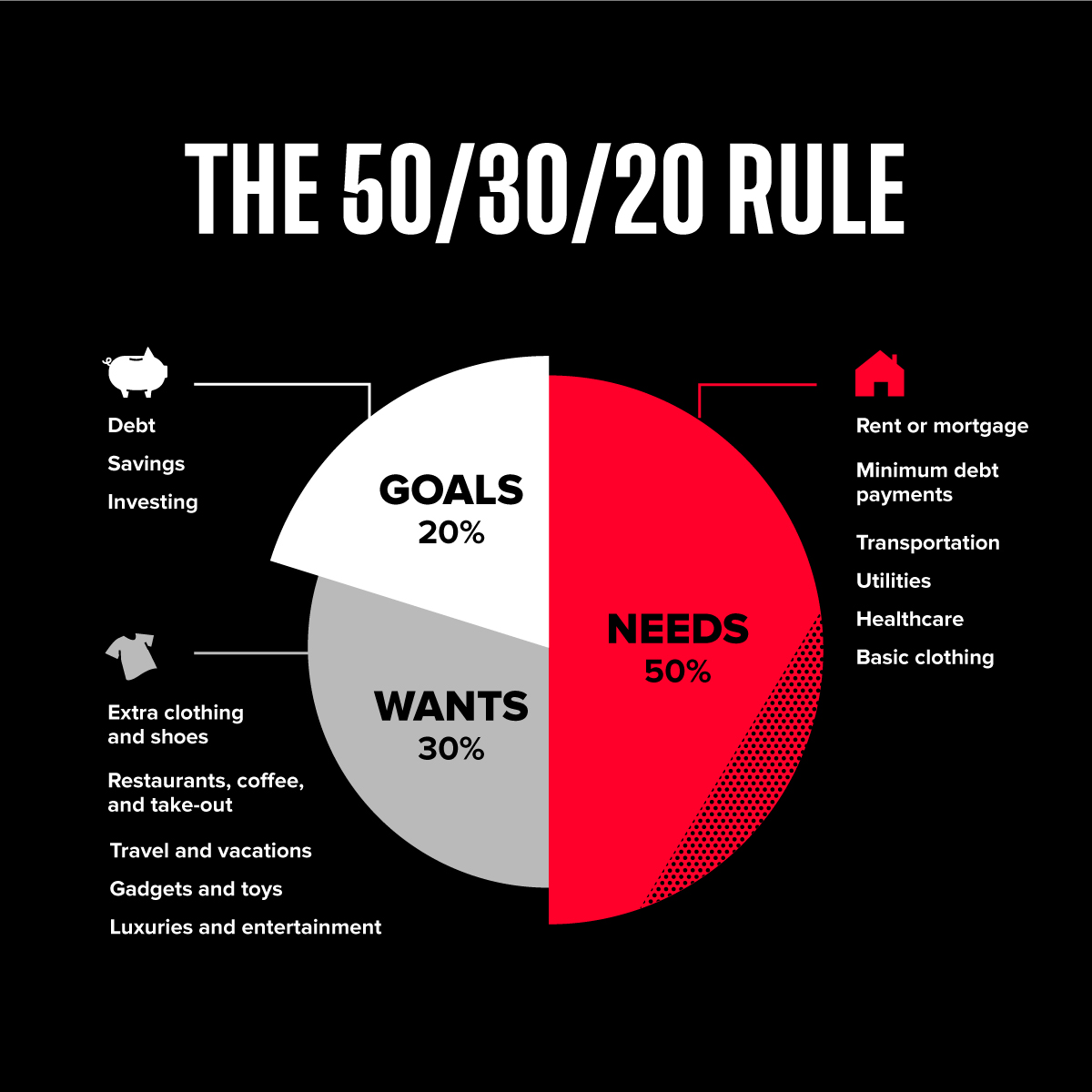
50% for Needs: These are your non-negotiables – the bills that keep your life running. Think rent or mortgage payments, groceries, utilities, insurance premiums, minimum debt payments, and transportation costs. If you’d face serious consequences for not paying it, it’s a need.
30% for Wants: This is where life gets enjoyable. Dining out, streaming subscriptions, concert tickets, vacations, new clothes beyond basics, and hobbies all fall here. Wants aren’t frivolous – they help keep life balanced and prevent burnout from overly restrictive budgeting.
20% for Savings and Debt Repayment: This category builds your future. It includes contributions to your TFSA (up to $7,000 in 2026), RRSP deposits, emergency fund savings, extra payments above minimums on debt, and investments through platforms like Wealthsimple or your bank’s brokerage.
Why Percentages Beat Detailed Tracking
The beauty of simple cash flow management through percentages is flexibility. If you get a raise, your budget automatically adjusts. If your income drops temporarily, you can still follow the same framework – just with smaller dollar amounts. You’re not constantly updating categories or feeling guilty about a coffee purchase.
For 2026, with the Bank of Canada holding its policy rate steady at 2.25% since late 2025, Canadians are seeing some relief on variable-rate debts. This stability makes it easier to predict your “needs” category and stick to your percentages.
How Do You Calculate Your 50/30/20 Split with Canadian Income?
The 50/30/20 rule uses your after-tax income – what actually hits your bank account. In Canada, this means accounting for federal and provincial taxes, CPP contributions, and EI premiums already deducted from your paycheque.
Step-by-Step Calculation
Let’s say you earn $65,000 annually in Ontario. After federal and provincial taxes, CPP contributions, and EI premiums, your estimated take-home pay is approximately $49,700 per year, or roughly $4,140 per month. Here’s your split:
- Needs (50%): $2,070/month
- Wants (30%): $1,242/month
- Savings/Debt (20%): $828/month
That roughly $830 monthly toward savings means you could max out your $7,000 TFSA contribution before the end of the calendar year and still have funds left for debt repayment or emergency savings. If you’re also considering how to start investing in Canada with $1,000, this 20% allocation gives you consistent capital to work with.
?? Pro Tip: Your exact take-home pay depends on your province, employer benefits, and any pre-tax deductions (like group RRSP or benefits premiums). Always base your 50/30/20 calculation on your actual net pay stubs – not an estimate – for the most accurate split.
What If You’re Self-Employed?
Self-employed Canadians need to calculate their after-tax income differently. Set aside 25-35% of gross income for taxes first (the range depends on your province and income level – this covers both the employee and employer portions of CPP contributions, which you pay in full as a self-employed person, plus income tax), then apply the 50/30/20 rule to what remains.
50/30/20 Rule vs. Other Budgeting Methods: Which Fits Your Life?
The 50/30/20 rule isn’t the only game in town. Here’s how it stacks up against other popular approaches:
| Feature | 50/30/20 Rule | Zero-Based Budget | Pay Yourself First | Envelope System |
|---|---|---|---|---|
| Time Required | Low (15 min/month) | High (1-2 hrs/month) | Low (15 min/month) | Medium (30 min/week) |
| Flexibility | High | Low | High | Medium |
| Best For | Busy professionals | Detail-oriented savers | Savings-focused beginners | Cash-based spenders |
| Tracks Individual Expenses | No | Yes | No | Yes |
| Adapts to Income Changes | Automatically | Requires recalculation | Automatically | Requires adjustment |
| Works with Canadian Tax Accounts | Yes | Yes | Yes | Limited |
The 50/30/20 rule wins for percentage-based budgeting simplicity, but if you’re trying to aggressively pay down debt or save for a home purchase through your FHSA ($8,000/year limit), you might need to temporarily adjust these ratios.
How to Set Up the 50/30/20 Budget Rule Canada in Four Steps
Getting started takes less than an hour. Here’s your action plan for simple cash flow management that actually sticks.
Step 1: Calculate Your True Take-Home Pay
Check your last few pay stubs or bank deposits. Add up what actually lands in your account after all deductions. If your income varies (commission, tips, freelance), use the average of your last three months. Be honest here – using gross income will throw off your entire budget.
Step 2: List and Categorize Your Current Spending
Pull your last month’s bank and credit card statements. Sort each expense into Needs, Wants, or Savings. Most people discover their actual spending looks nothing like 50/30/20 – and that’s okay. Common surprises include subscription services (often higher than expected) and dining out (the sneakiest budget killer).
Step 3: Automate Your Savings First
Before you adjust anything else, set up automatic transfers for your 20%. Schedule these for the day after payday so you never see the money in your chequing account. Direct funds to your TFSA, RRSP, or high-interest savings account at institutions like EQ Bank or one of the Big Five. When you’re ready to optimize where that money goes, check out our breakdown of Big 5 Banks vs. digital alternatives for cash management.
?? Pro Tip: If you automate only one habit from this entire article, make it this: a recurring transfer from chequing to TFSA on the day after each payday. You can optimize the investment later – what matters is that the money leaves your spending account before you can spend it.
Step 4: Adjust Categories Over Three Months
Don’t expect perfection immediately. Spend three months tracking which category each expense falls into and whether your current ratios work. If housing costs push your needs above 50%, that’s valuable information – you may need to earn more, reduce housing costs, or accept a modified ratio temporarily.

Why the Standard 50/30/20 Rule Might Need Canadian Adjustments in 2026
The 50/30/20 rule was popularized in the United States, where housing costs, tax structures, and retirement systems differ significantly from Canada’s reality.
Housing Costs in Major Cities
In Toronto, Vancouver, or even increasingly in cities like Calgary and Ottawa, housing alone can consume 40-50% of take-home pay. If you’re wondering how much mortgage you can actually afford in 2026, you’ll quickly see that the “50% for all needs” target becomes unrealistic for many urban Canadians.
Consider adjusting to a 60/20/20 or even 70/15/15 split if housing costs are unavoidably high. The key is maintaining some savings percentage rather than abandoning the system entirely.
Canada’s Tax-Advantaged Accounts Change the Math
Unlike Americans with 401(k)s and IRAs, Canadians have unique tools like the TFSA, RRSP, and FHSA. Your 20% savings allocation should prioritize these accounts in this order for most Canadians:
TFSA first for most people – $7,000 contribution room in 2026 (lifetime room of approximately $109,000 if you’ve never contributed and were 18+ in 2009). Growth and withdrawals are completely tax-free.
RRSP if you’re in a higher tax bracket – contribution limit is 18% of your previous year’s earned income, up to $33,810 for 2026 (based on your 2025 income). The tax refund can supercharge your savings when reinvested.
FHSA if you’re saving for a first home – $8,000 per year up to $40,000 lifetime. Combines RRSP-style tax deductions going in with TFSA-style tax-free withdrawals for home purchases.
Be More Intentional About Wants in 2026
With inflation having stretched budgets over the past few years, it’s wise to prioritize which wants matter most to you. Maybe streaming subscriptions stay but dining out gets reduced. Perhaps concert tickets are non-negotiable but new clothing gets pushed to sales seasons only.
The easy budgeting method works best when you’re intentional about that 30% – not when every want gets equal priority regardless of how much value it actually brings you.
Common 50/30/20 Mistakes Canadian Beginners Make
Even with a simple system, there are pitfalls. Avoid these to keep your budget on track.
Mistake #1: Using Gross Income Instead of Net
This is the most common error. If you earn $75,000 gross but take home $57,000 after taxes, your 50% needs budget is roughly $2,375/month – not $3,125. Using gross income means you’ll consistently overspend in every category. Always use your net pay from your paycheque.
Mistake #2: Miscategorizing Wants as Needs
Be honest here. Your premium gym membership isn’t a need – a basic one might be, but not the $80/month boutique studio. Unlimited data on your phone plan? Probably a want. New car when a reliable used one works? Definitely a want. Honest categorization is the foundation of percentage-based budgeting success.
Mistake #3: Ignoring Irregular Expenses
Car insurance paid annually, holiday gifts, and property taxes can blow up monthly budgets. Divide these expenses by 12 and include the monthly portion in your needs category. A $1,800 annual car insurance policy means budgeting $150/month, even if you’re not paying that amount every month.
Mistake #4: Not Adjusting for Life Changes
Had a baby? Your needs percentage will temporarily increase. Got a significant raise? Don’t let lifestyle inflation eat the whole thing – increase your savings percentage. The 50/30/20 budget rule Canada framework is a guideline, not a rigid law.
?? Pro Tip: Review your ratios every three months using actual numbers from your bank statements, not estimates. Apps like Mint, KOHO, or even a simple spreadsheet can categorize your transactions automatically. Set a 30-minute “money date” with yourself quarterly to check whether your actual spending matches your intended percentages.
Key Takeaways
- The 50/30/20 rule splits after-tax income into 50% needs, 30% wants, and 20% savings – perfect for busy Canadians who want simple cash flow management without detailed tracking.
- Always calculate using net income (after taxes, CPP, and EI), not gross pay, to avoid overspending in every category.
- Prioritize your 20% savings allocation toward tax-advantaged accounts: TFSA ($7,000 in 2026), RRSP (up to $33,810 for 2026, based on 18% of 2025 earned income), and FHSA ($8,000/year) if saving for a first home.
- High housing costs in Canadian cities may require adjusting to 60/20/20 or similar – maintaining some savings percentage matters more than hitting exact targets.
- Automate your 20% savings transfer immediately after payday so you’re paying yourself first without relying on willpower.
- Review and adjust your categories every three months as income changes and financial priorities shift throughout 2026.
Frequently Asked Questions
How do I apply the 50/30/20 rule with Canadian taxes?
Use your after-tax income – the amount that actually lands in your bank account after federal and provincial taxes, CPP contributions, and EI premiums are deducted. Check your pay stub’s “net pay” amount. If you’re self-employed, set aside 25-35% for taxes first (the range reflects that self-employed Canadians pay both employee and employer CPP portions), then apply the 50/30/20 percentages to what remains. This ensures you’re budgeting with real, spendable money.
Does the 50/30/20 rule work with the high cost of living in Canada?
It requires adjustment in expensive cities like Toronto and Vancouver, where housing alone can exceed 40% of take-home pay. Consider modifying to 60/20/20 or 70/15/15 if necessary. The important principle is maintaining some percentage for savings rather than abandoning budgeting entirely. Even 10% consistently saved builds meaningful wealth over time and maintains the habit when circumstances improve.
Should I adjust the 50/30/20 rule for RRSP contributions?
Yes – and strategically. If your employer offers RRSP matching, that’s free money and should be the first dollar of your 20%. If you’re in a higher marginal tax bracket – generally when your income is above ~$70,000 depending on province – RRSP contributions generate a meaningful tax refund that can be reinvested, amplifying your savings. In lower tax brackets, prioritize your TFSA first since the deduction is less valuable than the long-term tax-free growth. For 2026, the RRSP contribution limit is $33,810 (or 18% of your 2025 earned income, whichever is lower).
The 50/30/20 budget rule Canada offers a refreshingly simple approach to managing your money without obsessive tracking or complex spreadsheets. By allocating 50% to needs, 30% to wants, and 20% to savings – and adjusting these percentages for your actual Canadian living costs – you create a sustainable system that grows with your income. Whether you’re just starting your career or juggling family finances, this easy budgeting method provides the structure you need without the stress. Ready to take your finances further? Explore more strategies on Getwealthy to build the financial future you deserve.
Get free Canadian money tips every week
TFSA updates, CRA changes, mortgage strategies — straight to your inbox every Thursday. No spam, unsubscribe anytime.
Certified Financial Planner (CFP) and Chartered Investment Manager (CIM) with over 17 years of experience in Canadian personal finance. Spent 10+ years at one of Canada's Big Five banks, the last 7 focused exclusively on high-net-worth clients. Every guide is written with the same depth I bring to real client work — Canada-specific, CRA-verified, and always free.
Disclaimer: This article is for informational and educational purposes only and does not constitute financial, tax, or legal advice. Always consult a qualified financial advisor or tax professional for personalized advice.