Deciding between building an emergency fund or invest TFSA Canada is one of the most common money questions facing young Canadians today. Here’s a surprising fact: According to FP Canada’s 2026 Financial Stress Index, 43% of Canadians cite money as their leading source of stress — and a lack of emergency savings makes that stress worse. With the Bank of Canada’s policy rate held at 2.25% in September 2026 and savings rates well below their 2023–24 peaks, it pays to be strategic about where each dollar goes. In this guide, you’ll learn exactly which to prioritize, how much you need, and how to build both your safety net and wealth simultaneously.
Should I Save an Emergency Fund First Before Investing in My TFSA?
The short answer is yes—for most Canadians, building an emergency fund should come before aggressive TFSA investing. Financial experts consistently recommend establishing 3 to 6 months of essential expenses in an easily accessible account before directing money toward investments. This isn’t just conservative advice; it’s practical protection against the unexpected costs that life inevitably throws your way.
Why Your Emergency Fund Comes First
Think about what happens when your car breaks down, you lose your job, or you need emergency dental work. Without cash reserves, you’re forced to either sell investments (potentially at a loss during a market downturn) or rack up high-interest credit card debt. The average Canadian credit card charges between 19% and 22% interest—far more than any investment gains you might sacrifice by building savings first.
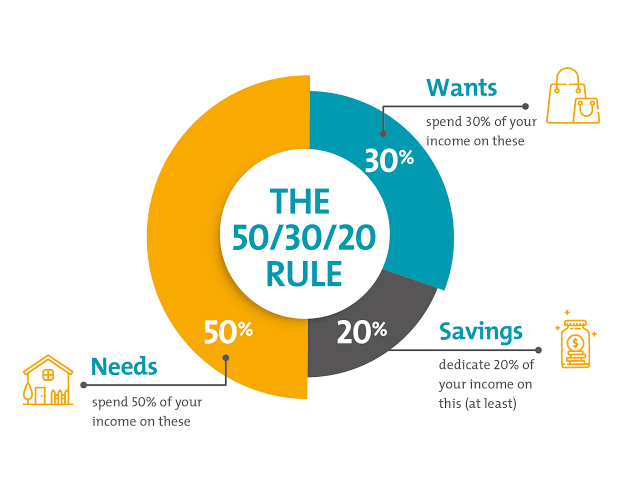
A sensible priority order for your money in 2026 looks like this: first, build a starter emergency fund; second, contribute enough to your employer RRSP to capture any matching—that’s free money you shouldn’t leave on the table; third, pay off high-interest debt above about 7% to 8% while you finish your full 3-to-6-month emergency fund. Only then should you focus on maximizing your TFSA contributions for long-term growth.
The Real Cost of Skipping the Emergency Fund
Let’s say you invest your entire $5,000 savings in your TFSA instead of keeping it liquid. Three months later, your furnace dies—replacement cost: $4,500. Your options are grim: withdraw from your TFSA during a potential market dip, losing both money and valuable contribution room, or put it on a credit card at 20% interest. Neither scenario helps you get wealthy.
When you withdraw from your TFSA, you don’t get that contribution room back until the following calendar year. If you invested $5,000 and withdrew it in October 2026, you couldn’t re-contribute that amount until January 2027. This creates a hidden cost that many Canadians overlook when treating their TFSA as an emergency backup.
How Much Emergency Fund Do You Need in Canada in 2026?
The standard guideline is 3 to 6 months of essential expenses—not your full income, but your must-pay costs. For most Canadians aged 25 to 40, this typically means building a 20k emergency fund Canada target, though your specific number depends on your lifestyle and obligations.
Calculating Your Personal Emergency Fund Target
Start by listing your non-negotiable monthly expenses: rent or mortgage, utilities, groceries, transportation, insurance, minimum debt payments, and phone or internet. Don’t include entertainment, dining out, or subscriptions you could cancel in a pinch.
For example, if your essential monthly expenses total $3,500, your emergency fund target range would be $10,500 (three months) to $21,000 (six months). If you’re a single-income household, self-employed, or work in an unstable industry, aim for the six-month end. Dual-income households with stable jobs might be comfortable closer to three months.
To set your target, list only the costs you’d have to keep paying if your income stopped:
- Rent or mortgage payment
- Utilities (hydro, gas, water, internet)
- Groceries
- Transportation (car payment, insurance, gas or transit)
- Minimum debt payments
- Insurance premiums
Then adjust for how stable your income is. If you’re self-employed, work on commission, are a single-income household or work in a volatile industry, aim closer to six months or more. Two stable incomes and secure jobs may justify three months. Newcomers to Canada, who may not yet qualify for some benefits and lack a local credit history, often benefit from a larger cushion.
Where to Keep Your Emergency Fund in 2026
The best place for your emergency fund is a high-interest savings account (HISA) at an online bank. In late September 2026, the best regular savings rates at online banks and credit unions were about 2.75% to 2.85%, and the best 1-year GICs paid about 3.80%. This beats the major banks like TD, RBC, BMO, Scotiabank, and CIBC, which typically offer lower rates on standard savings accounts.
Your emergency fund needs three qualities: liquidity (you can access it within one to two business days), safety (no risk of losing principal), and separation (it’s not mixed with your daily spending money). A HISA at an online bank checks all three boxes while actually earning you decent interest. Check out our guide on the best high-interest savings accounts in Canada for current rate comparisons.
💡 Pro Tip: Open your emergency fund account at a DIFFERENT bank than your daily chequing account.
The slight inconvenience of transferring money (1-2 days) acts as a psychological barrier against dipping into it for non-emergencies. “Out of sight, out of mind” is a feature, not a bug.
Can Your TFSA Hold Your Emergency Fund?
Despite the name, a TFSA isn’t only for investing. You can hold cash in a TFSA savings account or a cashable GIC and withdraw it at any time. Whether that’s smart depends on how much room you have:
| Where the money sits | Access | Return (late Sept 2026) | Uses TFSA room? | Best for |
|---|---|---|---|---|
| Regular HISA | Same day to 1–2 days | About 2.75%–2.85%, taxable | No | People who are filling their TFSA with investments |
| TFSA savings account | Same day to 1–2 days | About 2.75%–2.85%, tax-free | Yes | People with lots of unused TFSA room |
| TFSA with ETFs | 1–3 business days to sell | Varies, can fall | Yes | Money you won’t need for 5+ years |
If you have tens of thousands of dollars of unused room, a TFSA savings account can shelter your emergency interest from tax. Remember the timing rule: if you withdraw $5,000 in March, that room comes back only on January 1 of the following year, so re-contributing sooner could create an over-contribution taxed at 1% a month.
Emergency Fund vs TFSA Investing: A Complete Comparison

Understanding the key differences between emergency savings and TFSA investing helps you make smarter decisions about where each dollar should go. Here’s how they stack up across the factors that matter most:
| Feature | Emergency Fund (HISA) | TFSA Investing |
|---|---|---|
| Primary Purpose | Financial safety net for unexpected expenses | Long-term wealth building and tax-free growth |
| Expected Return (2026) | About 2.75%–2.85% at the best savings accounts; up to about 3.80% on 1-year GICs (late September 2026) | 6% to 8% average long-term (with volatility) |
| Risk Level | Zero—principal is protected | Low to high depending on investments chosen |
| Liquidity | Instant to 1-2 business days | 1-3 business days, but may require selling at a loss |
| Tax Treatment | Interest is taxable income | All growth is completely tax-free |
| Contribution Room Impact | Not applicable | Withdrawals restore room following January 1 |
| Best For | Short-term security and peace of mind | Goals 5+ years away, retirement savings |
As you can see, these two financial tools serve completely different purposes. Your emergency fund protects you from going into debt during tough times, while your TFSA builds wealth for your future. Trying to make one account do both jobs often means doing neither well.
How to Build Your Emergency Fund and Start TFSA Investing Together
Here’s the good news: you don’t have to completely ignore investing while building your emergency fund. With the right strategy, you can make progress on both goals. The key is understanding that the question of emergency fund or invest TFSA Canada isn’t always either/or—it’s about proper sequencing and allocation.
Step 1: Build a Starter Emergency Fund of $2,000 to $3,000
Before doing anything else, save a starter emergency fund that covers most common unexpected expenses. This amount handles car repairs, appliance replacements, or a trip to the emergency vet. Keep this in a high-interest savings account and don’t touch it unless there’s a genuine emergency.
At $500 per month of savings, you’ll hit this target in four to six months. During this phase, you can still contribute to your employer RRSP if they offer matching—that 50% or 100% match is an instant guaranteed return you shouldn’t pass up.
Step 2: Split Your Savings Between Emergency Fund and TFSA
Once you have your starter fund, consider a 70/30 or 60/40 split. Direct 60% to 70% of your monthly savings toward building your full emergency fund (your 3 to 6 month target), and allocate 30% to 40% to TFSA investments. This approach lets you benefit from compound growth and dollar-cost averaging while still building security.
For example, if you’re saving $1,000 per month, you might put $700 toward your emergency fund and $300 into your TFSA. With the 2026 TFSA contribution limit at $7,000 annually (and lifetime room of approximately $109,000 if you’ve been eligible since 2009), even modest contributions add up significantly over time.
💡 Pro Tip: Automate the split on payday. Set up two automatic transfers the day your paycheck arrives:
– 70% → EQ Bank HISA (emergency fund)
– 30% → Wealthsimple TFSA (investing)
When the transfers are automatic, you never have to think about it — and you never accidentally “forget” to save.
Step 3: Accelerate TFSA Investing Once Your Emergency Fund Is Complete
When your emergency fund reaches your target—whether that’s $15,000 or $25,000—redirect your full savings capacity toward investments. Now you can maximize your annual TFSA contribution, explore your RRSP (especially if your marginal tax rate is above 30%), or consider opening a First Home Savings Account if homeownership is in your plans.
The FHSA offers $8,000 in annual contribution room up to a $40,000 lifetime limit, with tax-deductible contributions like an RRSP and tax-free withdrawals like a TFSA when used for a qualifying home purchase. For Canadians saving for a down payment, this account is incredibly powerful. Learn more in our complete FHSA guide for first-time homebuyers.
Real Example — Sarah, 28, Toronto:
Monthly take-home: $4,200
Essential expenses: $3,200/month
Emergency fund target (4 months): $12,800
Month 1-4: Save $1,000/month
→ $700 to emergency fund
→ $300 to TFSA (XEQT ETF)
After 13 months:
Emergency fund: $12,800 ✅
TFSA: ~$4,000 invested (already earning compound growth!)
Month 14+: Full $1,000 to TFSA
Annual savings: ~$12,000 (more than the $7,000 TFSA limit, so she uses carried-forward TFSA room or sends the rest to her RRSP or FHSA)
Result: Protected AND investing 🍁
Common Mistakes When Balancing TFSA Emergency Fund vs Investing in 2026
Even with the right intentions, many Canadians make costly errors when figuring out whether they should I save emergency fund first or dive into investing. Avoiding these pitfalls keeps you on track toward financial security and long-term wealth.
Mistake 1: Using Your TFSA as Your Only Emergency Fund
Yes, you can technically hold cash in a TFSA. Some Canadians keep a HISA inside their TFSA, earning tax-free interest while maintaining liquidity. The problem? You’re wasting valuable tax-sheltered room on low-return savings. Every dollar in your TFSA earning under 3% in savings is a dollar that could be earning 7% or 8% in a diversified ETF portfolio over the long term.
The math is simple: tax-free growth matters most on investments with high returns. A $10,000 emergency fund earning 2.75% generates $275 in annual interest. Taxed at a 30% marginal rate, you’d owe about $83. That’s a small price to pay for keeping your TFSA room available for investments that might earn double or triple that return.
💡 Pro Tip: The ONE exception where TFSA emergency savings makes sense: if you’ve already maxed out your TFSA with investments AND have leftover room. In that case, a HISA inside your TFSA for extra liquid savings makes sense. But this is advanced planning — not for beginners still building their initial safety net.
Mistake 2: Investing Your Emergency Fund in Volatile Assets
Some people try to “make their money work harder” by investing their emergency fund in stocks or equity ETFs. This defeats the entire purpose. Imagine needing $5,000 for emergency roof repairs during a market correction when your $6,000 investment has dropped to $4,800. You’re now selling at a loss AND still coming up short.
Your emergency fund isn’t meant to generate wealth—it’s insurance. Keep it boring, keep it safe, and keep it accessible. High-interest savings accounts at online banks like EQ Bank, or even short-term GICs if you have additional liquid savings, are your best options.
Mistake 3: Waiting for “Perfect” to Start Investing
On the flip side, don’t wait until you have twelve months of expenses saved before putting a single dollar into your TFSA. Perfectionism is the enemy of progress. Starting with even $50 or $100 per month in a low-cost index ETF through a platform like Wealthsimple or Questrade gets you into the habit of investing and lets compound growth start working in your favour.
Time in the market matters more than timing the market. Someone who invests $200 per month starting today will likely outperform someone who waits two years to invest $400 per month, even if the second person eventually invests more total dollars.
Key Takeaways
- Build a $2,000 to $3,000 starter emergency fund before doing anything else—this covers most common unexpected expenses and prevents credit card debt.
- Your full emergency fund should cover 3 to 6 months of essential expenses, typically $10,000 to $21,000 for most Canadian millennials and Gen Z earners.
- Keep your emergency fund in a high-interest savings account at an online bank or credit union—or in a TFSA savings account only if you have plenty of unused room.
- Once you have a starter fund, use a 70/30 split between emergency savings and TFSA investing to make progress on both goals simultaneously.
- Maximize your 2026 TFSA contribution room of $7,000 only after your emergency fund is complete—or use the split strategy to balance security and growth.
- Always capture employer RRSP matching before anything else—it’s free money with an instant 50% to 100% return that beats any other financial move.
Frequently Asked Questions
How much emergency fund do I need before investing in Canada 2026?
You need 3 to 6 months of essential living expenses saved before investing aggressively. For most Canadians, this means $10,000 to $25,000 depending on your monthly costs and job stability. However, you can start with a smaller $2,000 to $3,000 starter fund and begin investing small amounts while you continue building toward your full target.
Can I use my TFSA as both an emergency fund and investment account?
Technically yes, but it’s not recommended. While you can hold cash or a high-interest savings account inside your TFSA, you’re wasting valuable tax-sheltered contribution room on low-return savings. Your TFSA room is better used for investments with higher growth potential, where tax-free compounding provides the greatest benefit. Keep your emergency fund in a regular HISA outside your TFSA.
Should I stop TFSA contributions to build my emergency fund faster?
Not necessarily—a balanced approach often works best. If you have no emergency savings at all, pause TFSA contributions briefly to build a $2,000 to $3,000 starter fund. After that, consider splitting your savings 70/30 or 60/40 between emergency savings and TFSA investing. This way, you’re building security while still benefiting from compound growth and developing good investing habits. The exception is employer RRSP matching, which you should always contribute enough to capture fully.
Can I use a TFSA savings account as my emergency fund?
Yes, as long as the money is in cash or a cashable product rather than stocks or ETFs. It’s a good option if you have plenty of unused TFSA room. Just remember that withdrawn room isn’t restored until the following January 1.
Understanding whether to prioritize your emergency fund or invest TFSA Canada ultimately comes down to building security first, then wealth second. With a solid emergency fund in place, you can invest confidently knowing that a car repair or job loss won’t derail your financial progress. The best approach combines both: build your safety net while gradually investing, then accelerate your wealth-building once you’re protected. Ready to take the next step? Explore more guides on Getwealthy’s investment resources to start building your financial future today.
Get free Canadian money tips every week
TFSA updates, CRA changes, mortgage strategies — straight to your inbox every Thursday. No spam, unsubscribe anytime.
The GetWealthy editorial team writes plain-English guides to Canadian personal finance, based on official CRA, FINTRAC and government sources and reviewed every year.
Disclaimer: This article is for informational and educational purposes only and does not constitute financial, tax, or legal advice. Always consult a qualified financial advisor or tax professional for personalized advice.