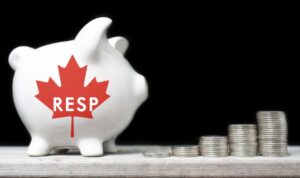
If you’ve ever felt lost trying to understand registered accounts Canada explained 2026, you’re not alone—a recent TD survey reveals that 63% of Gen Z Canadians don’t know enough about registered accounts to feel confident investing. That’s nearly two-thirds of young Canadians missing out on powerful tax advantages that could add tens of thousands of dollars to their wealth over time.
💡 Good News: Despite the knowledgegap, Gen Z is the most likely to invest their tax refund (33% vs
25% nationally) — more than doubling from 14% in 2025. The desire is there; this guide provides the
knowledge to act on it.
In this guide, you’ll learn exactly what registered accounts are, how the TFSA, RRSP, and FHSA differ, which account makes sense for your tax refund, and how to start investing even if your budget feels stretched. Let’s fix that knowledge gap today.
What Are Registered Accounts in Canada and Why Should You Care in 2026?

When we talk about what are registered accounts Canada, we’re referring to investment accounts that the Canada Revenue Agency (CRA) gives special tax treatment. Unlike a regular savings account where you pay tax on every dollar of interest earned, registered accounts let your money grow tax-free or tax-deferred—depending on which type you choose.
The “Registered” Part Explained Simply
“Registered” simply means the account is officially recognized by the federal government for specific tax benefits. When you open a TFSA, RRSP, or FHSA at institutions like TD, RBC, Wealthsimple, or EQ Bank, that account gets registered with the CRA. This registration is what unlocks the tax perks—and it’s also why there are contribution limits and rules you need to follow.
Why This Matters for Your Tax Refund
If you received a tax refund this spring, you’re sitting on a perfect opportunity. According to the same 2026 TD survey, more Canadians than ever plan to save or invest their refunds rather than spend them. But here’s the thing: putting that refund into a regular savings account means you’ll pay tax on any growth. Put it in the right registered account, and you could shelter that growth entirely. Over 20 or 30 years, the difference can be staggering—we’re talking potentially tens of thousands of dollars in extra wealth.
Real Example — $3,000 Tax Refund:
Option A: Regular savings account (3%)
Year 1: $3,000 → $3,090
Tax on $90 interest (40% bracket):
= $36 tax
Net: $3,054
Option B: TFSA with index ETF (7%)
Year 1: $3,000 → $3,210
Tax: $0
Net: $3,210
After 20 years:
Regular account: ~$5,200 (after tax each year)
TFSA: ~$11,600 (completely tax-free!)
Same $3,000. Same investments. $6,400 difference — just from choosing the right container! 🍁
How Do TFSA, RRSP, and FHSA Work Differently? Understanding the TFSA RRSP FHSA Difference
Understanding the TFSA RRSP FHSA difference is crucial because each account serves a different purpose and offers different tax advantages. Choosing the wrong one isn’t a disaster, but choosing the right one can accelerate your financial goals significantly.
Tax-Free Savings Account (TFSA)
The TFSA is the most flexible registered account available to Canadians. You contribute with after-tax dollars (money you’ve already paid tax on), but all growth inside the account—whether from interest, dividends, or capital gains—is completely tax-free. When you withdraw, you pay zero tax, and you get that contribution room back the following year.
For 2025, the annual TFSA limit is $7,000. If you’ve been eligible since the TFSA launched in 2009 and never contributed, your cumulative room is approximately $109,000 as of 2026. You can check your exact room by logging into your CRA My Account.
💡 Pro Tip: Check your TFSA room NOW at CRA My Account before depositing your tax refund. If you withdrew money from your TFSA in 2025, that room only came back January 1, 2026 — not immediately. Many Canadians accidentally over-contribute and pay 1%/month penalties.
Registered Retirement Savings Plan (RRSP)
The RRSP works differently—it’s tax-deferred rather than tax-free. Your contributions are deducted from your taxable income, giving you an immediate tax break. If you earn $60,000 and contribute $5,000 to your RRSP, you’re only taxed on $55,000. The money grows tax-free inside the account, but you’ll pay tax when you withdraw in retirement.
The RRSP contribution limit for 2026 is 18% of your previous year’s earned income, up to a maximum of $33,810. This makes the RRSP particularly powerful if you’re currently in a higher tax bracket than you expect to be in retirement.
First Home Savings Account (FHSA)
The FHSA is the newest registered account, designed specifically for first-time homebuyers. It combines the best features of both the TFSA and RRSP: contributions are tax-deductible (like an RRSP), and qualifying withdrawals for a home purchase are completely tax-free (like a TFSA).
You can contribute $8,000 annually to an FHSA, with a lifetime maximum of $40,000. If you’re dreaming of homeownership, this account should likely be your first priority. For more details, check out our guide on the FHSA for first-time homebuyers.
Registered vs Non-Registered Accounts: A Beginner’s Comparison

When you’re new to investing, the difference between registered vs non-registered accounts beginner options can feel confusing. This comparison table breaks down everything you need to know to make an informed decision about where to put your money in 2026.
| Feature | TFSA | RRSP | FHSA | Non-Registered Account |
|---|---|---|---|---|
| Tax on Contributions | After-tax (no deduction) | Tax-deductible | Tax-deductible | After-tax (no deduction) |
| Tax on Growth | Tax-free | Tax-deferred | Tax-free | Taxable annually |
| Tax on Withdrawals | Tax-free | Fully taxable | Tax-free (for home purchase) | Capital gains taxed at 50% inclusion |
| 2026 Annual Limit | $7,000 | $33,810 (or 18% of income) | $8,000 | No limit |
| Best For | Flexible savings, any goal | Retirement, high earners | First home purchase | After maxing registered accounts |
| Withdrawal Flexibility | Anytime, penalty-free | Taxable, early withdrawal penalty | Home purchase only (tax-free) | Anytime, but triggers tax |
Quick Decision Guide:
Earn under $55,000? → TFSA first
Earn $55,000-$120,000? → RRSP then TFSA
Earn over $120,000? → Max RRSP first
Buying first home? → FHSA first always
Under 18 or non-resident? → Neither (not eligible)
As you can see, non-registered accounts have no contribution limits, which sounds appealing—but you lose significant tax advantages. For most Canadians, especially those just starting out, maxing out registered accounts first makes the most financial sense. Only after you’ve filled your TFSA, RRSP, and FHSA (if eligible) should you consider a non-registered investment account.
How to Choose the Right Registered Account for Your Tax Refund in 2026
With your tax refund in hand, the question becomes: which account deserves your money? Here’s a step-by-step approach to making that decision confidently, even if you’re completely new to investing.
Step 1: Define Your Primary Financial Goal
Start by asking yourself one question: What’s this money for? Your answer determines which account makes the most sense:
- Buying your first home in the next 5-15 years? The FHSA should be your top priority. The double tax advantage (deduction now, tax-free withdrawal later) is unmatched for this goal.
- Building an emergency fund or saving for medium-term goals? The TFSA’s flexibility makes it ideal since you can withdraw anytime without penalty.
- Focused on retirement and currently earning a solid income? The RRSP’s tax deduction provides immediate tax relief, especially valuable if you’re in a higher tax bracket.
Step 2: Check Your Available Contribution Room
Before contributing, verify your room for each account. Log into your CRA My Account to find your TFSA and RRSP limits. For the FHSA, remember you can contribute up to $8,000 per year if you opened the account, with unused room carrying forward (up to $8,000 maximum carryforward).
Over-contributing triggers penalties: 1% per month on excess TFSA contributions and 1% per month on RRSP over-contributions beyond a $2,000 grace amount. These penalties add up quickly, so always confirm your room first.
Step 3: Start Small and Automate
The 2026 TD survey found that 44% of Canadians without registered accounts say they don’t have enough money to invest. Here’s the truth: you can start with as little as $50 at many institutions. Platforms like Wealthsimple have no minimum balance requirements, and you can set up automatic weekly or monthly contributions.
Starting small and staying consistent beats waiting until you have a “perfect” amount. If you invest just $100 monthly in your TFSA earning an average 7% annual return, you’d have over $120,000 after 30 years—completely tax-free. For more strategies on building wealth gradually, explore our beginner investing strategies guide.
💡 Pro Tip: Set up automatic bi-weekly contributions to match your pay schedule. $50 every two weeks = $1,300/year. At 7% average return, that’s $70,000+ over 25 years — all tax-free in a TFSA. “Pay yourself first” before you have a chance to spend it.
Common Mistakes to Avoid With Registered Accounts Canada Explained 2026
Understanding registered accounts Canada explained 2026 rules can help you avoid costly errors. Here are the most common mistakes that trip up new investors—and how to sidestep them.
Mistake #1: Treating Your TFSA Like a Day-Trading Account
While you can hold stocks, ETFs, and other investments in your TFSA, the CRA watches for “business-like” trading activity. If you’re making frequent trades and generating substantial profits, the CRA may reclassify your gains as business income—and tax them fully. Use your TFSA for long-term investing, not day trading.
Mistake #2: Contributing to an RRSP When Your Income Is Low
RRSP contributions make the most sense when you’re in a higher tax bracket because the deduction saves you more. If you’re earning $35,000, contributing to your TFSA first often makes better mathematical sense. Save your RRSP room for years when your income—and tax rate—is higher.
Mistake #3: Forgetting About the FHSA Deadline
The FHSA has a 15-year maximum lifespan from when you open it. If you don’t use the funds to buy a qualifying home within that window (or by December 31 of the year you turn 71), the money must be transferred to an RRSP or withdrawn and taxed. Open your FHSA as soon as you’re eligible to maximize your contribution room, even if homeownership feels years away.
Mistake #4: Leaving Cash Sitting in Registered Accounts
A registered account isn’t automatically invested—it’s just a container. Many Canadians open a TFSA or RRSP, deposit cash, and never actually invest it. That cash might earn only 1.75%-4.50% in a high-interest savings account (based on current 2026 rates from providers like Wealthsimple and Tangerine), while long-term diversified investments have historically returned 6-8% annually. Make sure your money is actually working for you.
💡 Pro Tip: If you just openedyour TFSA or RRSP and aren’t sure what to invest in, park it in a high-interest savings ETF likeCASH.to (2.24% yield) or a GIC while you decide. Earning 2% isinfinitely better than 0% sitting as uninvested cash — and you can switch to ETFs anytime.
Key Takeaways
- The 2026 TFSA limit is $7,000 annually, with approximately $109,000 cumulative room if you’ve been eligible since 2009—check your exact room on CRA My Account.
- The FHSA offers a rare double tax advantage (deductible contributions plus tax-free withdrawals for home purchases), making it the top choice for aspiring first-time homebuyers.
- Your RRSP contribution limit for 2026 is 18% of your previous year’s earned income, up to $33,810—most valuable when you’re in a higher tax bracket.
- 63% of Gen Z Canadians don’t understand registered accounts, but starting with just $50-100 monthly can build significant wealth over time.
- Always verify your contribution room before depositing to avoid over-contribution penalties of 1% per month.
- A registered account is just a container—make sure your money is actually invested, not sitting idle as cash.
Frequently Asked Questions
What is a registered account in Canada and why does it matter?
A registered account is an investment account officially recognized by the CRA that provides special tax benefits—either tax-free growth (like a TFSA) or tax-deferred growth (like an RRSP). It matters because these tax advantages can add tens of thousands of dollars to your wealth over your lifetime compared to investing in a regular non-registered account where all gains are taxed annually. For most Canadians, maximizing registered account contributions should be a foundational part of any wealth-building strategy.
Can I hold real estate investments inside my TFSA or RRSP?
You cannot hold physical real estate directly inside a TFSA or RRSP—these accounts don’t allow tangible property. However, you can gain real estate exposure through Real Estate Investment Trusts (REITs), real estate ETFs, or shares of publicly traded real estate companies, all of which are eligible investments for registered accounts. This gives you the benefits of real estate investing combined with the tax advantages of your registered account.
What happens if I put my tax refund in the wrong registered account?
Putting money in the “wrong” registered account isn’t necessarily a mistake—all registered accounts offer tax benefits. However, you might miss out on optimal benefits for your situation. For example, contributing to an RRSP when saving for a home means you’ll miss the FHSA’s tax-free withdrawal advantage. If you’ve already contributed and want to change course, you can withdraw from your TFSA penalty-free (you’ll regain the room next year), but RRSP withdrawals are taxable and lose that contribution room permanently.
Now that you understand registered accounts Canada explained 2026, you’re equipped to make smarter decisions with your tax refund and beyond. The key is to start—even small contributions today can compound into significant wealth over time. Don’t let the 63% knowledge gap hold you back any longer. Whether you choose a TFSA for flexibility, an RRSP for retirement, or an FHSA for your first home, taking action now puts you ahead of most Canadians your age. Explore more guides on Getwealthy’s registered accounts section to continue building your financial knowledge.
Get free Canadian money tips every week
TFSA updates, CRA changes, mortgage strategies — straight to your inbox every Thursday. No spam, unsubscribe anytime.
Certified Financial Planner (CFP) and Chartered Investment Manager (CIM) with over 17 years of experience in Canadian personal finance. Spent 10+ years at one of Canada's Big Five banks, the last 7 focused exclusively on high-net-worth clients. Every guide is written with the same depth I bring to real client work — Canada-specific, CRA-verified, and always free.
Disclaimer: This article is for informational and educational purposes only and does not constitute financial, tax, or legal advice. Always consult a qualified financial advisor or tax professional for personalized advice.