If you’re wondering whether is real estate investing worth it Canada 2026, you’re not alone—and the answer is more nuanced than ever. Here’s a surprising fact: according to CREA’s April 2026 forecast, pent-up demand from first-time buyers who’ve been sidelined for four years is finally starting to emerge, yet 97% of commercial real estate professionals expect activity to increase or remain stable. In this post, you’ll learn the true hidden costs of investment property, how real estate stacks up against stocks in 2026, and exactly how much cash flow you need to make a rental property worthwhile.
Is Real Estate Investing Worth It Canada 2026? The Current Market Reality
The Canadian real estate market in 2026 is navigating what PwC calls “a period of profound transformation.” After steep declines in early 2025, home sales have stabilized and are expected to recover gradually, CREA downgraded its sales forecast in April 2026 to just 1% growth (474,972 homes) — down from the earlier 5.1% prediction, as tariff uncertainty and economic headwinds weighed on buyer confidence.—particularly in southern Ontario and B.C. But stabilization doesn’t mean it’s a slam-dunk investment anymore.
What the Numbers Tell Us
Canada’s average home price is approximately $695,412 (April 2026), with the full-year forecast at $688,955″, meaning you’d need approximately $150,000 for a 20% down payment to avoid CMHC mortgage insurance. Mortgage rates range from 3.30% (variable) to 4.89% (5-year fixed), depending on your lender and down payment”. According to NerdWallet Canada, variable rates are lower right now, but with the Bank of Canada potentially raising its overnight rate, there’s real risk in watching your interest payments climb with each hike.
💡 Latest CREA Data (April 2026): – Sales: +0.7% month-over-month – New listings: +4.1% (supply up!)
– Average price: $695,412 (+2.2% YoY) – Sales-to-listings ratio: 45.6% (balanced market territory)
Translation: More inventory is coming to market than buyers can absorb — giving investors negotiating
power but slowing appreciation.
Regional Hotspots and Cold Spots
Not all markets are created equal in 2026. The GTA’s industrial market has cooled—availability rates hit a 13-year high in mid-2025, and rental rates have fallen for seven consecutive quarters. However, pockets of opportunity exist. Small bay industrial spaces remain popular, and landlords with below-market leases can capture rental increases as those agreements turn over. Institutional investors and family offices are actively snapping up distressed assets, which tells you something: the smart money sees value, but they’re being selective.
The Affordability Squeeze
Here’s the uncomfortable truth: rising food and gas prices might not factor into mortgage underwriting, but they absolutely impact your real-world affordability. Your monthly cash flow is likely tighter than spreadsheet projections suggest. For Canadians with $50K-$200K to invest, this means stress-testing your numbers against actual living expenses—not just the mortgage payment.
What Are the Hidden Costs of Real Estate Canada Investors Miss?
When evaluating should I invest in real estate Canada, most people dramatically underestimate the true costs. The purchase price and mortgage payment are just the beginning. Let’s break down what actually eats into your returns.
Upfront Costs Beyond the Down Payment
For a $670,000 property, expect these additional costs:
- Land transfer tax: In Ontario, you’d pay approximately $9,875 on a $670,000 purchase (Toronto adds another ~$9,875 in municipal LTT)
- Legal fees: $1,500-$2,500
- Home inspection: $400-$600
- Appraisal fee: $300-$500
- Title insurance: $300-$500
That’s roughly $15,000-$20,000 before you even get the keys—money that doesn’t build equity or generate returns.
Ongoing Hidden Costs
This is where hidden costs real estate Canada investors really get burned. Annual expenses include:
- Property taxes: 0.5%-1.5% of assessed value annually ($3,350-$10,050)
- Insurance: $1,200-$3,000 for landlord policies
- Maintenance reserve: Budget 1% of property value annually ($6,700)
- Property management: 8%-12% of rental income if you don’t self-manage
- Vacancy allowance: Budget for 1 month empty per year minimum
- Condo fees: $400-$800/month if applicable (and rising)
For more detail on protecting your investment, check out our guide on landlord insurance in Canada.
The Capital Expenditure Trap
Roofs last 20-25 years, furnaces 15-20 years, and water heaters 10-12 years. These aren’t “if” expenses—they’re “when” expenses. A new roof costs $8,000-$15,000. A furnace replacement runs $4,000-$7,000. Many new investors fail to budget for these, then face cash crunches that force them to sell at the worst possible time.
Real Estate vs Stocks Canada 2026: Which Builds More Wealth?
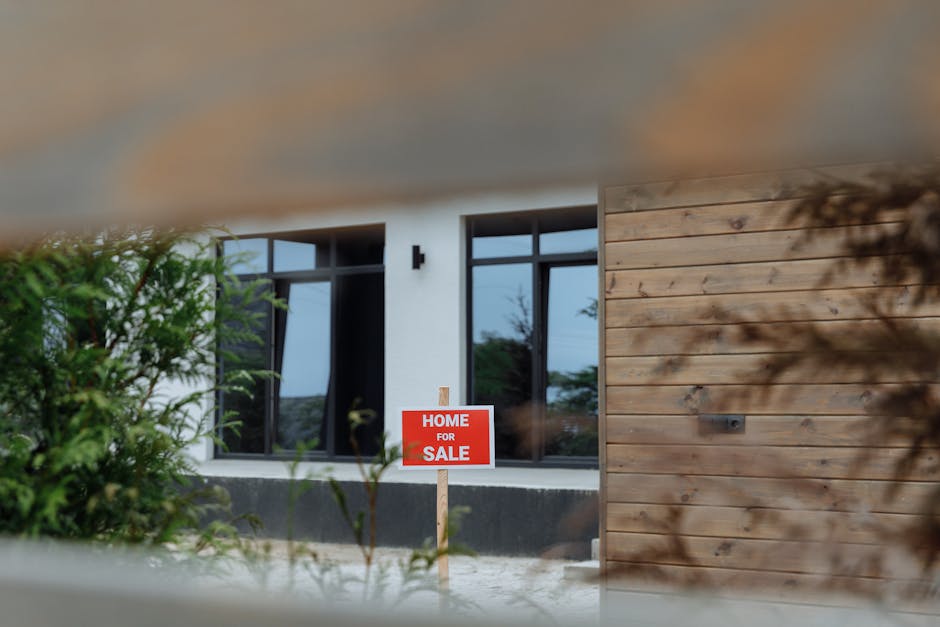
The debate over real estate vs stocks Canada 2026 has never been more relevant. Here’s an honest comparison for Canadian investors.
| Feature | Investment Property | Index Fund Portfolio |
|---|---|---|
| Minimum Investment | $150,000+ (20% down on average home) | $50 (fractional shares via Wealthsimple) |
| Liquidity | Low—months to sell | High—sell in seconds |
| Leverage Available | Yes—up to 80% LTV | Limited—margin accounts risky |
| Ongoing Time Commitment | 5-20+ hours/month | 1-2 hours/year |
| Tax-Advantaged Options | Limited (principal residence only) | TFSA, RRSP, FHSA available |
| Average Historical Return | 4-8% annually (plus leverage effects) | 7-10% annually (Canadian/US index blend) |
| Diversification | Concentrated in one asset | Thousands of companies instantly |
💡 Pro Tip: The hybrid strategy many wealthy Canadians use:
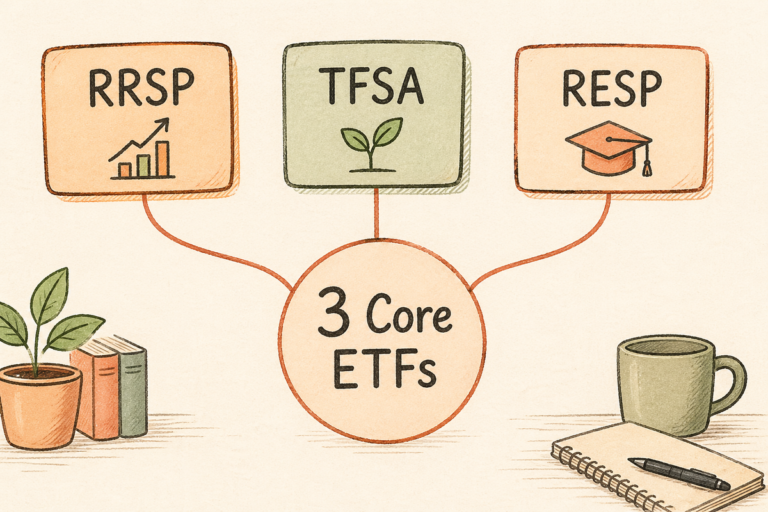
max out TFSA + RRSP ($16,000/year) in index ETFs for tax-free growth, THEN consider real estate with
remaining capital. This captures both tax advantages AND leverage benefits without sacrificing one for the other.
The Power of Tax-Sheltered Accounts
Here’s something real estate investors often overlook: your TFSA contribution room has likely accumulated to approximately $109,000 if you’ve been eligible since 2009, with $7,000 added in 2026. Every dollar of growth approximately inside your TFSA is completely tax-free—no capital gains, no tax on dividends, nothing.
Compare that to rental income, which is taxed at your marginal rate (potentially 40%+ in higher brackets), and capital gains on investment properties, where 50% of gains are taxable (and the inclusion rate may increase).
Your RRSP offers similar advantages with a 2025 contribution limit of $33,810or 18% of earned income. For many Canadians, maxing these accounts before touching real estate makes mathematical sense.
When Real Estate Wins
Real estate has genuine advantages: leverage amplifies returns (and losses), you have tangible control over your investment, and forced savings through mortgage payments builds equity. For investors who would otherwise spend their money, the discipline of a mortgage payment can be powerful. Plus, if you’re handy and enjoy property management, you can genuinely add value through sweat equity.
How to Evaluate If a Rental Property Is Actually Worth It in 2026
Before you buy, run these numbers honestly. Too many Canadians purchase investment properties based on hope rather than math.
Step 1: Calculate Your True Cash-on-Cash Return
Cash-on-cash return measures your annual cash flow divided by the total cash you invested. Here’s a realistic example for a $500,000 rental property:
Monthly rental income: $2,200
Monthly mortgage (20% down, 5%, 25-year amortization): -$2,330
Property taxes: -$400
Insurance: -$150
Maintenance reserve: -$420
Vacancy (8%): -$176
Monthly cash flow: -$1,276
That’s a negative cash flow property requiring you to subsidize it over $15,000 annually. Many Canadian markets look like this in 2026.
💡 Pro Tip: The “1% rule” for Canadian rental property: your monthly rent should equal at least 1% of the purchase price. A $500,000 property should rent for $5,000/month to even approach cash flow positivity.
In most Canadian cities in 2026, you’re lucky to get 0.4-0.5% — a clear sign of negative cash flow before expenses.
Step 2: Stress-Test Your Numbers
What happens if interest rates rise 1%? What if you have a three-month vacancy? What if the furnace dies in year one? Run worst-case scenarios, not best-case. NerdWallet Canada notes that with the Bank of Canada potentially raising rates, variable-rate mortgages carry real risk right now.
Step 3: Compare Opportunity Cost
The $100,000 you’d put down on a rental property could go into your TFSA invested in a diversified ETF portfolio. Over 10 years at 7% average returns, that grows to approximately $197,000—tax-free. Your real estate investment needs to beat that return after all costs, time invested, and stress to be worth it.
For a deeper dive into ETF investing, read our guide to the best Canadian ETFs in 2026.
Critical Mistakes to Avoid When Investing in Real Estate Canada 2026
After analyzing countless real estate investments, these are the errors that sink Canadian investors.
Mistake 1: Ignoring the “Landlord Tax”
Your time has value. If you spend 10 hours monthly managing a property and your time is worth $50/hour, that’s $6,000 annually in unpaid labour. Factor this into your returns. Many “profitable” properties become money-losers when you account for your time.
Mistake 2: Buying Based on Appreciation Hopes
Yes, Canadian real estate has historically appreciated. But CREA’s 2026 forecast shows only modest price increases ahead, and previous years saw actual declines. Banking on appreciation is speculation, not investing. Your property should make sense based on cash flow today, with appreciation as a bonus.
Mistake 3: Underestimating Tenant Risk
One bad tenant can cost you $10,000-$30,000 in unpaid rent, property damage, and legal fees. Ontario’s Landlord and Tenant Board has significant backlogs, meaning evictions can take 6-12 months. Budget for this reality.
Mistake 4: Over-Leveraging
Just because CMHC will insure a 5% down payment doesn’t mean you should use one. Higher leverage means higher risk. In a market where values could decline, you could find yourself underwater—owing more than the property is worth.
Mistake 5: Not Understanding Tax Implications
Rental income is fully taxable. Capital gains on investment properties don’t qualify for the principal residence exemption. CRA is increasingly auditing real estate transactions. Consult with a tax professional before purchasing—the tax hit might change your entire calculation.
💡 Pro Tip: In 2026, CRA is actively auditing property flips and short-term rentals (Airbnb). If you sell a property you owned for under 12 months, CRA may classify ALL profits as business income (100% taxable) rather than capital gains (50% taxable). Consult a tax professional BEFORE buying any investment property.
Key Takeaways
- Canadian real estate sales are expected to rise 5.1% in 2026, with southern Ontario and B.C. leading the recovery—but modest growth doesn’t guarantee profitable investments
- Hidden costs including land transfer tax, maintenance reserves, and vacancy can add $20,000+ annually to a typical rental property’s expenses
- Your TFSA ($7,000 annual limit, ~$102,000 lifetime room) and RRSP ($32,490 max contribution) offer tax-free or tax-deferred growth that rental properties can’t match
- At current mortgage rates (3.7%-6%) and average prices ($670,000), many Canadian rental properties have negative monthly cash flow
- Always stress-test investment property numbers against rising interest rates and extended vacancies before committing
- Consider your time investment—10 hours monthly at $50/hour equals $6,000 in annual “landlord tax” that rarely appears in return calculations
Frequently Asked Questions
What are the hidden costs of owning investment property in Canada?
The hidden costs include land transfer taxes ($10,000-$20,000+ depending on province), ongoing property taxes (0.5%-1.5% of value annually), landlord insurance ($1,200-$3,000/year), maintenance reserves (budget 1% of property value), capital expenditures for major repairs, vacancy losses, and potentially property management fees (8%-12% of rental income). Many investors also forget to value their own time—managing a property can require 5-20 hours monthly. All told, these costs can easily exceed $25,000 annually on a typical Canadian investment property.
Are stocks a better investment than real estate in Canada 2026?
For most Canadians with $50K-$200K to invest, stocks often provide better risk-adjusted returns in 2026, primarily due to tax advantages. Your TFSA allows approximately $102,000 in contribution room with completely tax-free growth, while rental income is taxed at your marginal rate. Stocks also offer instant diversification, zero time commitment, and immediate liquidity. However, real estate can outperform if you find a cash-flow-positive property, can add value through renovations, and use leverage responsibly. The right answer depends on your skills, time availability, and risk tolerance.
How much cash flow do I actually need for a rental property to be worth it?
Aim for minimum positive cash flow of $200-$400 monthly after all expenses including mortgage, taxes, insurance, maintenance reserve, vacancy allowance, and property management fees. This buffer protects you against unexpected costs and interest rate increases. In reality, many Canadian markets in 2026 don’t support this level of cash flow at current prices and interest rates. If your projected cash flow is negative or barely breaking even, you’re speculating on appreciation rather than investing—a risky strategy given current market conditions.
So, is real estate investing worth it Canada 2026? The honest answer is: it depends entirely on your specific situation, market, and numbers. For some Canadians, carefully selected properties in recovering markets offer genuine opportunity, especially as institutional investors eye distressed assets. For others, maximizing TFSA and RRSP contributions with low-cost index funds provides better risk-adjusted returns with far less hassle. Whatever you decide, run the real numbers—not the optimistic ones—and make sure your investment makes sense today, not just in a hoped-for future. Ready to build your wealth strategy? Explore more guides on Getwealthy to make confident financial decisions.
Get free Canadian money tips every week
TFSA updates, CRA changes, mortgage strategies — straight to your inbox every Thursday. No spam, unsubscribe anytime.
The GetWealthy editorial team writes plain-English guides to Canadian personal finance, based on official CRA, FINTRAC and government sources and reviewed every year.
Disclaimer: This article is for informational and educational purposes only and does not constitute financial, tax, or legal advice. Always consult a qualified financial advisor or tax professional for personalized advice.