With the 2026 tax season officially upon us, the Canada Revenue Agency (CRA) has introduced several sweeping changes that will directly impact your wallet. From brand new benefit rollouts to the permanent end of pandemic-era deductions, filing your taxes on autopilot this year could cost you thousands.
To ensure you get the maximum refund possible, I have put together the ultimate 2026 tax-filing guide, entirely backed by the latest federal and provincial data. Let’s dive into the critical deadlines, the new tax brackets, and the most commonly overlooked deductions you absolutely need to claim.
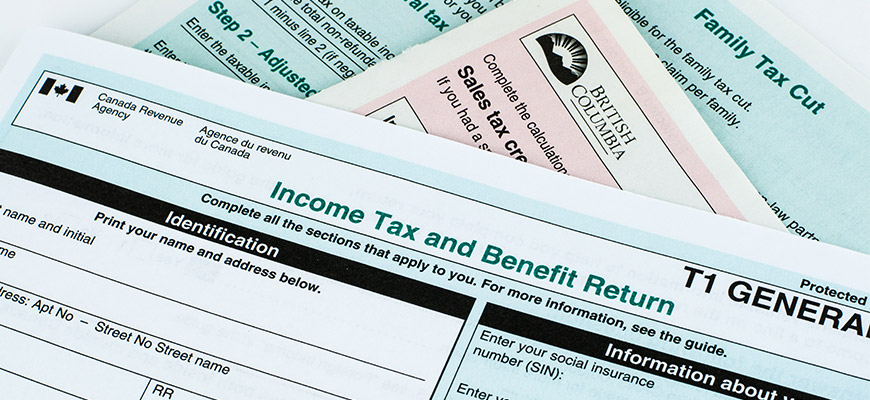
📌 Critical 2026 Tax Deadlines You Must Know
Before we talk about deductions, you need to mark your calendar. Missing these dates will result in late-filing penalties and interest charges.
- February 23, 2026: This is the date you can start filing your 2025 income tax and benefit return online.
- April 30, 2026: This is the deadline for most individuals to file their 2025 income tax and benefit return and pay any taxes owed.
- June 15, 2026: This is the deadline for self-employed individuals to file their 2025 income tax and benefit return.
📉 The New 2026 Federal Tax Brackets
A major win for taxpayers this year is the reduction of the lowest tax bracket. Ottawa’s cut to the lowest federal income tax bracket is now fully in effect. Here are the updated federal brackets you will be working with:
- 14.5% blended rate on income up to $57,375
- 20.5% on the portion of taxable income over $58,523 up to $117,045.
- 26% on the portion of taxable income over $117,045 up to $181,440.
- 29% on the portion of taxable income over $181,440 up to $258,482.
- 33% on the portion of taxable income over $258,482.
🔍 Top 5 Hidden & Changing Deductions for 2026
1. The Work-From-Home Deduction (Massive Change)
If you work from home, listen up: The temporary flat rate method is no longer available for 2026.
- All employees must now use the Detailed Method.
- This requires a signed Form T2200 from your employer and a calculation based on the size of your workspace relative to your home.
2. Medical Expenses & Travel Limits
Many Canadians claim standard medical expenses like prescriptions, but completely miss out on travel claims.
- In 2026, the threshold has been indexed to the lesser of $2,834 or 3% of your net income.
- You can claim travel expenses if you had to travel at least 40km (one way) to obtain medical services not available near your home.
- If you had to travel more than 80km, you can also claim meals and accommodation.
3. Maximum Child Care Deductions
The Child Care Deduction remains one of the most substantial tax benefits for Canadian families. Remember, the lower-income spouse must typically claim this deduction.
- For the 2026 tax year, ensure you are using the correct limits: $8,000 for children under age 7, and $5,000 for children aged 7 to 16.
- If a child is eligible for the Disability Tax Credit, the limit remains $11,000 regardless of age.
4. Student Loan Interest Carry-Forward
Did you pay off a large chunk of your student loans recently? You might not need the deduction this year, but do not let it go to waste.
- Interest can be carried forward for five years.
- Both current and prior year interest payments can be claimed on qualifying Canada Student Loans or provincial/territorial student loans.
5. Transition to the Canada Groceries and Essentials Benefit (CGEB)
While not a deduction, filing your return is mandatory to trigger the newest federal benefit.
- The Canada Groceries and Essentials Benefit will replace the GST/HST credit in July 2026.
- As part of the transition, an additional one-time GST/HST credit top-up payment will be issued starting on June 5, 2026 to recipients who were entitled to the January 2026 payment.
- Be cautious online: There is disinformation online that the Government of Canada has introduced a new $680 one-time payment, but there is no new one-time payment.
💡 Final Thoughts
Taxes don’t have to be intimidating. By gathering your T4s, downloading your NETFILE access code directly from your CRA account, and tracking down receipts for things like medical travel and detailed home office expenses, you can keep significantly more of your hard-earned money in your pocket this year.