The Bank of Canada rate mortgage renewal decision on June 10, 2026, left the policy rate unchanged at 2.25%—the fifth consecutive hold this year. If you’re among the estimated 1.2 million Canadians facing mortgage renewal in 2026, this news directly impacts your monthly payments and long-term financial health. With the prime rate sitting at 4.45% and uncertainty around U.S. trade policy still looming, now is the time to understand your options. In this guide, you’ll learn exactly how this rate hold affects your renewal, whether to choose fixed or variable, and how to negotiate the best deal possible.
How Does the Bank of Canada Rate Affect Your Mortgage Renewal in 2026?
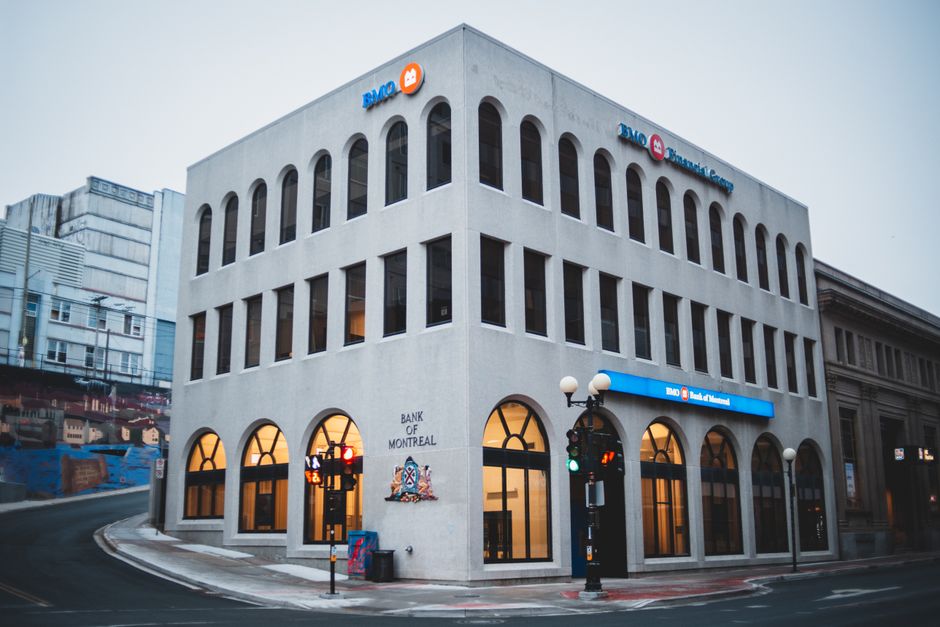
The Bank of Canada’s policy rate is the foundation of all borrowing costs in Canada. When the BoC holds, raises, or cuts this rate, it creates a ripple effect through the entire lending system. For homeowners approaching renewal, understanding this connection is crucial to making smart financial decisions.
The Direct Link Between the Policy Rate and Your Mortgage
Here’s how it works: Canadian banks set their prime rate based on the Bank of Canada’s policy rate. As of June 2026, the prime rate sits at 4.45%, reflecting the current 2.25% policy rate. If you have a variable-rate mortgage, your interest rate is typically expressed as “prime minus” or “prime plus” a certain percentage. So when the BoC holds steady, your variable-rate payments stay the same—at least until the next announcement on July 15, 2026.
Fixed-rate mortgages work differently. They’re tied to the bond market, specifically the Government of Canada 5-year bond yield. However, the BoC’s rate decisions still influence fixed rates indirectly by shaping market expectations about future inflation and economic conditions.
Why the Bank of Canada Keeps Holding Rates
The BoC has held rates at 2.25% since October 2025, citing two main concerns: weak economic activity in Canada and persistent uncertainty around U.S. trade policy. The ongoing conflict in the Middle East and volatile oil prices add another layer of complexity. According to True North Mortgage’s analysis, this creates a push-pull scenario—inflation risks from energy prices could push rates up, while economic weakness could justify cuts.
For mortgage holders, this uncertainty means one thing: you need to be prepared for multiple scenarios when your renewal date arrives.
💡 Latest Context (June 2026): The BOC is caught in a genuine two-way bind. GDP contracted -0.1% in Q1, and unemployment sits at 6.5-7%, normally arguments for cutting. But Middle East oil price pressure pushed April inflation to 2.8%, an argument for holding or even hiking. Governor Macklem called this combination “a dilemma for monetary policy” — which is exactly why predicting your renewal rate environment is so difficult right now.
What Does a 2.25% Interest Rate Mean for Canadian Mortgage Rates in 2026?
Let’s translate this policy rate into real numbers you’ll see on your renewal offer. Understanding the current rate environment helps you evaluate whether your lender’s offer is competitive or if you should shop around.
Current Mortgage Rate Landscape
With the prime rate at 4.45%, here’s what Canadian homeowners are seeing in June 2026:
- Variable-rate mortgages: Typically prime minus 0.50% to prime minus 1.00%, putting effective rates between 3.45% and 3.95%
- 5-year fixed mortgages: Ranging from approximately 4.29% to 4.89% depending on the lender and your qualifications
- 3-year fixed mortgages: Often slightly lower than 5-year terms, around 4.09% to 4.59%
These rates represent a significant drop from the peaks of 2023-2024, when many Canadians locked in at rates above 6%. If you’re renewing a mortgage that originated during that high-rate period, you may actually see lower payments—a welcome relief for household budgets.
The Impact on Different Mortgage Sizes
Let’s put this into perspective with real numbers. On a $500,000 mortgage with a 25-year amortization:
- At 6.00% (common in 2023): Monthly payment of approximately $3,211
- At 4.50% (current competitive rate): Monthly payment of approximately $2,778
- Monthly savings: $433 or $5,196 per year
However, if you originally secured a rate below 3% during the pandemic-era lows, you’ll still face higher payments at renewal. The Bank of Canada’s own analysis indicates that about 40% of Canadian mortgages are 5-year fixed terms, and many of these pandemic-era mortgages are coming due throughout 2026.
Fixed vs Variable Mortgage Rates at Renewal: Which Should You Choose?

This is the million-dollar question for every Canadian facing mortgage renewal Canada 2026. The right choice depends on your risk tolerance, financial stability, and how you interpret the current economic signals. If you’re weighing these options carefully, our detailed guide on fixed vs variable mortgage rates in Canada 2026 breaks down the decision even further.
| Feature | Fixed-Rate Mortgage | Variable-Rate Mortgage |
|---|---|---|
| Current Rate Range (June 2026) | 4.29% – 4.89% | 3.45% – 3.95% (prime minus discount) |
| Payment Predictability | Completely stable for the term | Can change with BoC decisions |
| Potential Savings if Rates Drop | None—locked in | Yes—payments decrease automatically |
| Risk if Rates Rise | Protected | Payments could increase |
| Penalty to Break Early | Higher (Interest Rate Differential) | Lower (typically 3 months’ interest) |
| Best For | Risk-averse, tight budgets, peace of mind | Flexible budgets, believe rates will fall |
The Case for Fixed Rates in 2026
With the BoC signalling uncertainty and inflation risks from oil prices still present, a fixed rate offers peace of mind. You’ll know exactly what your payment is for the next 3-5 years, making budgeting straightforward. This is especially valuable if your household income is stable but doesn’t have much room for payment increases.
The current spread between fixed and variable rates is relatively narrow, meaning you’re not paying a huge premium for the security of a fixed rate. If rates rise due to inflation concerns, you’ll be protected.
The Case for Variable Rates in 2026
Variable-rate mortgages currently offer lower starting rates, and there’s a reasonable case that rates could fall further. The BoC has room to cut if economic weakness persists or if trade tensions damage the Canadian economy more severely. Historically, variable-rate borrowers have paid less interest over time—though this isn’t guaranteed.
Variable rates also come with lower penalties if you need to break your mortgage early, which matters if you might sell your home or refinance within the next few years.
How to Negotiate Your Bank of Canada Rate Mortgage Renewal Successfully
Your lender will send a renewal offer, often about 30 days before your matyours date. Here’s a critical truth: you should almost never accept the first offer. Banks count on borrower inertia, and their initial renewal rates are rarely their best rates.
Step 1: Start Early—At Least 120 Days Before Renewal
Most lenders allow you to lock in a rate up to 120 days before your renewal date. This gives you a rate hold, meaning if rates rise before your renewal, you keep the lower locked rate. If rates fall, many lenders will let you take the new lower rate instead. Starting early also gives you leverage—you’re not desperate and can walk away if needed.
Step 2: Get Competing Quotes from Multiple Lenders
Approach at least three different lenders: your current bank, a competing Big Five bank (TD, RBC, BMO, Scotiabank, or CIBC), and a mortgage broker who can access rates from credit unions and monoline lenders. Monoline lenders often offer the most competitive rates because mortgages are their only business.
When you return to your current lender with competitor quotes, they’ll often match or beat them to keep your business. This simple step can save you thousands over your mortgage term.
Step 3: Understand What’s Negotiable Beyond the Rate
Interest rate isn’t the only factor. Consider negotiating:
- Prepayment privileges: The ability to pay an extra 15-20% annually without penalty
- Portability: Taking your mortgage to a new property if you move
- Blend-and-extend options: Flexibility to change terms mid-mortgage
- Cashback offers: Some lenders offer thousands in cashback, though this usually means a slightly higher rate
Step 4: Calculate the True Cost of Switching Lenders
Switching to a new lender at renewal is free—there’s no penalty because your term is ending. However, you may face minor costs like legal fees ($500-$1,000) or appraisal fees. Many lenders will cover these costs to win your business, so ask. If switching saves you 0.25% on a $400,000 mortgage, that’s $1,000 per year in interest savings, easily covering any one-time costs.
Common Mortgage Renewal Mistakes Canadians Make in 2026
Avoid these pitfalls to ensure your renewal works in your favour, not your bank’s.
Mistake #1: Automatically Signing Your Lender’s Renewal Letter
As mentioned, the renewal rate your bank sends is almost never their best offer. One study found that simply calling to negotiate saves the average Canadian 0.25% to 0.50% on their rate. On a $500,000 mortgage, that’s $1,250 to $2,500 per year.
Mistake #2: Ignoring Your Amortization Period
At renewal, you can extend or shorten your amortization. If cash flow is tight, extending from 20 to 25 years lowers monthly payments. If you can afford more, shortening your amortization saves significant interest over the life of the mortgage. Make this an active choice, not an afterthought.
Mistake #3: Not Reviewing Your Overall Financial Picture
Renewal is the perfect time to consider whether paying down your mortgage faster makes sense compared to other priorities. For instance, maximizing your TFSA ($7,000 contribution limit in 2026) or contributing to an RRSP (up to $33,810 for 2026 income) might offer better returns depending on your tax situation. Our analysis on RRSP vs mortgage paydown at renewal can help you decide.
Mistake #4: Forgetting About Insurance
Many Canadians have mortgage life insurance through their bank, which is often more expensive and less flexible than term life insurance purchased independently. Renewal is a good time to compare options. You can learn more about this in our comparison of term life vs mortgage life insurance.
What’s Next for Canadian Mortgage Rates: The 2026 Forecast
Nobody can predict rates with certainty, but understanding the factors at play helps you prepare for different scenarios.
Factors That Could Push Rates Lower
If the Canadian economy continues to show weakness, particularly if U.S. trade tensions escalate, the BoC may cut rates to stimulate growth. The policy rate has already dropped 2.75% since June 2024, and further cuts are possible. Some economists predict the policy rate could reach 2.00% or lower by late 2026 if economic conditions worsen.
Factors That Could Push Rates Higher
Energy-related inflation poses the biggest risk to further rate cuts. If oil prices spike due to Middle East tensions, inflation could resurge, forcing the BoC to hold or even hike rates. While rate hikes seem unlikely given current conditions, True North Mortgage notes it remains a possibility that shouldn’t be ignored.
💡 Market Odds (per bond pricing): Hold at July 15: highly likely 25bp hike probability: ~6% By September: hike probability rises to ~18%
These aren’t certainties, but they reflect what professional traders are actually betting on — useful context as you decide fixed vs. variable for your renewal.
The Bottom Line for Your Planning
The safest approach is to ensure you can afford your mortgage payments if rates rise by 1-2% from current levels. Build this buffer into your budget. If rates fall instead, enjoy the savings—but don’t count on them when making your decision.
Key Takeaways
- The Bank of Canada held its policy rate at 2.25% in June 2026, with the prime rate at 4.45%—the fourth consecutive hold this year
- Canadian homeowners renewing in 2026 may see lower rates than 2023-2024 peaks, but higher than pandemic-era lows below 3%
- Start your renewal negotiations at least 120 days early and always get competing quotes from multiple lenders
- Never accept your lender’s first renewal offer—negotiating typically saves 0.25% to 0.50% on your rate
- Consider your full financial picture at renewal, including TFSA contributions ($7,000 limit), RRSP room, and insurance needs
- The next BoC rate decision is July 15, 2026—watch for changes that could affect your renewal timing
Frequently Asked Questions
How does the 2.25% Bank of Canada rate affect my mortgage renewal?
The 2.25% policy rate directly influences the prime rate (currently 4.45%), which determines variable mortgage rates. If you have a variable-rate mortgage, your payments stay stable while the BoC holds. Fixed rates are affected indirectly through bond markets. At renewal, you’ll see rates significantly lower than the 2023-2024 peaks, but if you locked in below 3% during the pandemic, expect higher payments.
Should I lock in a fixed or variable rate when renewing my mortgage in 2026?
Choose fixed if you value payment stability and want protection against potential rate increases—current fixed rates around 4.29%-4.89% offer reasonable value. Choose variable if you believe rates will fall further and your budget can handle potential payment increases. Variable rates currently offer lower starting payments (3.45%-3.95%) and smaller penalties if you break your mortgage early.
When is the best time to start negotiating my Canadian mortgage renewal?
Start at least 120 days before your renewal date. Most lenders offer rate holds for this period, protecting you if rates rise while allowing you to take lower rates if they fall. This timeline also gives you leverage to shop around and negotiate without the pressure of an imminent deadline. Beginning early turns renewal from a stressful obligation into a strategic financial opportunity.
Understanding how the Bank of Canada rate mortgage renewal connection works puts you in control of one of your largest financial decisions. With the policy rate steady at 2.25% and the prime rate at 4.45%, Canadian homeowners have a window of relative stability to plan their next move. Whether you choose fixed or variable, start early and negotiate hard—your future self will thank you. Explore more mortgage and personal finance strategies at Getwealthy to make every financial decision count.
Get free Canadian money tips every week
TFSA updates, CRA changes, mortgage strategies — straight to your inbox every Thursday. No spam, unsubscribe anytime.
Certified Financial Planner (CFP) and Chartered Investment Manager (CIM) with over 17 years of experience in Canadian personal finance. Spent 10+ years at one of Canada's Big Five banks, the last 7 focused exclusively on high-net-worth clients. Every guide is written with the same depth I bring to real client work — Canada-specific, CRA-verified, and always free.
Disclaimer: This article is for informational and educational purposes only and does not constitute financial, tax, or legal advice. Always consult a qualified financial advisor or tax professional for personalized advice.