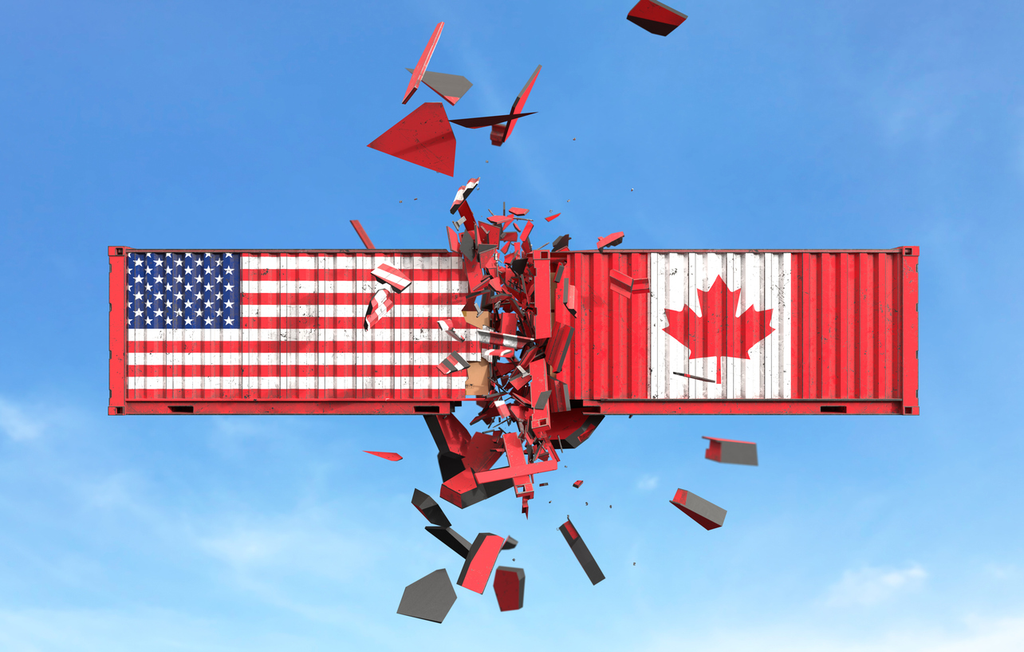
If you are a Canadian homeowner planning a major basement renovation, a buyer waiting for a pre-construction condo to finish, or a family building a custom home this fall, your project budget just encountered a massive, unavoidable roadblock.
As of September 8, 2026, Ottawa’s $27.6 billion retaliatory counter-tariff package is fully active. Buried deep within this sweeping legislation are punitive 50% duties on U.S. steel and aluminum, alongside 25% tariffs on softwood lumber, drywall, and essential household appliances.
For the Canadian real estate and construction sectors, these border levies threaten to disrupt supply lines, trigger delay clauses, and inflate project costs by thousands of dollars virtually overnight. Here is a deep dive into exactly how the new counter-tariffs will impact your building budgets, complete with financial scenarios and mitigation strategies.
🚀 Key Takeaways (TL;DR)
- Structural Cost Spikes: 50% tariffs on imported steel and 25% on engineered lumber will drastically increase the baseline costs of framing, roofing, and structural components.
- Finishing Budget Shocks: Renovating a kitchen or bathroom will cost significantly more due to 25% duties on imported stoves, refrigerators, and HVAC equipment.
- Pre-Construction Delays: High-rise condo developers facing sudden material shortages may trigger “material delay” clauses, pushing back possession dates for buyers.
- The Mitigation Strategy: Homeowners must immediately source domestic materials, buy floor-model appliances, and lock contractors into fixed-price, updated quotes.
1. The Direct Hit to New Home Construction
It is a common misconception that because Canada is rich in timber and resources, our domestic housing builds are immune to global trade. In reality, Canadian homebuilders rely on a complex, highly integrated North American supply chain.
While raw lumber is milled here, engineered wood products, specialized structural steel (I-beams), insulated electrical wiring, and high-grade drywall are frequently imported from American manufacturers.
- Custom Home Builds: If you are operating under a “cost-plus” contract with a custom home builder (where you pay the cost of materials plus a percentage fee), these new 25% and 50% border duties will be passed directly onto your final invoice.
- Pre-Construction Condos: High-rise residential developments require thousands of tons of structural steel and rebar. Developers caught mid-construction face severe budget overruns. Buyers must carefully review their Purchase and Sale Agreements (APS). Developers may trigger force majeure or material escalation clauses, leading to extended delays while they scramble to secure cheaper steel from Asia.
2. Renovation Budgets: Kitchens, Basements, and Bathrooms
For existing homeowners, the pain of the counter-tariffs will be felt most acutely during finishing work and appliance installations. The September 8 mandate specifically targets household goods to maximize political pressure.
- 25% Tariff on Major Appliances: U.S.-manufactured refrigerators, washing machines, dishwashers, and ovens are now significantly more expensive to import.
- 15% Tariff on HVAC & Water: Replacing a furnace, air conditioning unit, or hot water tank this fall will carry a noticeable premium.
- Drywall and Insulation: Specialized imported drywall and spray-foam insulation chemicals face new duties, driving up the cost of basement finishing.
3. Financial Scenario: The $80,000 Kitchen Renovation
To understand the real-world impact, let’s simulate a standard mid-to-high-end kitchen renovation in Toronto or Vancouver, comparing pre-tariff costs to post-tariff realities.
| Expense Category | Pre-Tariff Cost (Aug 2026) | Post-Tariff Cost (Oct 2026 Est.) | Why the Increase? |
|---|---|---|---|
| Labour & Design | $30,000 | $30,000 | Unchanged (Local service). |
| Cabinets (Local) | $20,000 | $20,000 | Unchanged (Domestic wood/MDF). |
| U.S. Appliances | $15,000 | $18,750 | +25% Import Tariff on fridge/stove. |
| Drywall/Steel Studs | $5,000 | $7,000 | +40% Blended Tariff on materials. |
| HVAC / Venting | $10,000 | $11,500 | +15% Import Tariff. |
| Total Project Cost | $80,000 | $87,250 | An unexpected $7,250 budget blowout. |
Conclusion: Simply due to cross-border trade disputes, a standard homeowner must find an additional $7,000+ in cash or credit to complete the exact same project.
4. How to Navigate Your Construction Projects This Fall
If you cannot delay your construction or renovation plans until the trade war cools down, you must adapt your strategy immediately:
- Mandate Domestic Sourcing: Instruct your general contractor to use strictly Canadian-milled lumber, local drywall, and domestic steel studs. It may take longer to source, but it bypasses the 50% border tax.
- Hunt for Pre-Tariff Inventory: Big-box hardware stores and appliance centers still have warehouses full of inventory imported before September 8. Buy floor models, “scratch-and-dent” units, or secure your appliances today before that old stock runs out.
- Lock In Fixed-Price Quotes: If you are planning a project for Spring 2027, do not rely on a casual estimate provided in August. Demand a legally binding, fixed-price quote from your contractor that explicitly accounts for current tariff conditions, shifting the material risk away from your family budget.
Frequently Asked Questions (FAQ)
Q: Can my contractor legally increase my price if we already signed a contract?
A: It depends on the contract type. A “Fixed-Price” contract protects you, meaning the contractor must absorb the tariff cost. A “Cost-Plus” or “Time and Materials” contract means you carry the risk and will pay the inflated material prices.
Q: Are Canadian-made appliances cheaper now?
A: In theory, yes. However, true Canadian appliance manufacturing is very limited. Most brands assemble in the U.S. or Mexico. Consider European (Bosch, Miele) or South Korean (Samsung, LG) brands, as they are not subject to these specific U.S. retaliatory tariffs.
Q: Will this pop the housing bubble?
A: Tariffs typically reduce the supply of new housing because builds become too expensive or delayed. Reduced housing supply generally keeps existing home prices elevated, even in a high-rate environment.
Are you dealing with sudden cost increases on a home build or renovation? Share your experience below!
Get free Canadian money tips every week
TFSA updates, CRA changes, mortgage strategies — straight to your inbox every Thursday. No spam, unsubscribe anytime.
Certified Financial Planner (CFP) and Chartered Investment Manager (CIM) with over 17 years of experience in Canadian personal finance. Spent 10+ years at one of Canada's Big Five banks, the last 7 focused exclusively on high-net-worth clients. Every guide is written with the same depth I bring to real client work — Canada-specific, CRA-verified, and always free.