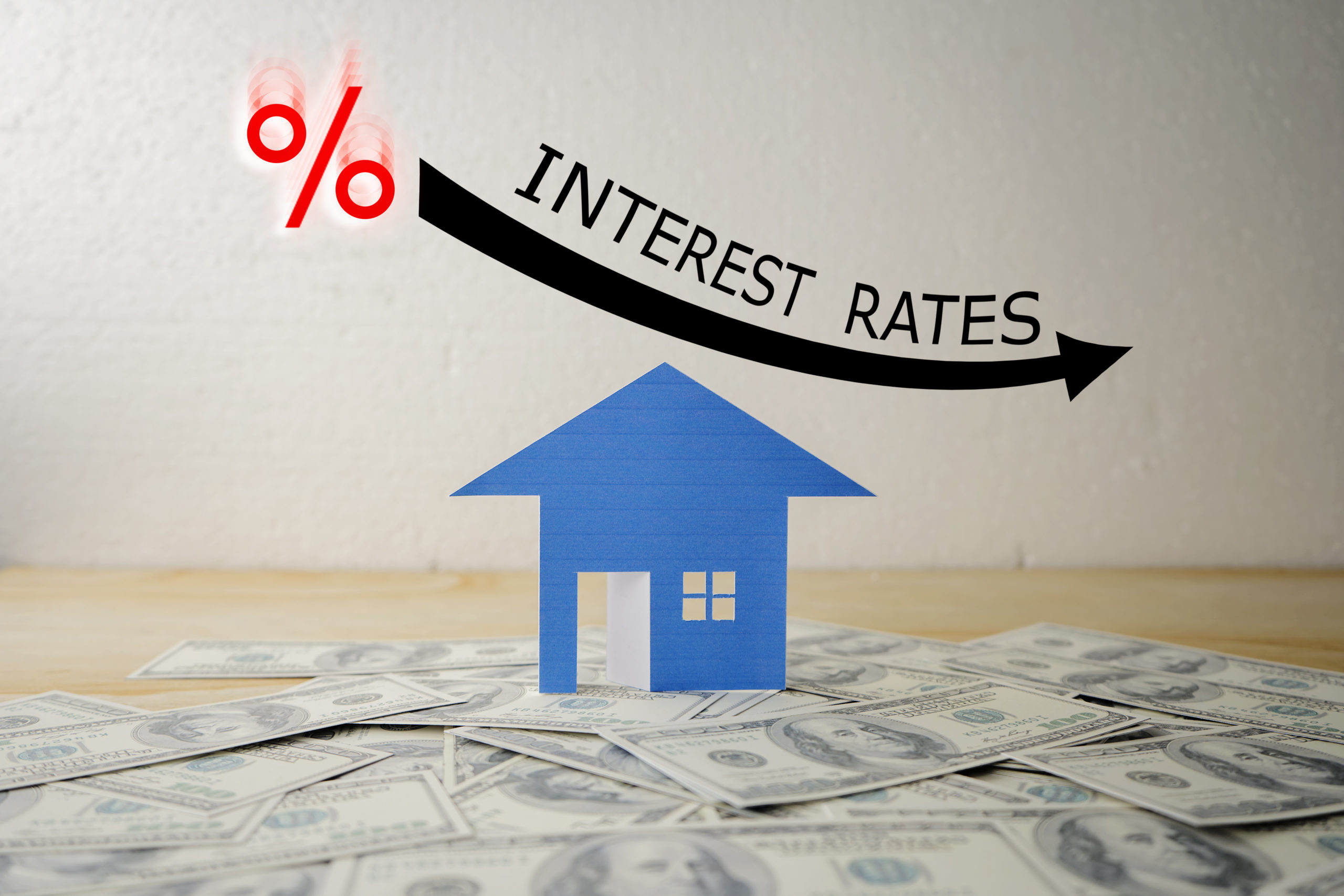
If you’re asking, “Should I buy a house now Canada 2026?” you’re not alone. As of the latest CREA data (August 2026 activity, released September 15, 2026), the national sales-to-new-listings ratio sits at 49.1%—squarely in balanced-market territory, on the softer, more buyer-friendly side of the range. After two brutal years of rate hikes, the Bank of Canada’s policy rate has dropped to 2.25% from its 5.0% peak reached in July 2023 (held through multiple decisions until the first cut in June 2024), and variable mortgage rates have followed it down. This post breaks down exactly what September 2026’s numbers mean for first-time buyers, when waiting makes sense, and how to decide if now is your window—or if patience still pays.
Quick Answer:
- With the Bank of Canada rate at 2.25% and variable rates stable, borrowing costs are the lowest since early 2022—but fixed rates haven’t dropped as sharply.
- The market is balanced (49.1% sales-to-new-listings ratio as of August 2026, still within CREA’s 45-65% balanced band but below the 54.7% long-term average), giving buyers more negotiating power than during the 2021-2022 frenzy.
- Major forecasters expect largely flat to modestly rising prices through 2026, so waiting for a “crash” may cost you in opportunity.
- Your personal financial readiness—stable income, 5%+ down payment, manageable debt—matters more than timing the absolute bottom.
📋 Table of Contents
- Should I Buy a House Now Canada 2026? What the Current Numbers Actually Tell Us
- How Mortgage Rates Canada September 2026 Compare to Recent History
- Housing Market Timing Canada: Why Waiting for a “Crash” Might Backfire
- New Home Construction Canada 2026: The Supply Problem That Isn’t Going Away
- Should I Buy a House Now Canada 2026? A Decision Framework for First-Time Buyers
- Key Takeaways
- Frequently Asked Questions
Should I Buy a House Now Canada 2026? What the Current Numbers Actually Tell Us
Let’s cut through the noise. The single most important number for Canadian home buyers right now is the Bank of Canada’s policy interest rate, which sits at 2.25% as of September 2026. That’s a dramatic drop from the 5.0% level the rate reached by mid-2023—a peak the Bank held through multiple decisions before beginning to cut in June 2024.
Here’s what that means in real dollars. On a $500,000 mortgage amortized over 25 years, the difference between a 5.0% variable rate and today’s roughly 4.25% variable rate (prime minus a typical discount) works out to approximately $214 less per month—or about $2,570 per year you’re not lighting on fire.
But here’s where it gets nuanced. Fixed mortgage rates, which most first-time buyers prefer for payment certainty, haven’t fallen as dramatically. Five-year fixed rates from major lenders like TD, RBC, and Scotiabank currently hover around 4.4% to 4.7% for conventional (20%+ down) purchases, depending on your down payment and lender. That’s better than the 6%+ peaks of 2023, but not the sub-2% rates of 2021 that fuelled the buying frenzy.
Pro Tip: If you’re buying with less than 20% down (an insured, high-ratio mortgage), broker and monoline lenders are often pricing meaningfully below the 4.4%-4.7% conventional range quoted above—closer to the low-4% range. Always ask whether a quoted rate is for an insured or conventional product before comparing offers across lenders.
The Balanced Market Advantage
CREA’s most recent data (covering August 2026 activity, released September 15, 2026) shows a national sales-to-new-listings ratio of 49.1%. For context, CREA’s own long-term average for this ratio is 54.7%—so today’s market is running a bit softer than the historical norm, not sitting exactly at it. That number might seem abstract, but it’s actually the clearest indicator of whether buyers or sellers hold the power. Here’s how to read it:
- Below 45%: Buyer’s market—lots of inventory, sellers compete for your offer
- 45% to 65%: Balanced market—reasonable negotiation room on both sides
- Above 65%: Seller’s market—multiple offers, bidding wars, no conditions
At 49.1%, we’re sitting in balanced territory, but closer to the buyer-friendly end of that range than the middle. That means you can likely include financing and inspection conditions on your offer without getting laughed out of the room—a luxury buyers in 2021-2022 didn’t have. You also have time to think. Properties aren’t selling in 48 hours with 15 competing offers anymore.
For context, during the 2021 peak, some hot markets saw ratios above 80%. If you tried to buy then, you know what that felt like: waiving inspections, offering $100,000 over asking, and still losing out. That market is gone—at least for now.
How Mortgage Rates Canada September 2026 Compare to Recent History
To decide if now is the right time, you need context. Here’s how today’s borrowing environment stacks up against the last five years:
| Period | Bank of Canada Rate | Typical 5-Year Fixed | Market Conditions |
|---|---|---|---|
| Early 2021 (Pre-Boom) | 0.25% | 1.8% – 2.2% | Extreme seller’s market, bidding wars |
| Mid-2023 (Rate Peak) | 5.00% | 5.8% – 6.3% | Frozen market, few buyers could qualify |
| Early 2025 | 3.25% | 4.8% – 5.2% | Slow recovery beginning |
| September 2026 (Now) | 2.25% | 4.4% – 4.7% (conventional) | Balanced market, measured recovery |
Notice something? Fixed rates haven’t dropped as much as the Bank of Canada rate. That’s because lenders price fixed mortgages based on bond yields and their expectations for where rates will be over the next five years—not just where they are today. The bond market is betting that rates stay relatively stable, which is why five-year fixed rates have plateaued in the mid-4% range.
According to forecasts from CMHC and major lenders, the Bank of Canada is expected to hold the policy rate at 2.25% through early 2027. Variable rates should stay stable as a result. If you’re considering variable, you’re unlikely to see further dramatic drops—but you’re also protected from sudden spikes in the near term.
Fixed vs. Variable: The September 2026 Math
The gap between fixed and variable rates matters. Right now, a typical variable rate sits around 4.0% to 4.5% (prime at 4.45% minus lender discounts), while five-year fixed rates run 4.4% to 4.7% for conventional purchases (often lower for insured, high-ratio buyers). That’s an unusually narrow spread.
Historically, variable rates have outperformed fixed rates over most five-year periods—but that calculation assumed larger spreads and room for rates to fall. With variable and fixed rates nearly neck-and-neck, many first-time buyers are opting for fixed simply for the payment certainty. If your budget is tight and a $200/month payment swing would stress you out, fixed makes sense even if variable might save you a few hundred dollars over five years.
If you’re comfortable with some payment fluctuation and believe rates might edge down another 0.25% to 0.50%, variable could still be worth considering. Just make sure you can handle payments if rates tick back up—switching lenders at renewal is always an option, but you need to survive the first term.
Housing Market Timing Canada: Why Waiting for a “Crash” Might Backfire
Let’s address the elephant in the room: should you wait for prices to drop further before buying?
This is the question that’s paralyzed hundreds of thousands of potential buyers since 2022. The logic seems sound—prices went up too fast, they must come down, so why not wait? But the data tells a more complicated story.
According to the Real Estate Institute of Canada’s 2026 outlook, major forecasters expect “a measured recovery in sales and largely flat to modestly rising prices” through 2026. CMHC’s Housing Market Outlook echoes this: prices aren’t expected to crash, but they’re not expected to surge either. We’re in a stabilization phase—consistent with a sales-to-new-listings ratio sitting just below the long-term balanced average rather than swinging hard toward either buyers or sellers.
Here’s the math that matters: if you wait 12 months for a 5% price drop that never comes, and prices instead rise 3%, you’ve lost ground. But the bigger cost is often the rent you paid while waiting. At $2,500/month rent (common in Toronto, Vancouver, and increasingly in Calgary and Ottawa), that’s $30,000 per year going to your landlord instead of building equity.
The Opportunity Cost of Waiting
Let’s run a realistic scenario. Say you’re looking at a $600,000 condo in the GTA. You have a 10% down payment saved ($60,000) and can qualify for the mortgage at today’s rates.
Option A: Buy now
- Purchase price: $600,000
- Down payment: $60,000 (10%)
- Mortgage: $540,000 at 4.5% fixed ≈ $2,970/month
- Plus condo fees, property tax, maintenance—total housing cost ~$3,800/month
Option B: Wait 12 months, hope for a 5% price drop
- You pay rent: $2,500/month × 12 = $30,000
- If prices drop 5%: Purchase price becomes $570,000—you save $30,000
- Net gain: $0 (rent ate your savings)
- If prices stay flat or rise: You’ve lost $30,000 in rent AND prices didn’t drop
This math doesn’t account for your down payment potentially growing if you invest it while waiting—but it also doesn’t account for the possibility that you get priced out entirely if rates or prices move against you. The stress test requires you to qualify at 5.25% or your contract rate plus 2%, whichever is higher. If your financial situation changes (job loss, interest rate spike, debt increase), you might not qualify at all in 12 months.
The lesson? Timing the market is a gambler’s game. Buying when you’re financially ready and the property meets your needs is a strategy.
New Home Construction Canada 2026: The Supply Problem That Isn’t Going Away
Here’s a factor many first-time buyers overlook: supply constraints. Canada has a well-documented housing shortage, and new construction isn’t keeping pace with population growth—especially in major urban centres.
According to CMHC, Canada needs to build 3.5 million additional homes by 2030 to restore affordability. We’re building roughly 200,000-250,000 units per year. You can do the math—we’re not even close.
What does this mean for you as a September 2026 buyer? It means the downward pressure on prices that would come from abundant supply simply isn’t materializing. Even if demand softens temporarily (fewer buyers due to economic uncertainty, immigration slowdowns, or affordability constraints), the underlying supply shortage puts a floor under prices in most markets.
Regional Variations Matter
Not all markets are equal. If you’re flexible on location, here’s a rough breakdown of where construction activity and market balance differ:
- Greater Toronto Area: High demand, constrained supply, prices stabilizing but unlikely to drop significantly
- Greater Vancouver: Similar dynamics to Toronto—land scarcity keeps prices elevated
- Calgary and Edmonton: More balanced, with stronger new construction and relatively better affordability
- Ottawa: Steady government employment supports demand; balanced market
- Atlantic Canada: Saw huge price increases during the remote-work migration; now stabilizing with some softening
If you’re a first-time buyer willing to consider markets outside Toronto and Vancouver, your dollar stretches significantly further. A $500,000 budget that gets you a small condo in the GTA can buy a detached home in many parts of Alberta or the Maritimes. Remote work has made this more viable than ever—though you’ll want to ensure your job is truly location-independent before making the leap.
Understanding how property taxes work in your target market is also crucial—mill rates vary dramatically between provinces and municipalities, and that affects your total carrying costs.
Should I Buy a House Now Canada 2026? A Decision Framework for First-Time Buyers
Let’s get practical. Here’s a framework to help you decide if September 2026 is your time to buy—or if you’re better off waiting.
Buy Now If:
- You have at least 5% down payment saved (ideally 10%+ to avoid the maximum CMHC insurance premium)
- Your employment is stable—you’ve been in your current job or industry for at least two years
- You can pass the stress test—your lender will qualify you at roughly 6.5% even if your actual rate is 4.5%
- Your total debt service ratio is healthy—housing costs plus other debt payments below 44% of gross income
- You plan to stay at least 5 years—transaction costs (land transfer tax, legal fees, moving, potential selling costs) eat into your equity if you sell too soon
- You’ve found a property that genuinely meets your needs—not just “a property” because you feel pressured
Wait If:
- You’re scraping together minimum down payment—better to save 10%+ and reduce your insurance costs and monthly payments
- Your employment situation is uncertain—layoffs looming, contract ending, or you’re new to your industry
- You’re carrying significant high-interest debt—pay off credit cards and car loans first; they hurt your qualification and your cash flow
- You’d be stretching to the absolute maximum you qualify for—just because a bank will lend you $700,000 doesn’t mean you should borrow $700,000
- You haven’t defined what you actually need—rushing into homeownership without clarity leads to buyer’s remorse
Your down payment might also be eligible for a boost through the First Home Savings Account (FHSA). If you haven’t already opened one, you can contribute up to $8,000 per year (lifetime maximum $40,000), and contributions are tax-deductible like an RRSP while withdrawals for a qualifying home purchase are tax-free like a TFSA. It’s the best of both worlds—and if you’re not already maxing it out, you’re leaving money on the table. Check the official FHSA rules to confirm your eligibility.
You should also understand exactly what a down payment covers and how it works before committing your savings.
Key Takeaways
- The Bank of Canada rate at 2.25% has brought variable mortgage rates to their lowest point since early 2022—but five-year fixed rates remain in the 4.4% to 4.7% range for conventional purchases, and forecasters expect stability rather than further drops.
- A sales-to-new-listings ratio of 49.1% (August 2026 data) signals a balanced market—on the softer, buyer-friendlier side of CREA’s 45-65% balanced range and below the 54.7% long-term historical average—giving buyers negotiating power without the frenzy of 2021-2022.
- Waiting for a price “crash” carries real costs—rent payments, opportunity costs, and the risk of being priced out if your financial situation or qualification criteria change.
- Canada’s housing supply shortage isn’t being solved anytime soon; new construction lags far behind CMHC’s 3.5-million-home target, putting a floor under prices in most markets.
- Your personal readiness matters more than market timing—stable income, manageable debt, 5-10%+ down payment, and a 5+ year time horizon are the real prerequisites.
- First-time buyers should maximize the FHSA ($8,000/year contribution room) for tax-advantaged down payment savings before buying.
Frequently Asked Questions
Are mortgage rates going down more in Canada 2026?
Probably not significantly. The Bank of Canada’s policy rate is already at 2.25%, down from a 5.0% peak reached by mid-2023, and major forecasters expect it to hold steady through early 2027. Variable rates have stabilized, and fixed rates—priced off bond yields—have plateaued in the mid-4% range. You might see minor fluctuations of 0.1% to 0.25%, but don’t bank on a dramatic drop to sub-3% fixed rates anytime soon.
Is it better to buy now or wait for prices to drop further?
For most financially ready buyers, waiting is a gamble that often doesn’t pay off. Forecasters predict flat to modestly rising prices through 2026—not a crash. Meanwhile, waiting costs you rent payments (potentially $25,000-$35,000 per year in major cities) and carries the risk that rates, prices, or your qualification status move against you. If you have stable income, manageable debt, and a down payment saved, buying now locks in today’s rates and starts building equity instead of paying your landlord.
How does slowing new construction affect 2026 home prices?
It puts a floor under prices. Canada needs 3.5 million additional homes by 2030 to restore affordability, but we’re only building 200,000-250,000 units per year—far short of that target. This supply shortage means that even if buyer demand softens temporarily, there aren’t enough homes to cause significant price drops in most markets. The supply problem is structural and will take years (likely a decade or more) to meaningfully address, so don’t expect a flood of new inventory to crater prices.
Asking “should I buy a house now Canada 2026” ultimately comes down to your personal financial readiness, not market timing. With the Bank of Canada rate at 2.25%, a balanced market giving buyers real negotiating power, and forecasts pointing to price stability rather than a crash, September 2026 offers solid conditions for first-time buyers who’ve done the math on their own finances. Don’t buy because rates are low—buy because you’re ready, the property fits your needs, and you can comfortably afford it for at least five years. Ready to dive deeper into your home-buying journey? Explore more guides on Getwealthy to make your next move with confidence.
Get free Canadian money tips every week
TFSA updates, CRA changes, mortgage strategies — straight to your inbox every Thursday. No spam, unsubscribe anytime.
Certified Financial Planner (CFP) and Chartered Investment Manager (CIM) with over 17 years of experience in Canadian personal finance. Spent 10+ years at one of Canada's Big Five banks, the last 7 focused exclusively on high-net-worth clients. Every guide is written with the same depth I bring to real client work — Canada-specific, CRA-verified, and always free.
Disclaimer: This article is for informational and educational purposes only and does not constitute financial, tax, or legal advice. Always consult a qualified financial advisor or tax professional for personalized advice.