You just checked out with a $400 jacket, splitting it into four “easy” payments through a buy now pay later app. No interest, no hard credit check, done in seconds. But what happens when those four payments stack on top of last week’s electronics purchase, next month’s concert tickets, and a surprise car repair? Buy now pay later (BNPL) services have exploded in popularity in Canada, but the hidden costs and credit implications catch many shoppers off guard. This guide explains the fees that lurk beneath the surface, how BNPL affects your credit score, which apps operate in Canada, and how to use split payments without wrecking your finances.
Quick Answer
- Late fees add up fast. Afterpay charges $10 per missed payment, plus up to $7 more if it stays unpaid for seven days, capped at 25% of the order (maximum $68).
- Stacking is common. In a March 2026 Spergel survey, 46% of Canadian BNPL users said they had more than one plan running at once, and 22% had missed or paid late on an instalment.
- Credit risk is one-sided. Most BNPL providers don’t report on-time payments to credit bureaus, but unpaid balances can end up in collections and hurt your score for years.
- Context matters. Canadian households owed about $1.76 for every $1 of disposable income in Q2 2026, so new payment obligations deserve a careful budget check.
How Does Buy Now Pay Later Actually Work in Canada?
Buy now pay later services let you split a purchase into smaller instalments, typically four payments over six weeks, without credit card interest. When you check out at a participating retailer, the BNPL provider pays the merchant in full, and you then owe the BNPL company, not the store.
The appeal is simple: a $200 pair of shoes becomes four $50 payments, and if you pay on time, you pay exactly $200. The provider makes money mainly by charging merchants a fee on each sale, and in some cases by collecting fees from customers who miss payments.
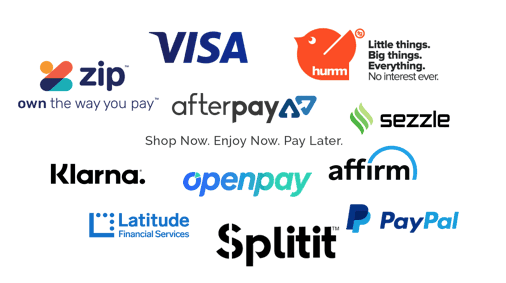
Major BNPL providers operating in Canada
| Provider | Main plan | Late fees | Notes |
|---|---|---|---|
| Afterpay | 4 payments every 2 weeks | $10, plus up to $7 if unpaid after 7 days; capped at 25% of the order, max $68 | No credit check; late payments not reported to bureaus |
| Klarna | Pay in 4 interest-free; longer financing with interest | May apply; check Klarna’s Canadian terms | Longer financing can carry interest |
| Affirm (formerly PayBright) | Pay in 4, or monthly plans of 6 to 60 months | No late fees | Powers Shop Pay Installments for many Shopify stores; monthly plans can carry 0% to about 30% APR |
| Sezzle | 4 payments over 6 weeks | Fees vary; check current terms | Allows a payment reschedule, with the first one typically free |
| PayPal Pay in 4 | 4 payments on purchases of $30 to $1,500 | No late fees | Launched in Canada in late 2025 |
Each provider has different terms, fee structures, and merchant partnerships, and terms change often. What they share is a friction-free checkout designed to help retailers sell more.
Why retailers love BNPL
From the merchant’s perspective, BNPL makes sense. Shoppers who might abandon a $300 cart often complete the purchase when they see “$75 × 4 payments” at checkout. The retailer pays a fee to the BNPL provider, but that cost is offset by higher sales and larger orders.
That matters to you because it explains why BNPL is everywhere. Fashion brands, electronics retailers, and home goods stores all want to capture impulse purchases. Your job is to look past the seamless checkout and understand what you are agreeing to.
What Are the Hidden Costs of BNPL Services in Canada?
The “interest-free” label is accurate for most short-term BNPL plans, but it’s incomplete. The costs fall into several categories that rarely appear in the marketing.
Late payment fees
Some providers charge a flat fee as soon as a payment fails. Afterpay’s Canadian fees are a good example of how quickly they add up:
| Afterpay order | Missed payments | Late fees | Effective cost |
|---|---|---|---|
| $100 (four $25 payments) | 1, paid within 7 days | $10 | $110 |
| $100 | 1, unpaid after 7 days | $17 | $117 |
| $100 | 2 or more | Capped at $25 (25% of order) | $125 |
| $400 | Several | Capped at $68 | $468 |
On a six-week loan, a $17 fee on a $100 purchase is a far higher effective cost than any credit card interest, despite the “0% interest” marketing. Not every provider charges late fees: Affirm and PayPal Pay in 4 say they don’t, but missing payments can still get your account frozen or sent to collections.
The debt stacking problem
This is where BNPL becomes genuinely risky. In Spergel’s March 2026 survey, 46% of Canadian BNPL users said they had more than one plan running at the same time, 56% used BNPL to bridge gaps between paycheques, and 22% had missed or paid late on an instalment.
Consider a realistic scenario:
- Week 1: You buy a $160 jacket (4 × $40 payments).
- Week 3: You buy $200 in electronics (4 × $50 payments).
- Week 5: You buy $120 in skincare products (4 × $30 payments).
By week 6, all three plans overlap. Your bi-weekly BNPL obligation is now $120, roughly $240 a month, on top of rent, bills, and credit card payments. Because each purchase felt small at checkout, the total sneaks up on you.
Account suspension and repayment acceleration
Most providers freeze your account after a missed payment, blocking new purchases until you are caught up. Some agreements also let the provider demand the full remaining balance after a default. If you were counting on spreading a $400 purchase over six weeks, suddenly owing $200 at once can trigger overdrafts or push you onto higher-interest credit.
Currency conversion on foreign purchases
If you buy from a US retailer, the purchase may be priced in US dollars, and conversion charges can apply. PayPal, for example, notes that purchases in other currencies may incur conversion fees. Check the currency at checkout before you split a foreign purchase.
The opportunity cost nobody mentions
When you commit future paycheques to BNPL, you reduce your flexibility. That $240 a month locked into split payments is money that can’t go to your emergency fund or high-interest debt. Canadian households already owed about $1.76 in credit market debt for every $1 of disposable income in Q2 2026, according to Statistics Canada, so adding more payment obligations deserves a hard look.
Pro Tip: Treat every BNPL plan like a bill, not a purchase. The moment you check out, add all four payment dates to your calendar and keep a running total of active plans on one note in your phone. If that total ever exceeds what you could pay off today from your chequing account, stop using BNPL until it’s back to zero.
How Does Buy Now Pay Later Affect Your Credit Score in Canada?
The credit reporting relationship for BNPL is different from traditional credit, and not always in your favour.
What BNPL providers report, and don’t
Most BNPL providers do not report your on-time payments to Equifax or TransUnion. Even if you pay perfectly for years, you are not building credit history. Unlike a credit card, where months of on-time payments help your score, standard BNPL payments typically leave no positive trace.
Missed payments are a different story:
- Account freezes: Missed payments block you from using that BNPL service, though this alone doesn’t affect your bureau score.
- Collections referral: If the balance stays unpaid, the provider may charge it off and send it to a collection agency.
- Collections on your credit report: Collection agencies usually report to the credit bureaus. A collection can drop your score significantly and stays on your Equifax report for six years from the date of first delinquency.
The asymmetry is stark: BNPL offers no credit-building upside but carries real downside. A single collection from a forgotten $80 purchase could hurt your score for years.
Soft checks vs hard checks
| Plan type | Typical credit check | Effect on your score |
|---|---|---|
| Pay in 4 (Afterpay, Klarna, Affirm, Sezzle, PayPal) | None or soft | No effect |
| Affirm monthly plans | Soft to prequalify; hard check when you accept some plans | A hard check can lower your score by a few points temporarily |
| Klarna longer-term financing | May include a credit check | Check before applying |
If you are planning a major credit application, like a mortgage or car loan, in the next 6 to 12 months, avoid opening longer-term financing plans that involve hard inquiries.
The mortgage and loan application wrinkle
When you apply for a mortgage, the lender calculates your debt service ratios based on all your monthly obligations. BNPL payments may not show on your credit report, but lenders often ask for bank statements, where recurring $40 and $50 debits are easy to spot.
A mortgage underwriter who sees multiple BNPL payments may:
- Question how you manage cash flow.
- Count those payments as monthly debt obligations, reducing how much you qualify for.
- Ask you to pay off outstanding BNPL balances before approval.
With the Bank of Canada’s policy rate at 2.25% after its September 2026 hold, borrowing costs still matter for homebuyers. Clear out BNPL plans a few months before you apply for a mortgage.
When Does Using BNPL Actually Make Financial Sense?
BNPL isn’t inherently harmful. Used strategically, it can serve a purpose.
Legitimate use cases
- Large necessary purchases with predictable income: If you need a $600 appliance, have the money coming next month, and splitting it avoids credit card interest, BNPL can save you money.
- Avoiding credit card interest: If the alternative is carrying a balance at about 20% or more, an interest-free BNPL plan is cheaper, as long as you pay on time.
- Planned purchases you’d make anyway: A winter coat in October, split over six weeks, can smooth cash flow without costing extra.
Red flags that you shouldn’t use BNPL
- You’re already juggling another plan. Adding one more compounds the stacking risk.
- It’s an impulse purchase. If you wouldn’t buy it at full price today, BNPL just makes an unwise purchase easier.
- Your income is irregular. Gig workers, freelancers, and seasonal workers face extra risk because payment dates don’t flex with income.
- You’re using it for consumables or essentials. Splitting groceries, a restaurant meal, or concert tickets means you’re still paying after the experience is over, and it can be a sign your budget needs attention.
A better alternative: the sinking fund approach
Instead of splitting payments after a purchase, split them before. Set aside $50 a week in a dedicated savings bucket for planned purchases, and buy outright once you have enough. You pay no fees, face no late charges, and build savings discipline. This approach fits the three-bucket money strategy that helps Canadians organize their paycheques.
If you do use BNPL, follow three rules: use only one plan at a time, set reminders for every payment date, and never use it for purchases you wouldn’t make if the split-payment option didn’t exist.
Comparing Major BNPL Providers for Canadian Shoppers
| Feature | Afterpay | Klarna | Affirm | Sezzle | PayPal Pay in 4 |
|---|---|---|---|---|---|
| Standard plan | 4 payments / 6 weeks | 4 payments / 6 weeks | Pay in 4, or 6 to 60 months | 4 payments / 6 weeks | 4 payments |
| Interest-free option | Yes | Yes | Yes (Pay in 4 and some promos) | Yes | Yes |
| Late fee | $10 + up to $7; cap 25%, max $68 | Check terms | None | Check terms | None |
| Credit check | None | Soft for Pay in 4 | Soft; hard for some monthly plans | Soft | Eligibility check |
| Reports on-time payments | No | Generally no | Generally no | Generally no | Generally no |
| Where you’ll see it | Fashion and lifestyle | Large retailers | Shopify stores via Shop Pay Installments | Smaller online retailers | Anywhere PayPal is accepted |
Terms change often. Confirm current fees and conditions in each provider’s Canadian terms before you buy.
Key differences worth noting
Afterpay has wide recognition in fashion and lifestyle shopping. Its 25% cap and $68 maximum limit late fees, but on small orders the fees are still steep relative to the purchase.
Affirm dominates many Canadian online stores through Shopify. Its Pay in 4 is interest-free with no late fees, but its longer monthly plans can carry interest of up to about 30% APR, higher than most credit cards.
PayPal Pay in 4 is the newest major entrant in Canada and advertises no late fees or sign-up fees, which makes it one of the most forgiving options if you already use PayPal.
Klarna and Sezzle both offer interest-free Pay in 4 plans, with different fee and rescheduling rules. Sezzle lets you reschedule a payment, with the first reschedule typically free.
Key Takeaways
- 46% of Canadian BNPL users had more than one plan running at once in a March 2026 survey, so track every active plan.
- Afterpay’s late fees can reach 25% of an order (up to $68), far more than credit card interest over six weeks.
- Affirm and PayPal Pay in 4 say they charge no late fees, but missed payments can still lead to frozen accounts and collections.
- On-time BNPL payments don’t build credit, but a collection can damage your score for six years.
- Clear BNPL balances before applying for a mortgage, since lenders can see the payments on your bank statements.
- If you wouldn’t buy it at full price today, BNPL is enabling an impulse purchase; skip it.
Frequently Asked Questions
What are the hidden fees with buy now pay later in Canada?
The main costs are late fees (Afterpay charges $10, plus up to $7 more after seven days, capped at 25% of the order), interest on longer-term financing plans (up to about 30% APR at some providers), and possible currency conversion charges on foreign purchases. The “0% interest” label is accurate for short-term plans, but a single missed payment can make the effective cost far higher than credit card interest.
Can buy now pay later affect your credit score in Canada?
Yes, but asymmetrically. Most BNPL providers don’t report on-time payments to Equifax or TransUnion, so you won’t build credit by paying responsibly. If an unpaid balance goes to collections, that can appear on your credit report and lower your score for years. Longer-term plans, such as Affirm’s monthly plans, may involve a hard credit check.
Is Afterpay or Klarna better in Canada in 2026?
It depends on where you shop and how you pay. Afterpay is common at fashion and lifestyle retailers and caps late fees at 25% of the order, up to $68. Klarna offers both Pay in 4 and longer financing at many large retailers. If avoiding late fees matters most, Affirm and PayPal Pay in 4 say they don’t charge them. Choose based on the retailers you use and the provider’s current Canadian terms.
Is BNPL a sign of financial trouble?
Not always, but it can be. If you are using BNPL for groceries, rent, or to bridge gaps between paycheques, it’s a sign your budget is under strain. In Spergel’s 2026 survey, more than half of users said they used BNPL to bridge paycheque gaps. If that sounds familiar, a budget review or a free consultation with a non-profit credit counsellor can help.
Conclusion
Understanding the true costs of buy now pay later in Canada helps you make informed decisions instead of getting swept up by a seamless checkout. The convenience is real, but so are the late fees, stacking risks, and credit consequences that providers don’t emphasize. Use BNPL only for planned purchases you’d make anyway, never stack multiple plans, and always set payment reminders. For more ways to manage cash flow and avoid common money traps, explore our other guides at GetWealthy.
Get free Canadian money tips every week
TFSA updates, CRA changes, mortgage strategies — straight to your inbox every Thursday. No spam, unsubscribe anytime.
The GetWealthy editorial team writes plain-English guides to Canadian personal finance, based on official CRA, FINTRAC and government sources and reviewed every year.
Disclaimer: This article is for informational and educational purposes only and does not constitute financial, tax, or legal advice. BNPL terms and fees change often; confirm current details with each provider. Always consult a qualified financial advisor for personalized advice.