Direct stock investing in Canada is gaining serious traction among young investors who’ve maxed out their TFSAs and RRSPs—but is picking your own stocks actually worth the effort in 2026? Here’s a surprising fact: according to the Fraser Institute’s annual Canadian Consumer Tax Index, the average Canadian family pays more in total taxes than they spend on housing, food, and clothing combined. This is why tax-efficient investing matters as much as investment selection. That means where and how you invest matters just as much as what you invest in. In this guide, you’ll learn whether buying individual stocks makes sense for your situation, how it compares to ETFs, and practical steps to get started without blowing up your portfolio.
What Is Direct Stock Investing in Canada and Who Is It For?
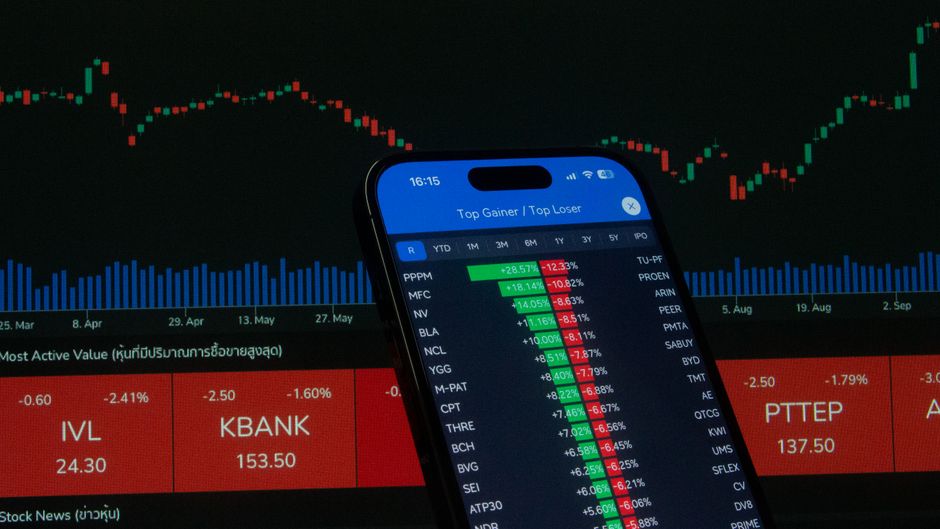
Direct stock investing means buying shares of individual companies—like Shopify, Royal Bank, or Canadian National Railway—rather than purchasing a basket of stocks through an ETF or mutual fund. You’re essentially becoming a part-owner of that specific company, which means you benefit directly from its growth (or suffer from its decline).
The Appeal for Younger Investors
If you’re in your 20s or 30s, you’ve probably already done the “responsible” things: opened a TFSA, maybe started an RRSP, and funnelled money into broad-market ETFs. Now you’re wondering if there’s more upside to be had. The allure of stock market investing as a beginner in Canada often comes down to three things:
- Lower fees: No management expense ratios (MERs) eating into your returns
- Control: You decide exactly which companies you own
- Dividend potential: Many Canadian stocks pay quarterly dividends that can grow over time
With the Bank of Canada maintaining its policy rate at 2.25% as of June 2026, borrowing costs have stabilized, and the economy is growing at a moderate pace. This environment can favour patient stock pickers who focus on quality companies with strong balance sheets.
When Direct Investing Makes Sense
Buying individual stocks in Canada works best when you’ve already built a solid foundation. That means:
- Your TFSA is maxed (up to ~$109,000 lifetime contribution room in 2026)
- You have an emergency fund covering 3-6 months of expenses
- You’re contributing to your RRSP (up to $33,810 for 2026 contributions, based on 18% of your 2025 earned income)
- You have time to research companies—not just scroll Reddit for “hot tips”
If you’re still building your emergency fund versus investing in your TFSA, focus on that first. Direct stock investing should come after your basics are covered.
How Does Buying Individual Stocks Compare to ETFs for Canadian Investors?
This is the question every beginner grapples with: should I buy individual stocks Canada-style, or stick with the simplicity of ETFs? Both approaches have their place, and understanding the trade-offs will help you make a smarter decision.
The Case for ETFs
ETFs bundle dozens or hundreds of stocks into a single purchase. A Canadian equity ETF like XIU (tracking the TSX 60) gives you instant exposure to Canada’s largest companies. You get diversification on day one, and you don’t need to analyze balance sheets or earnings reports.
For most beginners, this is the right starting point. You’re essentially betting on the Canadian (or global) economy rather than any single company. If one stock tanks, it barely dents your portfolio.
The Case for Individual Stocks
When you buy individual stocks, you’re making a concentrated bet. If you pick winners, your returns can crush the index. If you pick losers… well, you’ll learn expensive lessons.
The key advantage is control. You can:
- Overweight sectors you believe in (like Canadian banks or energy)
- Avoid companies that don’t align with your values
- Build a dividend portfolio tailored to your income needs
- Harvest tax losses strategically in non-registered accounts
For investors curious about different approaches, understanding growth vs value investing on the TSX can help clarify which style suits your personality.
ETF vs Individual Stocks Canada: A Side-by-Side Comparison

Let’s break down the practical differences between these two approaches. This table compares key factors that matter most to Canadian investors in 2026:
| Feature | Individual Stocks | ETFs |
|---|---|---|
| Management Fees | $0 (no MER) | 0.03% – 0.75% annually |
| Diversification | Limited (you must build it yourself) | Instant (dozens to thousands of holdings) |
| Time Required | 5-10+ hours/week for research | 1-2 hours/month for rebalancing |
| Control Over Holdings | Complete control | No control (fund manager decides) |
| Minimum Investment | Price of 1 share (or fractional shares) | Price of 1 unit (typically $20-$100) |
| Dividend Flexibility | Choose high-yield or growth stocks | Fixed yield based on underlying holdings |
| Emotional Difficulty | High (watching single stocks drop is painful) | Lower (diversification smooths volatility) |
| Tax-Loss Harvesting | Easy to sell specific losers | Limited (must sell entire position) |
The bottom line? ETFs win on simplicity and time savings. Individual stocks win on fees and control. Many successful Canadian investors use both—ETFs for their core holdings and individual stocks for a smaller “satellite” portion of their portfolio.
How to Start Buying Individual Stocks in Canada: A Step-by-Step Guide
Ready to dip your toes into direct stock investing? Here’s exactly how to get started without making rookie mistakes.
Step 1: Choose a Discount Brokerage
You’ll need a brokerage account to buy stocks. In Canada, popular options include:
- Wealthsimple Trade: Commission-free for Canadian stocks, beginner-friendly app
- Questrade: Low commissions, good for active traders
- TD Direct Investing: Full-service option with strong research tools
- RBC Direct Investing: Integrated with RBC banking, solid for dividend reinvestment
- BMO InvestorLine: Good for BMO customers, competitive pricing
Most brokerages let you open a TFSA, RRSP, or non-registered account. If you have contribution room, always prioritize your TFSA first—your gains grow completely tax-free.
Step 2: Decide on Your Stock Allocation
Don’t go all-in on individual stocks right away. A sensible approach for beginners:
- Core (70-80%): Broad-market ETFs for stability
- Satellite (20-30%): Individual stocks you’ve researched thoroughly
This way, even if your stock picks underperform, your overall portfolio stays healthy. As you gain experience and confidence, you can adjust these percentages.
Step 3: Research Before You Buy
Never buy a stock because someone on social media said it’s going to moon. Instead, look at:
- Revenue and earnings growth: Is the company actually making more money each year?
- Debt levels: Can the company survive an economic downturn?
- Dividend history: Has the company consistently paid (and raised) dividends?
- Competitive moat: What stops competitors from stealing market share?
- Valuation: Is the stock price reasonable compared to earnings?
Canadian banks (RBC, TD, BMO, Scotiabank, CIBC) are popular picks for dividend investors because of their long track records of consistent payouts. But even “safe” stocks can drop 30-40% during recessions, so never invest money you’ll need within the next five years.
💡 Pro Tip: SEDAR+ (sedarplus.ca) is the Canadian equivalent of the SEC’s EDGAR database. Every publicly traded Canadian company files its financial statements, MD&A (Management Discussion & Analysis), and annual information forms here — for free. This is your primary source of truth, far more reliable than any financial news article or analyst note.
Step 4: Place Your First Trade
Once you’ve done your research, placing a trade is straightforward:
- Log into your brokerage account
- Search for the stock by ticker symbol (e.g., RY for Royal Bank)
- Choose “Buy” and enter the number of shares
- Select “Market order” (executes immediately at current price) or “Limit order” (executes only at your specified price)
- Review and confirm
Start small. There’s no rule saying you need to buy 100 shares. Even 5-10 shares of a company lets you learn how stock ownership feels emotionally.
Common Mistakes When Buying Individual Stocks in Canada
Learning from others’ errors can save you thousands of dollars. Here are the traps that catch most beginner investors.
Mistake #1: Ignoring Tax Implications
Where you hold your stocks matters enormously. Canadian dividends receive favourable tax treatment in non-registered accounts (thanks to the dividend tax credit), but US dividends get hit with a 15% withholding tax—even in your TFSA.
A smart approach:
- TFSA: Canadian dividend stocks and growth stocks
- RRSP: US dividend stocks (withholding tax is waived)
- Non-registered: Canadian dividend stocks (for the tax credit)
Taking time to understand TFSA vs RRSP strategies will help you maximize your after-tax returns.
💡 Pro Tip: Before buying any U.S.-listed stock in your TFSA, run this quick check: does the company pay a regular dividend? If yes, hold it in your RRSP instead. Growth stocks that pay no dividends (Shopify, Amazon) lose nothing to withholding tax in a TFSA. Dividend payers (Apple, Microsoft, Coca-Cola) should go in your RRSP to protect the full yield.
Mistake #2: Overconcentration in One Stock or Sector
Canadians love their bank stocks—and for good reason. But if 80% of your portfolio is in financials, you’re exposed to massive risk if the banking sector hits turbulence. Aim to hold at least 15-20 individual stocks across different sectors if you’re building a stock-only portfolio.
Mistake #3: Panic Selling During Downturns
When your stock drops 25%, every instinct screams “SELL!” But selling locks in your loss. Unless the fundamental reason you bought the stock has changed, volatility is just noise. The investors who build wealth are the ones who stay calm and even buy more during downturns.
Mistake #4: Chasing Yield Without Checking Sustainability
A 10% dividend yield looks amazing—until the company cuts the dividend and the stock price crashes. Always check the payout ratio (dividends paid ÷ earnings). A ratio above 80-90% for non-REITs is a warning sign.
💡 Pro Tip: For Canadian REIT investors, the “safe” payout ratio threshold is different from regular companies. REITs use AFFO (Adjusted Funds From Operations) rather than earnings as their baseline. A REIT with a 90% payout ratio relative to AFFO is often healthy, while a 90% payout ratio for a manufacturing company is a serious red flag. Compare apples to apples by sector.
Mistake #5: Forgetting About Alternative Options
Direct stock investing isn’t your only choice for putting money to work. As of January 2026, competitive GIC rates range from 3.00-3.65% for 1-year terms and 3.75-3.80% for 5-year terms. With inflation at approximately 2.8% (April 2026) and expected to hover near 3% before gradually easing toward the BoC’s 2% target, GIC real returns are modest but positive for risk-averse investors. For money you’ll need within 1-3 years, GICs at EQ Bank or other online institutions might beat a volatile stock portfolio.
Key Takeaways
- Direct stock investing in Canada works best after you’ve maxed your TFSA ($7,000 annual limit in 2026) and built an emergency fund
- Individual stocks charge no MER fees, but require 5-10+ hours weekly of research to do properly
- A hybrid approach—70-80% ETFs and 20-30% individual stocks—balances simplicity with opportunity
- Tax placement matters: hold Canadian dividend stocks in your TFSA or non-registered account, US stocks in your RRSP
- GICs offering 3.40-3.80% in 2026 provide a risk-free alternative for shorter time horizons
- Avoid overconcentration—diversify across at least 15-20 stocks and multiple sectors
Frequently Asked Questions
How much money do I need to start buying stocks in Canada?
You can start buying stocks in Canada with as little as $1 if your brokerage offers fractional shares, or the price of a single share (often $20-$150 for popular Canadian stocks). However, most experts recommend having at least $1,000-$5,000 to build a small diversified portfolio. More importantly, you should only invest money you won’t need for at least five years, after you’ve established an emergency fund.
How do I avoid wash-sale rules when tax-loss harvesting in Canada?
Good news: Canada doesn’t have an explicit “wash-sale rule” like the U.S. However, the CRA has a “superficial loss” rule — if you sell a stock at a loss and repurchase the same or identical security within 30 days (before or after the sale), the loss is denied and added to the adjusted cost base (ACB) of the repurchased shares. To claim the loss, you must wait 31 days before rebuying, or purchase a similar-but-not-identical ETF (e.g., sell XIU and buy ZCN) to maintain market exposure without triggering the rule.
Can beginners beat the market picking individual stocks?
Most beginners cannot consistently beat the market picking individual stocks. Studies show that even professional fund managers underperform their benchmark indexes more than 80% of the time over 10+ year periods. As a beginner, you’re competing against algorithms, institutional investors, and analysts who research stocks full-time. A more realistic goal is learning to match the market while avoiding major mistakes, then gradually developing your skills over years of practice.
Should I buy stocks or ETFs as a new Canadian investor?
As a new Canadian investor, you should start with ETFs for your core portfolio and consider adding individual stocks later as a smaller “satellite” position. ETFs provide instant diversification, require minimal research time, and protect you from the devastating impact of any single company failing. Once you’ve built investing experience and have time to commit to research, allocating 10-30% of your portfolio to individual stocks you’ve thoroughly analyzed can make sense.
Direct stock investing in Canada can be a rewarding way to build wealth in 2026—but it’s not a shortcut to riches. The investors who succeed are those who combine patience, research, and realistic expectations. For most young Canadians, a hybrid approach using ETFs as a foundation and individual stocks as a complement offers the best balance of growth potential and risk management. Ready to take the next step? Explore more investing guides on Getwealthy to build your financial knowledge and confidence.
Get free Canadian money tips every week
TFSA updates, CRA changes, mortgage strategies — straight to your inbox every Thursday. No spam, unsubscribe anytime.
Certified Financial Planner (CFP) and Chartered Investment Manager (CIM) with over 17 years of experience in Canadian personal finance. Spent 10+ years at one of Canada's Big Five banks, the last 7 focused exclusively on high-net-worth clients. Every guide is written with the same depth I bring to real client work — Canada-specific, CRA-verified, and always free.
Disclaimer: This article is for informational and educational purposes only and does not constitute financial, tax, or legal advice. Always consult a qualified financial advisor or tax professional for personalized advice.