EQ Bank vs Tangerine: two of Canada’s most popular online banks — but in 2026, one consistently pays Canadians more interest on their savings. Here’s exactly which one wins, and when. Here’s a surprising stat: the average Canadian loses over $500 per year in potential interest by keeping their money in a Big Five bank savings account paying just 0.01%. Both EQ Bank and Tangerine offer dramatically better rates—but which one actually deserves your deposits in 2026? In this complete comparison, you’ll discover the real interest rate differences, account features, safety considerations, and which bank wins for different financial goals.
EQ Bank vs Tangerine: Key Differences in 2026
Both EQ Bank and Tangerine have disrupted traditional Canadian banking by eliminating physical branches and passing those savings directly to customers through higher interest rates and lower fees. But despite both being “online banks,” they operate quite differently and serve distinct customer needs.
EQ Bank: The Interest Rate Powerhouse
EQ Bank, owned by Equitable Bank, has built its reputation on consistently offering some of the highest savings rates in Canada. In 2026, their flagship Savings Plus Account continues to attract rate-chasers with competitive everyday interest—no promotional gimmicks or hoops to jump through. You earn the posted rate on every dollar from day one.
EQ Bank also offers registered accounts including TFSAs, RRSPs, and FHSAs. With the TFSA contribution limit at $7,000 for 2026 (bringing the cumulative lifetime room to approximately $102,000 for those eligible since 2009), maximizing your tax-free growth with a high-interest account makes a real difference. Similarly, their FHSA offering lets first-time homebuyers earn competitive interest on their $8,000 annual contributions while saving for a down payment.

Tangerine: The Full-Service Digital Bank
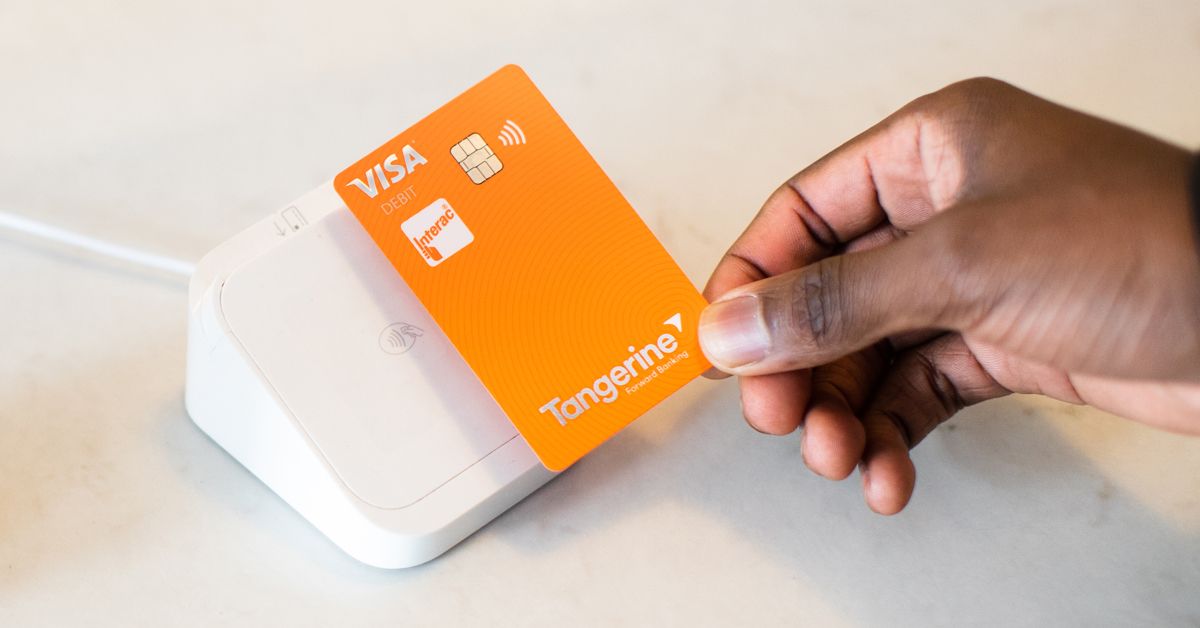
Tangerine, owned by Scotiabank since 2012, positions itself as a complete banking alternative rather than just a savings account provider. Beyond savings, Tangerine offers chequing accounts, credit cards, mortgages, investment accounts, and even GICs—all under one digital roof.
This full-service approach appeals to Canadians who want to consolidate their banking relationship. Their Tangerine savings account rates typically feature promotional offers for new clients or on new deposits, which can be highly competitive for the first few months before reverting to a lower standard rate.
Does EQ Bank Have Higher Interest Rates Than Tangerine for Everyday Savings?
Let’s cut straight to what matters most for savers: the actual interest you’ll earn. In 2026, EQ Bank generally maintains the edge for everyday savings rates, though the gap fluctuates throughout the year.
Everyday Savings Rates Compared
EQ Bank’s Savings Plus Account currently offers a flat rate on all balances with no minimum deposit requirements. There are no tiers, no promotional periods, and no conditions—you simply earn the advertised rate immediately. This transparency makes it easy to calculate exactly how much interest you’ll earn.
Tangerine’s approach differs significantly. Their standard everyday savings rate tends to sit lower than EQ Bank’s, but they frequently run promotional campaigns offering bonus rates for 5-6 months on new deposits. If you’re willing to chase these promotions (and remember to move your money when they expire), you can sometimes beat EQ Bank’s rate temporarily. However, many Canadians forget to act when promotional periods end, losing the rate advantage.
TFSA and RRSP Rate Differences
For registered accounts, EQ Bank has consistently offered higher rates on TFSA and RRSP savings accounts. If you’re working toward your $7,000 TFSA contribution for 2026 or maximizing your RRSP room (up to 18% of earned income, capped at $32,490 for 2025 tax year), the interest rate differential compounds meaningfully over time.
Consider this: a $50,000 TFSA balance earning 1% more annually generates an extra $500 in completely tax-free income. Over a decade, that’s $5,000+ in additional growth before compounding. For a detailed breakdown of maximizing these registered accounts, check out our guide on TFSA strategies for Canadian savers.
EQ Bank vs Tangerine Canada: Complete Feature Comparison
Beyond interest rates, these banks differ substantially in their feature sets. This comparison table breaks down the key differences that matter for everyday banking in 2026.
| Feature | EQ Bank | Tangerine |
|---|---|---|
| Everyday Savings Rate | Higher flat rate, no conditions | Lower base rate, frequent promos |
| Chequing Account | Yes, with interest earned | Yes, no monthly fees |
| Credit Cards | No | Yes, cashback and rewards options |
| TFSA Savings Account | Yes, competitive rate | Yes, lower standard rate |
| FHSA | Yes | Yes |
| GICs | Yes, various terms | Yes, various terms |
| Mortgages | Yes | Yes |
| ATM Access | THE EXCHANGE Network (free) | Scotiabank ATMs (free) |
| Joint Accounts | Yes | Yes |
| Mobile App Rating | Highly rated | Highly rated |
| Parent Company | Equitable Bank | Scotiabank |
The table reveals a key distinction: Tangerine functions as a complete banking replacement, while EQ Bank excels specifically at savings and basic banking. If you want credit cards, investment accounts, and a mortgage all in one place, Tangerine offers that convenience. If maximizing your savings rate is the priority, EQ Bank typically wins.
How to Choose Between EQ Bank and Tangerine for Your Savings Goals
Selecting the right online bank depends entirely on your specific financial situation and priorities. Here’s a step-by-step approach to making the right choice.
Step 1: Identify Your Primary Banking Need
Ask yourself: do you need a complete banking relationship or specifically a high-yield savings account? If you’re happy with your current chequing account and credit cards at another institution (perhaps TD, RBC, BMO, or CIBC), EQ Bank makes an excellent savings-only companion. You can link external accounts easily and transfer money in when you want to earn higher interest.
If you prefer having everything in one app with one login, Tangerine’s ecosystem provides that simplicity. You can set up your paycheque deposit, pay bills, use their credit card, and save—all without logging into multiple banks.
Step 2: Calculate the Actual Dollar Difference
Don’t choose based on rates alone without doing the math for your balance. A 0.5% rate difference on a $10,000 emergency fund equals just $50 per year. That’s meaningful but perhaps not worth the hassle of maintaining another banking relationship. However, on a $75,000 balance, that same 0.5% gap becomes $375 annually—enough to cover a nice dinner out every month.
For those building their FHSA toward the $40,000 lifetime contribution limit, or maximizing RRSP contributions for retirement, these rate differences compound dramatically over decades.
Step 3: Consider Your Banking Habits
Do you frequently need cash? Tangerine’s access to Scotiabank’s extensive ATM network across Canada provides more convenient withdrawal options in most cities. EQ Bank uses THE EXCHANGE Network, which has solid coverage but fewer total locations. If you rarely use cash (increasingly common in 2026), this difference becomes irrelevant.
For more on building your complete banking strategy, explore our comparison of the best high-interest savings accounts in Canada.
Common Mistakes When Choosing Between EQ Bank and Tangerine
After reviewing thousands of reader questions about online banking, certain mistakes appear repeatedly. Avoid these pitfalls when making your decision.
Chasing Promotional Rates Without a System
Tangerine’s promotional rates genuinely beat EQ Bank’s everyday rate—but only temporarily. The mistake isn’t taking advantage of these promotions; it’s forgetting to act when they expire. If you choose Tangerine specifically for a promotional rate, set a calendar reminder for one week before it ends. Either another promotion will appear, or you should consider moving your funds to a higher-rate alternative.
Many Canadians leave tens of thousands sitting at Tangerine’s base rate for years, unaware they’re earning significantly less than they could elsewhere. This passive approach costs real money.
Ignoring the Convenience Factor
The “best” bank is the one you’ll actually use consistently. If opening an EQ Bank account for a slightly higher rate means you never get around to transferring money there, you’ve gained nothing. Sometimes the modest rate sacrifice for having everything in one place at Tangerine actually results in better savings behaviour because you’ll contribute more consistently.
Overlooking Customer Service Quality
Both banks handle customer service primarily through phone, email, and chat rather than in-person branches. However, response times and issue resolution can vary. Before committing significant deposits, consider opening a small account first to test their service. Try reaching support with a question and evaluate their responsiveness.
Forgetting About CDIC Insurance Limits
Both EQ Bank and Tangerine are members of the Canada Deposit Insurance Corporation (CDIC). Your eligible deposits are protected up to $100,000 per deposit category. If you’re fortunate enough to have savings exceeding these limits, you’ll need to split deposits across institutions or categories for full protection. This safety net applies equally to both banks.
Key Takeaways
- EQ Bank typically offers higher everyday savings rates without promotional conditions—ideal for rate-focused savers with significant balances.
- Tangerine provides a complete banking ecosystem with chequing, savings, credit cards, and mortgages under one roof, plus access to Scotiabank ATMs.
- Both banks offer registered accounts (TFSA, RRSP, FHSA), but EQ Bank’s rates on these tax-sheltered accounts tend to be more competitive—critical when maximizing your $7,000 TFSA limit for 2026.
- Tangerine’s promotional rates can temporarily beat EQ Bank, but require active management to maintain the advantage.
- Both banks are CDIC-insured up to $100,000 per category, providing equal protection for your deposits.
- The best choice depends on your priorities: maximum interest (EQ Bank) versus all-in-one convenience (Tangerine).
Frequently Asked Questions
Is EQ Bank or Tangerine better for savings in Canada?
EQ Bank is generally better for savings if your priority is maximizing interest earned. Their everyday savings rates consistently rank among the highest in Canada, with no conditions or promotional gimmicks. However, Tangerine is better if you want a complete banking relationship including credit cards, mortgages, and Scotiabank ATM access alongside your savings account.
Does EQ Bank have higher interest rates than Tangerine in 2026?
Yes, EQ Bank’s standard everyday savings rate is typically higher than Tangerine’s base rate in 2026. Tangerine sometimes matches or exceeds EQ Bank through limited-time promotional offers, but these revert to a lower standard rate after the promotional period ends. For consistent, predictable high interest without needing to chase promotions, EQ Bank has the advantage.
Are EQ Bank and Tangerine safe banks in Canada?
Yes, both EQ Bank and Tangerine are federally regulated and insured by the Canada Deposit Insurance Corporation (CDIC). Your eligible deposits at each institution are protected up to $100,000 per insured category. Tangerine is owned by Scotiabank, one of Canada’s Big Five banks, while EQ Bank is the digital arm of Equitable Bank, a Schedule I Canadian bank regulated by the Office of the Superintendent of Financial Institutions (OSFI).
When comparing EQ Bank vs Tangerine Canada, there’s no universal winner—only the right fit for your specific needs. EQ Bank delivers on its promise of higher everyday interest rates for serious savers, while Tangerine offers unmatched convenience for Canadians wanting a complete digital banking solution. For most savers focused on maximizing returns in 2026, EQ Bank earns the slight edge—but using both strategically can capture the best of both worlds. Explore more comparisons and strategies on Getwealthy to optimize every dollar you save.
Get free Canadian money tips every week
TFSA updates, CRA changes, mortgage strategies — straight to your inbox every Thursday. No spam, unsubscribe anytime.
Certified Financial Planner (CFP) and Chartered Investment Manager (CIM) with over 17 years of experience in Canadian personal finance. Spent 10+ years at one of Canada's Big Five banks, the last 7 focused exclusively on high-net-worth clients. Every guide is written with the same depth I bring to real client work — Canada-specific, CRA-verified, and always free.
Disclaimer: This article is for informational and educational purposes only and does not constitute financial, tax, or legal advice. Interest rates and account features change frequently; verify current rates directly with each bank before making decisions. Always consult a qualified financial advisor or tax professional for personalized advice.