Picture this: you’ve just finished converting your basement into a bright one-bedroom suite, and your first tenant moves in next month paying $1,800 per month. You’re excited about the extra income — until a friend mentions something about GST/HST on rent. Suddenly you’re wondering: do I need to charge tax on this? Understanding GST HST basement rental Canada rules is one of the most common areas of confusion for new landlords, and getting it wrong can trigger unexpected CRA attention. In this guide, you’ll learn exactly when GST/HST applies to residential rent, what exemptions protect most basement landlords, and how to report your rental income correctly in 2026.
Quick Answer:
- Long-term residential basement rent (one month or longer) is generally exempt from GST/HST — you don’t charge it to tenants, and you don’t remit it to CRA
- Short-term rentals under 30 days (like Airbnb) usually require GST/HST collection once you exceed $30,000 in annual revenue
- Your rental income is still taxable as income on your personal tax return, even though it’s GST/HST-exempt
- Mixing short-term and long-term rentals in the same property creates complex “change in use” tax rules you need to track carefully
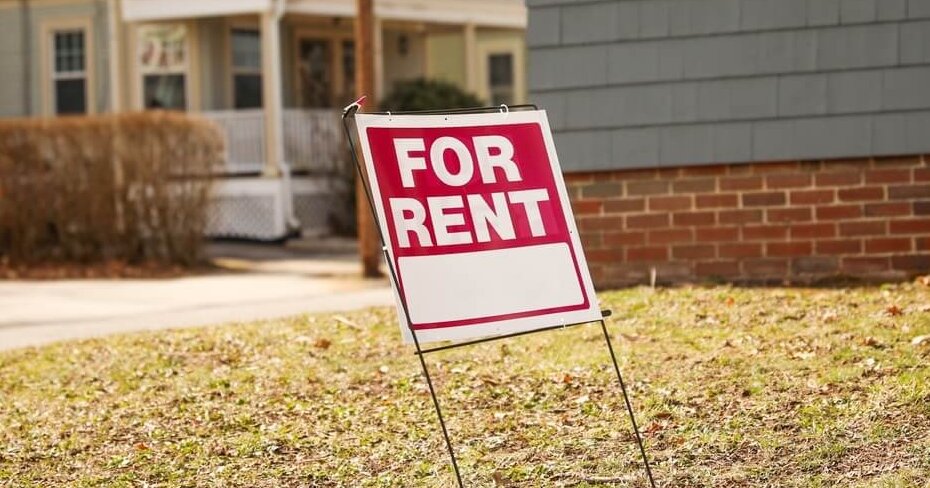
Do I Charge HST on Basement Rent? Understanding the GST HST Basement Rental Canada Exemption
Here’s the good news most Canadian landlords need to hear: if you’re renting your basement suite to a tenant on a lease of one month or longer, you almost certainly don’t need to charge GST/HST on the rent. This is called the residential rental exemption, and it’s one of the most valuable — but least understood — tax rules for property owners.
Why Long-Term Residential Rent Is GST/HST-Exempt
Under Canadian tax law, long-term residential rent is classified as an “exempt supply.” This means the rental isn’t subject to the 5% federal GST (or combined HST in provinces like Ontario at 13% or the Atlantic provinces at 15%). You don’t add tax to the rent you collect from your tenant, and you don’t need to register for a GST/HST account just because you’re a landlord.
According to current CRA guidance, this exemption applies when you rent a residential unit for periods of one continuous month or more. Your basement suite qualifies as long as it’s being used as a place to live — not as a commercial space or vacation rental.
What “Exempt” Really Means for Your Wallet
There’s an important trade-off with exempt supplies. Because you’re not collecting GST/HST, you also can’t claim Input Tax Credits (ITCs) on the GST/HST you pay for expenses related to that rental property. For example, if you pay HST on repairs, property management fees, or new appliances for your basement suite, you can’t recover that tax through ITCs.
However, you can still deduct these expenses (before tax) against your rental income on your personal tax return. So while you don’t get the GST/HST portion back directly, you do reduce your taxable rental income — which lowers your overall tax bill.
When Does GST/HST Apply to Basement Suite Tax Rules Canada?
Not every basement rental situation qualifies for the exemption. There are specific scenarios where you may need to register for GST/HST and charge it on your rental income. Understanding these exceptions is critical if you want to avoid a surprise CRA reassessment.
Short-Term Rentals (Under 30 Days)
If you’re renting your basement on platforms like Airbnb, VRBO, or other short-term rental sites, the rules change significantly. Rentals of less than one continuous month are generally considered taxable supplies, not exempt ones.
Once your total taxable revenues from all your business activities exceed $30,000 in a single calendar quarter or over four consecutive quarters, you become a mandatory GST/HST registrant. At that point, you must charge GST/HST on each short-term rental booking and remit it to CRA.
For example, if your basement Airbnb brings in $2,500 per month and you also have a side consulting business earning $1,000 monthly, you’d hit the $30,000 threshold within about nine months. Once you cross that line, registration is mandatory — not optional.
Commercial Rentals
If your basement isn’t being used as someone’s residence — say you’re renting it as office space to a small business — the residential exemption doesn’t apply. Commercial rent is a taxable supply, and you’ll need to charge GST/HST once you exceed the $30,000 small supplier threshold.
New Builds and Substantial Renovations
There’s one situation where GST/HST intersects with long-term residential rentals: when you’ve built a new rental property or substantially renovated an existing one. In these cases, you may trigger a “deemed sale” for GST/HST purposes even though you’re renting the property rather than selling it.
However, the GST/HST New Residential Rental Property (NRRP) Rebate can help offset this. To be eligible for the federal portion of the NRRP rebate, the fair market value of the qualifying residential unit must be under $450,000 when the tax becomes payable — this is confirmed directly on CRA’s official NRRP rebate page. The federal rebate portion phases out gradually between $350,000 and $450,000 fair market value, reaching zero at $450,000. Larger purpose-built rental developments (at least four self-contained units) may qualify for an enhanced 100% rebate with no phase-out under newer rules — though this typically doesn’t apply to a single basement suite conversion.
GST HST Basement Rental Canada: Long-Term vs Short-Term Comparison
To help you see the differences at a glance, here’s a comparison of how GST/HST rules apply to long-term basement rentals versus short-term vacation rentals in Canada for 2026:
| Feature | Long-Term Rental (1+ Month) | Short-Term Rental (Under 30 Days) |
|---|---|---|
| GST/HST on Rent | Exempt — don’t charge tenants | Taxable once over $30,000/year revenue |
| GST/HST Registration Required | No (for residential rent alone) | Yes, if over $30,000 threshold |
| Can Claim Input Tax Credits | No — exempt supplies don’t qualify | Yes — can recover GST/HST on expenses |
| Rental Income Taxable | Yes — report on T776 | Yes — report on T776 or T2125 |
| Platform Examples | Traditional lease, Rentals.ca, Kijiji | Airbnb, VRBO, Booking.com |
| CRA Audit Risk Level | Lower (straightforward rules) | Higher (complex GST/HST and change-in-use) |
As you can see, the distinction between renting for 30 days or longer versus shorter periods creates completely different tax obligations. If you’re considering switching between models — or doing both — you need to track your revenues and days carefully.
What Is the GST HST Exemption for Residential Rent in 2026?
Let’s dig deeper into exactly what qualifies for the residential rental GST exemption 2026 and how CRA defines the key terms.
The “One Month” Rule Explained
For your rental to be exempt, the tenant must have continuous occupancy rights for at least one month. This doesn’t mean they have to stay the full month — it means the lease or rental agreement must grant them the right to occupy for that period.
A month-to-month tenancy qualifies. A six-month lease qualifies. Even a furnished rental qualifies, as long as the continuous period is 30 days or more. What doesn’t qualify is a nightly or weekly vacation rental where guests book for shorter stays.
Residential Use Is Required
The unit must be used as a place of residence. If your tenant is running a business out of your basement suite as their primary use of the space (not just occasional work-from-home), you may have a commercial rental situation, which changes the GST/HST treatment.
However, a tenant who works from home while living in your basement suite still qualifies for the exemption — the residential use is primary.
What About Parking, Laundry, and Other Add-Ons?
If you include parking, storage, or laundry as part of the residential rent, these are generally bundled into the exempt supply. You don’t need to charge GST/HST separately on a parking spot that’s included with a long-term basement rental.
However, if you charge separately for these services to non-tenants — like renting your driveway spot to a neighbour — that income may be taxable. The key is whether the service is part of an integrated residential rental or a standalone transaction.
How to Report Basement Rental Income on Your Taxes: Step-by-Step
Even though your long-term basement rental is GST/HST-exempt, you absolutely must report the rental income on your personal tax return. Here’s how to do it correctly for the 2026 tax year.
Step 1: Track All Income and Expenses Throughout the Year
Keep records of every rent payment you receive and every expense you pay. This includes mortgage interest (not principal), property taxes, insurance, utilities (if you pay them), repairs, maintenance, advertising, and professional fees.
Use a spreadsheet, accounting software like Wave (free), or even a dedicated rental property app. The CRA requires you to keep these records for at least six years after the tax year in question. If you’re ever audited, organized records are your best defense.
Step 2: Complete Form T776 (Statement of Real Estate Rentals)
When you file your tax return, you’ll report your basement rental income and expenses on Form T776. This form calculates your net rental income (or loss), which then flows to your T1 return.
On the T776, you’ll list:
- Your share of the rental income (if you co-own the property)
- Deductible expenses like repairs, property management, and utilities
- Capital cost allowance (CCA) if you choose to claim depreciation
Important: claiming CCA on a rental property can trigger recapture when you sell, so many landlords skip this deduction. Consult a tax professional before claiming it.
Step 3: Calculate Your Net Rental Income
Your net rental income is simply your gross rent collected minus your eligible expenses. If you earned $21,600 in basement rent ($1,800 × 12 months) and had $8,000 in deductible expenses, your net rental income would be $13,600.
This $13,600 gets added to your other income for the year and taxed at your marginal rate. For 2026, confirmed federal tax brackets are:
- 14% on income up to $58,523
- 20.5% on income between $58,523 and $117,045
- 26% on income between $117,045 and $181,440
- 29% on income between $181,440 and $258,482
- 33% on income over $258,482
Provincial taxes add to this, varying by province.
Step 4: Make Installment Payments If Required
If your rental income (combined with other sources) means you’ll owe more than $3,000 in federal tax this year (or $1,800 in Quebec), CRA may require quarterly installment payments. Missing installments triggers interest charges, so if you’re earning significant rental income, budget for this.

Mixing Short-Term and Long-Term Rentals: The “Change in Use” Trap
Many Canadian homeowners start with a long-term tenant, then consider switching to Airbnb during peak tourist season or when the tenant moves out. This flexibility sounds great — but it creates one of the most complex tax situations for basement landlords.
What Is a Change in Use?
When you switch a property from exempt use (long-term residential) to taxable use (short-term rental), CRA treats this as a “change in use” for GST/HST purposes. The same applies in reverse. Each change can trigger deemed dispositions, fair market value calculations, and potential GST/HST obligations.
For example, if you rented your basement long-term for three years, then start listing it on Airbnb, you may need to calculate the fair market value at the time of the switch and potentially self-assess GST/HST on the property’s value allocated to the rental portion.
Why This Catches Landlords Off Guard
Most homeowners don’t realize they’ve created a taxable situation until they receive a CRA notice or work with an accountant at tax time. The rules are genuinely complex, and CRA has been increasing scrutiny on short-term rental operators — especially those who haven’t been collecting and remitting GST/HST.
If you’re receiving payments through e-transfers for your rental — whether short or long-term — it’s worth understanding how the CRA tracks e-transfer patterns and what it means for your tax situation.
How to Protect Yourself
If you plan to mix rental types, document each period carefully: when was the property used for long-term rental, and when was it on Airbnb? Keep records of fair market value estimates at transition points. And strongly consider working with a CPA who specializes in rental property taxation — the cost is usually far less than the potential penalties and interest from getting it wrong.
Common GST/HST Mistakes Canadian Basement Landlords Make
Even with the exemption protecting most long-term landlords, there are several mistakes that can create problems with CRA or cost you money.
Mistake #1: Assuming All Rental Income Is Tax-Free
Some new landlords confuse “GST/HST-exempt” with “income-tax-free.” They’re completely different things. Your basement rental income is absolutely taxable as income — it just doesn’t require you to charge GST/HST to your tenant. You still need to report every dollar of rent on your T776.
Mistake #2: Not Tracking Expenses Properly
If you can’t prove your expenses, you can’t deduct them. Keep receipts for everything: that $200 plumber visit, the $1,500 new water heater, the $75/month you pay for the tenant’s portion of internet. Digital copies (photos or scans) are perfectly acceptable — just make sure they’re backed up.
Mistake #3: Incorrectly Splitting Expenses Between Personal and Rental Use
If you live in the main house and rent the basement, you can only deduct the portion of expenses attributable to the rental. If your basement represents 30% of the home’s total square footage, you can generally deduct 30% of shared expenses like property tax, home insurance, and utilities.
CRA auditors look closely at these allocations. Using a reasonable, consistent method (square footage is most common) and documenting it protects you if questions arise.
Mistake #4: Forgetting About Capital Gains Implications
When you eventually sell your home, the portion that was rented out may not be fully covered by the principal residence exemption. This can trigger capital gains tax on the basement’s share of any appreciation. The rules are complex, but understanding them early helps you plan.
Mistake #5: Not Registering for GST/HST When Required
If you’re doing short-term rentals and you cross the $30,000 threshold, you must register and start charging GST/HST. CRA can reassess you for uncollected tax, and you’d owe that money out of your own pocket — since you didn’t collect it from guests. The penalty for not registering can be substantial.
Key Takeaways
- Long-term basement rentals (one month or more) are GST/HST-exempt in Canada — you don’t charge tax on rent collected from residential tenants
- Short-term rentals under 30 days are taxable, and you must register for GST/HST once your revenues exceed $30,000 annually
- Your rental income is still fully taxable as personal income — report it on Form T776 and pay tax at your marginal rate (starting at 14% federally in 2026, rising to 33% above $258,482)
- The GST/HST NRRP rebate may help if you’ve built or substantially renovated a rental property with a fair market value under $450,000 — confirmed directly via CRA
- Switching between long-term and short-term rentals triggers complex “change in use” rules — document everything and consider professional tax advice
- Keep records of all rental income and expenses for at least six years to protect yourself in case of a CRA audit
Frequently Asked Questions
Is basement rental income taxable in Canada?
Yes, basement rental income is fully taxable as personal income in Canada. You must report all rent you receive on Form T776 (Statement of Real Estate Rentals) when filing your annual tax return. The net rental income — after deducting eligible expenses — is added to your other income and taxed at your marginal rate. For 2026, confirmed federal rates range from 14% on the first $58,523 of taxable income up to 33% on income over $258,482, plus provincial taxes on top.
What is the GST HST exemption for residential rent?
The GST/HST exemption for residential rent means that long-term residential rentals (one continuous month or longer) are exempt from GST/HST in Canada. As a landlord, you don’t charge your tenant GST/HST on their monthly rent, and you don’t need to register for a GST/HST account based solely on long-term rental income. However, this exemption doesn’t apply to short-term rentals under 30 days, which are generally taxable supplies once you exceed $30,000 in annual revenue.
How do I report basement rental income on my taxes?
Report your basement rental income by completing Form T776 (Statement of Real Estate Rentals) and including it with your T1 personal tax return. On this form, you’ll list your total rental income, deductible expenses (such as property taxes, insurance, utilities, repairs, and mortgage interest), and calculate your net rental income or loss. If you co-own the property, report only your share. Keep all receipts and records for at least six years, as CRA may request documentation to verify your claims.
Understanding GST HST basement rental Canada rules doesn’t have to be overwhelming. The key takeaway for most landlords is simple: if you’re renting to a long-term tenant on a monthly lease, you’re exempt from charging GST/HST — but you still owe income tax on your rental profits. Keep clean records, track your expenses carefully, and know when short-term rental activity changes the game. For more strategies on managing your rental income and staying on CRA’s good side, explore our full library of Canadian tax and personal finance guides at Getwealthy.
Get free Canadian money tips every week
TFSA updates, CRA changes, mortgage strategies — straight to your inbox every Thursday. No spam, unsubscribe anytime.
Certified Financial Planner (CFP) and Chartered Investment Manager (CIM) with over 17 years of experience in Canadian personal finance. Spent 10+ years at one of Canada's Big Five banks, the last 7 focused exclusively on high-net-worth clients. Every guide is written with the same depth I bring to real client work — Canada-specific, CRA-verified, and always free.
Disclaimer: This article is for informational and educational purposes only and does not constitute financial, tax, or legal advice. Always consult a qualified financial advisor or tax professional for personalized advice.