Say you’re three months into a new job when your car’s transmission dies — $2,400 to fix, and your credit card is already carrying a balance. That moment of panic is exactly why knowing how to build an emergency fund Canada-style matters so much. Without a financial cushion, one unexpected expense can spiral into months of high-interest debt. In this guide, you’ll learn exactly how much emergency savings you need based on your situation, where to park that money for easy access and decent interest, and a step-by-step system to build your fund — even if saving has never stuck for you before.
Quick Answer:
- Aim for 3–6 months of essential expenses (typically $10,000–$25,000 for most Canadian households), but start with a $1,000–$2,000 starter fund first
- Keep your emergency fund in a high-interest savings account (HISA) — not invested — so it’s accessible within 1–2 business days without market risk
- A TFSA is the ideal home for your emergency fund in 2026, with a $7,000 annual contribution limit and $109,000 cumulative room if you’ve been eligible since 2009
- Automate weekly or bi-weekly transfers to build your fund without relying on willpower
Why Do You Need an Emergency Fund in Canada?
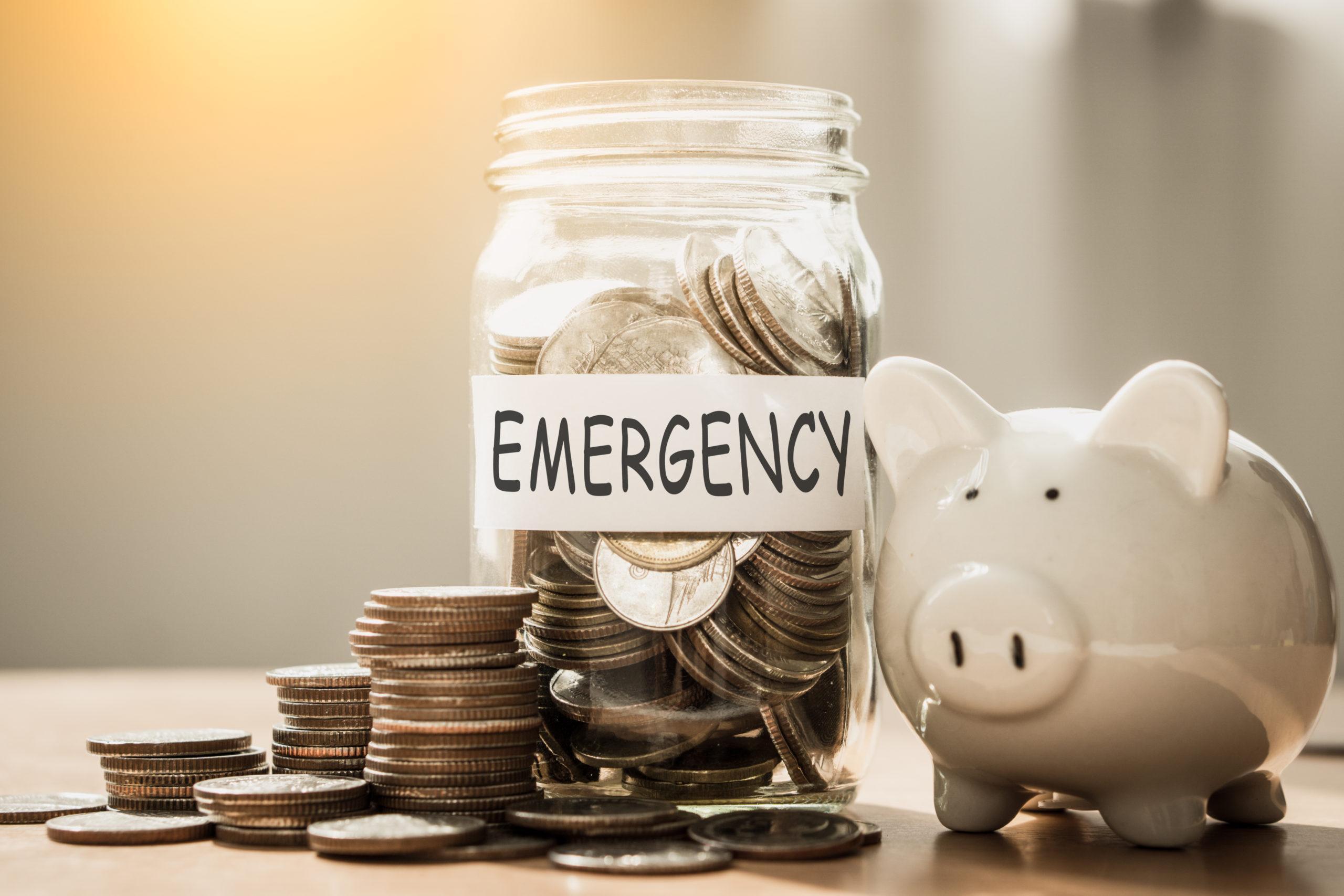
An emergency fund isn’t about being pessimistic — it’s about being realistic. Life in Canada comes with financial surprises that don’t care about your budget: furnace failures in January, layoffs during economic downturns, dental emergencies your benefits don’t fully cover, or a family crisis that requires last-minute flights across the country.
Without cash reserves, these situations force difficult choices. You might rack up credit card debt at 19–22% interest, dip into retirement savings (triggering taxes and lost growth), or delay necessary expenses until they become bigger problems. A Financial Consumer Agency of Canada guide emphasizes that emergency funds prevent these cascading financial setbacks.
The psychological benefit matters too. Financial stress affects sleep, relationships, and work performance. Knowing you have $10,000 sitting in a savings account changes how you handle unexpected news. You shift from panic mode to problem-solving mode because you have options.
For Canadians specifically, emergency funds serve another purpose: bridging income gaps. If you lose your job, Employment Insurance benefits are calculated based on your previous earnings — but EI typically replaces only 55% of your income up to a maximum of $729 per week in 2026 (based on maximum insurable earnings of $68,900). That gap between your EI payment and your actual expenses is exactly what your emergency fund covers.
How Much Emergency Savings Do You Actually Need?
The standard advice of “3–6 months of expenses” is a solid guideline, but your actual target depends on your specific situation. Let’s break down what that number really means and how to calculate yours.
Calculate Your Monthly Essential Expenses
Your emergency fund target is based on essential expenses — not your total spending. Essential expenses include:
- Housing: Rent or mortgage, property taxes, condo fees, basic utilities, home insurance
- Food: Groceries (not restaurants or takeout)
- Transportation: Car payment, insurance, gas for necessary trips, or transit passes
- Insurance: Health, life, disability premiums not covered by an employer
- Debt minimums: Credit cards, student loans, lines of credit
- Childcare: If both parents need to work
- Medical: Prescriptions, ongoing treatments
For a typical Canadian household, essential expenses often run $3,500–$5,500 per month. Pull up your last three months of bank statements and add up only the non-negotiable categories. That’s your baseline.
The Two-Phase Approach: Starter Fund Then Full Fund
A smart two-phase approach makes building an emergency fund feel achievable rather than overwhelming:
Phase 1: Starter emergency fund of $1,000–$2,000. This amount handles most single emergencies — a car repair, an appliance replacement, an unexpected medical bill. Build this first before aggressively paying down high-interest debt. The starter fund prevents you from adding to your debt every time something goes wrong.
Phase 2: Full emergency fund of 3–6 months of essential expenses. Once high-interest debt is cleared, expand your fund to the full target. For someone with $4,000 monthly essential expenses, that’s $12,000–$24,000.
Factors That Affect Your Target
Not everyone needs the same cushion. Here’s how to adjust:
| Your Situation | Recommended Emergency Fund | Why |
|---|---|---|
| Stable job, dual income household, no dependents | 3 months of expenses | Lower risk of total income loss; faster re-employment |
| Single income, stable job, dependents | 4–5 months of expenses | No backup income if primary earner loses job |
| Variable income (freelance, commission, seasonal) | 6+ months of expenses | Income fluctuations require larger buffer |
| Single parent or sole caregiver | 6 months of expenses | Higher risk profile, less flexibility |
| Job in volatile industry or nearing retirement | 6–12 months of expenses | Longer potential job search; age discrimination is real |
If you’re 55 or older and worried about layoffs, a larger emergency fund becomes even more critical. The average job search for workers over 50 takes significantly longer than for younger Canadians, and your emergency fund may need to bridge income until CPP and OAS kick in.
Where Should You Keep Your Emergency Fund in Canada?
Your emergency fund needs to balance three things: accessibility (you can get it within 1–2 business days), safety (it won’t lose value), and growth (it earns something while it sits). Here’s how different options stack up.
High-Interest Savings Accounts (HISAs)
A HISA is the default choice for emergency funds, and for good reason. Online banks like EQ Bank, Wealthsimple Cash, and Tangerine typically offer rates between 2.5% and 3.5% on an ongoing basis (with some promotional offers reaching closer to 4% for a limited introductory period) — significantly higher than the 0.01–0.50% at Big Five banks’ basic savings accounts.
The key features you want:
- No minimum balance: Your full balance earns the advertised rate
- No monthly fees: Fees eat into your interest earnings
- Unlimited free withdrawals: Some accounts limit how often you can access funds
- CDIC insurance: Deposits up to $100,000 per category are protected
TFSA vs. Non-Registered Account for Emergency Funds
The TFSA is almost always the better choice for your emergency fund. Interest earned inside a TFSA is completely tax-free, while interest in a regular savings account is taxed at your marginal rate. If you earn 4% on $20,000 in a taxable account and you’re in a 30% tax bracket, you keep $560 after tax (verified: $800 × 0.70). In a TFSA, you keep the full $800 (verified: $20,000 × 4%).
The 2026 TFSA dollar limit is $7,000, and the cumulative limit has reached approximately $109,000 for anyone who was 18 or older and a Canadian resident in 2009. That’s more than enough room for most emergency funds plus long-term investments. Verify your actual contribution room through your CRA My Account.
There’s a common misconception that TFSA money is “locked up.” It’s not. You can withdraw from a TFSA anytime without penalty. The only catch: you don’t get that contribution room back until the following January. If you withdraw $5,000 for an emergency in March 2026, you can re-contribute that $5,000 starting January 2027.
If you’re deciding which account to prioritize for various financial goals, keeping your emergency fund in a TFSA HISA while investing separately often makes sense.
What About GICs?
Guaranteed Investment Certificates offer slightly higher rates than savings accounts — typically 2.70% to 4.00% for non-redeemable 1-year terms at competitive institutions. But there’s a catch: your money is locked until maturity. Cashing out early means penalties or forfeiting interest entirely.
A laddered approach can work: keep $5,000 in a HISA for immediate access, then spread additional amounts across 3-month, 6-month, and 12-month GICs. This way, something is always maturing while you earn slightly higher rates. But honestly, for most people, the modest rate difference isn’t worth the complexity. A simple HISA does the job.
How to Build an Emergency Fund Canada: Step-by-Step
Understanding the theory is easy. Actually building the fund when you have bills, debt, and finite income? That’s where most people get stuck. Here’s a practical approach that works even for inconsistent savers.
Step 1: Open a Separate Account Today
Your emergency fund needs its own home — not mixed with your chequing account where it’ll get spent. Open a high-interest savings account at a separate institution from your main bank. The slight friction of transferring money between banks helps prevent impulsive withdrawals. EQ Bank, Tangerine, or Wealthsimple are all solid Canadian options with competitive rates and no fees.
If you want the TFSA tax benefits, open a TFSA HISA specifically. You can hold multiple TFSAs at different institutions as long as your total contributions don’t exceed your limit.
Step 2: Set Your Initial Target at $1,000–$2,000
Don’t aim for the full 3–6 months immediately — that number feels impossible when you’re starting from zero. Your first milestone is the starter fund. For most Canadians, hitting $1,500 takes 2–4 months of focused effort. That quick win builds momentum.
Step 3: Automate Transfers on Payday
The Financial Consumer Agency of Canada emphasizes automation as one of the most effective strategies for building savings. Set up an automatic transfer from your chequing account to your emergency fund on the same day you get paid. Start with whatever you can manage — even $25 per paycheque.
The psychology here matters: you’re paying yourself first, before the money gets absorbed into daily spending. Building gradually with regular contributions works just as well as lump-sum deposits — consistency beats intensity.
Step 4: Find Extra Money Without Lifestyle Pain
You can accelerate your emergency fund without dramatic sacrifice:
Tax refund: If you’re getting a refund this year, direct half to your emergency fund. That single deposit might jump you from $500 to $2,000.
Subscription audit: Cancel one streaming service, one unused gym membership, or one forgotten app subscription. Redirect those exact dollars to automatic savings.
Raise allocation: When you get a raise, increase your automatic transfer by 50% of the raise amount. Your lifestyle inflates more slowly, and your emergency fund grows faster.
Cash windfalls: Birthday money, work bonuses, tax benefits, or sold items — route a portion to savings before you mentally spend it.
Step 5: Scale Up Once High-Interest Debt Is Gone
If you’re carrying credit card debt at 19% interest, mathematically it makes sense to stop at the $1,000–$2,000 starter fund and attack the debt aggressively. Once the high-interest debt is cleared, redirect those former debt payments directly to your emergency fund. If you were paying $400/month toward credit cards, that same $400 now goes to savings. At that rate, you’d save $4,800 in a year (verified) — nearly halfway to many full emergency fund targets.
Step 6: Don’t Touch It Unless It’s Actually an Emergency
An emergency is unexpected, necessary, and urgent. A car repair that lets you get to work qualifies. A vacation deal that expires soon doesn’t. A job loss qualifies. A friend’s wedding you forgot about doesn’t. Be honest with yourself about what counts.
If you do use your emergency fund — and you will eventually, that’s the point — prioritize rebuilding it. Pause other savings goals temporarily if needed. Getting back to your target protects you from the next emergency, which statistically comes sooner than you’d expect.
Emergency Fund vs. Investing: Where Does Your Money Go First?
One of the most common questions in Canadian financial planning is whether to invest money or keep it in cash. For emergency funds specifically, the answer is clear: cash wins.
Why You Shouldn’t Invest Your Emergency Fund
The stock market averages 7–10% annual returns over the long term. A savings account might pay 2.5–3.5%. So investing seems smarter, right? The problem is timing. Markets are volatile in the short term. The same month you need your emergency fund might be the month your investments are down 15–30%.
Imagine losing your job right as markets crash. If your “emergency fund” was invested, you’d be selling at the worst possible moment — locking in losses and getting less cash than you deposited. That’s the opposite of financial security.
Emergency funds aren’t investments. They’re insurance. You pay a “premium” (the difference between stock market returns and savings account interest) for the certainty that your money will be there, in full, whenever you need it.
The Hybrid Approach for Larger Funds
Once your emergency fund exceeds 6 months of expenses, you might consider a hybrid approach. Keep 3 months in a HISA for immediate access. Invest the excess in a conservative balanced portfolio. But this only works if you have genuine surplus beyond your target — not as a way to shortcut building the fund in the first place.
Key Takeaways
- Start with a $1,000–$2,000 starter emergency fund before aggressively paying down high-interest debt — this prevents new debt when emergencies hit
- Your full target is 3–6 months of essential expenses, which typically means $10,000–$25,000 for most Canadian households depending on your situation and risk factors
- Keep your emergency fund in a TFSA high-interest savings account — the 2026 TFSA limit is $7,000 annually with a ~$109,000 cumulative limit, and all interest earned is tax-free
- Automate transfers on payday before you can spend the money — even $50–$100 per paycheque adds up to $1,300–$2,600 per year
- Don’t invest your emergency fund. The gap between HISA rates and average investment returns isn’t worth the risk of being forced to sell during a market downturn when you actually need the money
- EI replaces only 55% of income up to a $729/week maximum in 2026 — your emergency fund is what bridges the gap between that benefit and your actual expenses
- Once you use your emergency fund for an actual emergency, prioritize rebuilding it before resuming other financial goals
Frequently Asked Questions
How much should I have in my emergency fund in Canada?
Most Canadians should aim for 3–6 months of essential expenses in their emergency fund. For a typical household, that translates to $10,000–$25,000, though your specific number depends on factors like job stability, whether you’re single or dual-income, and whether you have dependents. Start with a $1,000–$2,000 starter fund to handle most single emergencies, then build toward the full amount once high-interest debt is eliminated.
Should I invest my emergency fund or keep it in cash?
Keep your emergency fund in cash, specifically in a high-interest savings account. The purpose of an emergency fund is guaranteed availability when you need it — investing introduces market risk that could mean your $15,000 fund is worth $12,000 exactly when you lose your job. The gap between competitive savings account rates (2.5–3.5%) and average investment returns is the price you pay for certainty, and it’s worth paying.
Where is the best place to keep an emergency fund in Canada?
A TFSA high-interest savings account at an online bank is typically the best choice for Canadian emergency funds. Online banks like EQ Bank, Wealthsimple Cash, and Tangerine offer ongoing rates between 2.5% and 3.5% — far higher than Big Five bank savings accounts. The TFSA wrapper means all interest earned is tax-free. Make sure the account has no monthly fees, no minimum balance requirements, and is covered by CDIC deposit insurance.
Learning how to build an emergency fund Canada-style is one of the most important steps toward genuine financial security. With a solid cash cushion in a TFSA high-interest savings account, you transform unexpected expenses from crises into inconveniences. Start with your first $1,000, automate your contributions, and work your way toward 3–6 months of expenses. For more strategies on building wealth and protecting your financial future, explore the other guides on Getwealthy.
Get free Canadian money tips every week
TFSA updates, CRA changes, mortgage strategies — straight to your inbox every Thursday. No spam, unsubscribe anytime.
Certified Financial Planner (CFP) and Chartered Investment Manager (CIM) with over 17 years of experience in Canadian personal finance. Spent 10+ years at one of Canada's Big Five banks, the last 7 focused exclusively on high-net-worth clients. Every guide is written with the same depth I bring to real client work — Canada-specific, CRA-verified, and always free.
Disclaimer: This article is for informational and educational purposes only and does not constitute financial, tax, or legal advice. Always consult a qualified financial advisor or tax professional for personalized advice.