
If you’re wondering how to invest tax refund Canada 2026, you’re not alone—but you might be surprised who’s leading the charge. According to a May 2026 TD survey, 33% of Gen Z Canadians plan to invest their tax refunds this year, outpacing every other generation. Yet here’s the kicker: 63% of those same young investors admit they don’t fully understand registered accounts like TFSAs and RRSPs. If Gen Z is investing despite confusion, what’s holding everyone else back? In this post, you’ll learn exactly what to do with your tax refund, which registered account fits your situation, and why waiting could cost you thousands in tax-free growth.
Why Should You Invest Your Tax Refund in Canada 2026?

Your tax refund isn’t a bonus—it’s your own money coming back to you. The average Canadian refund hovers around $2,000 to $2,500, and what you do with it can dramatically shape your financial future. With economic headwinds redefining financial priorities for many Canadians (as TD’s survey notes), more people are choosing practical moves over splurges.
The Real Cost of Letting Your Refund Sit
If you deposit your $2,500 refund into a standard savings account earning 1% interest, you’ll have roughly $2,525 after a year. But if you invest that same amount in a TFSA earning an average 6% annual return, you’d have approximately $2,650. Over 20 years, that single refund could grow to over $8,000—completely tax-free. The difference compounds dramatically when you invest year after year.
Gen Z Gets It—Even Without Full Knowledge
Here’s what’s fascinating: despite 63% of Gen Z admitting they don’t know enough about registered accounts, they’re still putting money in. They understand that starting matters more than perfection. Meanwhile, many Canadians aged 35-60 sit on the sidelines, overthinking the “right” choice. The truth? An imperfect investment today usually beats a perfect plan you never execute.
💡 Bonus Insight: TD’s survey also found TFSAs have officially overtaken RRSPs as Canadians’ most common primary investment account — a historic shift. Among Gen Z without
a registered account, “familiarity” (not lack of money) was cited as the #1 barrier — 63% simply don’t know enough to start.
This means YOUR biggest obstacle might not be money. It’s information. And you just got some.
Economic Uncertainty Makes Investing More Important
With inflation still impacting household budgets and interest rates remaining elevated, your refund’s purchasing power erodes if it sits idle. Investing—even conservatively—helps your money at least keep pace with inflation, if not outpace it. The strategies for managing cash flow during inflation apply here too: put every dollar to work.
What Should You Do With Your Tax Refund in Canada?
Before investing a single dollar, you need a quick financial check-up. Not everyone should invest their refund immediately—but most people should do something strategic with it.
First, Check Your Emergency Fund
Do you have three to six months of expenses saved in an accessible account? If not, consider directing part of your refund there. A high-interest savings account at EQ Bank, Tangerine, or even TD’s Every Day Savings Account can hold this money while earning better-than-chequing returns. Some accounts currently offer promotional rates above 4%, though standard rates range from 1% to 2.50%.
Next, Look at High-Interest Debt
Credit card debt charging 19-21% interest will outpace any reasonable investment return. If you’re carrying a balance, paying it down delivers a guaranteed “return” equal to your interest rate. That said, don’t ignore investing entirely—the psychological win of seeing your investments grow can motivate better financial habits overall.
Finally, Consider Your Goals
Are you saving for retirement, a first home, or your child’s education? Each goal has an ideal registered account. Understanding why you’re investing helps you choose where to invest—which brings us to the registered account confusion that trips up so many Canadians.
Which Registered Account Should You Use for Your Tax Refund: TFSA vs RRSP?
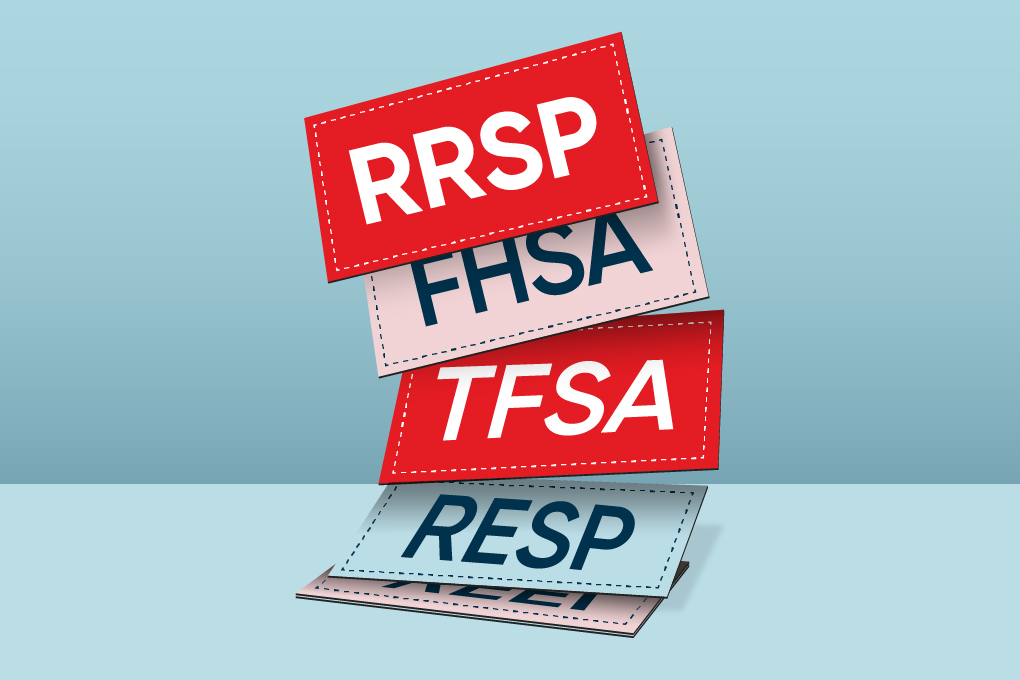
The question of tax refund TFSA or RRSP is one of the most Googled personal finance questions in Canada. Both accounts shelter your investments from tax, but they work in completely different ways. Choosing wrong won’t ruin you, but choosing right can save you thousands over your lifetime.
Understanding TFSA Basics in 2026
The Tax-Free Savings Account lets you contribute after-tax dollars, then all growth and withdrawals are completely tax-free—forever. The 2025 annual limit is $7,000, and if you’ve never contributed since the TFSA launched in 2009, your cumulative room is approximately $109,000 as of 2026. There’s no deadline pressure; you can contribute anytime, and unused room carries forward indefinitely.
Understanding RRSP Basics in 2026
The Registered Retirement Savings Plan lets you contribute pre-tax dollars (you get a tax deduction now), but you’ll pay tax when you withdraw in retirement. For 2026, the contribution limit is 18% of your previous year’s earned income, up to a maximum of $33,810. The deadline for 2025 tax year contributions was March 2, 2026, but you can still contribute for future years anytime.
The Income Factor Most People Miss
If you expect your income to be higher in retirement than it is now (perhaps you’re early-career or building a business), the TFSA typically wins. If your income is higher now than it will be in retirement, the RRSP’s upfront tax deduction delivers more value. Most Canadians in their peak earning years (roughly $60,000-$150,000) benefit from a balanced approach—contributing to both.
Comparison: TFSA vs RRSP vs FHSA for Your Tax Refund
This table breaks down the three main registered accounts Canadians should consider when deciding what to do with tax refund Canada. If you’re saving for a first home, the FHSA deserves serious attention.
| Feature | TFSA | RRSP | FHSA |
|---|---|---|---|
| 2026 Annual Limit | $7,000 | $33,810 (or 18% of income) | $8,000 |
| Lifetime Limit | ~$102,000 (cumulative since 2009) | Based on contribution room earned | $40,000 |
| Tax on Contributions | None (after-tax dollars) | Deductible (reduces taxable income) | Deductible (like RRSP) |
| Tax on Growth | Tax-free | Tax-deferred | Tax-free |
| Tax on Withdrawal | Tax-free | Taxed as income | Tax-free (for home purchase) |
| Withdrawal Flexibility | Anytime, room restored next year | Anytime, but taxed; room lost | Must use for first home within 15 years |
| Best For | Flexible savings, any goal | Retirement, high earners | First-time homebuyers |
If you’re a first-time homebuyer, the FHSA offers a remarkable double benefit: you get a tax deduction like an RRSP and tax-free withdrawals like a TFSA. For a deeper dive on this choice, check out our FHSA vs RRSP first home comparison.
How to Invest Your Tax Refund in Canada 2026: Step-by-Step
Ready to take action? Here’s exactly how to move from “I got a refund” to “I’m building wealth” in four practical steps. The registered accounts confusion ends here.
Step 1: Choose Your Account Type
Based on the comparison above, decide whether a TFSA, RRSP, or FHSA makes sense for your situation. If you’re unsure and your income is under $80,000, the TFSA is usually the safest default—you can always withdraw without penalty if your circumstances change. If you’re earning over $100,000 and far from retirement, the RRSP’s tax deduction delivers immediate value.
Step 2: Open Your Account (It Takes 15 Minutes)
You can open registered accounts at any major bank (TD, RBC, BMO, Scotiabank, CIBC) or through digital platforms like Wealthsimple or Questrade. Digital platforms often have lower fees and no minimum balances. If you already have a TFSA or RRSP, simply log in and prepare to contribute. The account opening process requires your SIN, ID, and basic contact information—nothing complicated.
Step 3: Decide What to Invest In
Your registered account is just a container—you still need to choose investments inside it. For beginners, consider these options:
- High-interest savings ETFs (like CASH.TO): Currently yielding around 1.8-2.24%, tracking the BOC overnight rate
- All-in-one ETFs (like VBAL or XGRO): Diversified portfolios in a single purchase, great for hands-off investors
- GICs: Guaranteed returns, best for money you won’t need for 1-5 years
- Index funds: Low-cost exposure to entire markets
If you’re exploring low-risk options inside your TFSA, our CASH.TO vs cashable GIC comparison breaks down the pros and cons.
💡 Pro Tip: For short-term refund parking (under 1 year), compare CASH.TO’s current yield against EQ Bank’s everyday savings rate (~2.75%) before choosing. With BOC holding at 2.25%, the gap between cash ETFs and high-interest savings accounts has narrowed significantly in 2026 — sometimes the simpler HISA option wins on both yield AND instant access.
Step 4: Set Up Automatic Contributions
Here’s the secret that separates successful investors from everyone else: automation. Once you’ve invested your refund, set up automatic monthly contributions—even $50 or $100. This removes decision fatigue and ensures you’re consistently building wealth, not just making one-time deposits when you remember.
Common Mistakes Canadians Make With Tax Refunds (And How to Avoid Them)
Even well-intentioned Canadians lose money by making avoidable errors. Here’s what to watch for when you invest tax refund Canada 2026.
Mistake 1: Treating Your Refund as “Fun Money”
Your refund represents real earnings that the government held interest-free all year. While treating yourself isn’t wrong, blowing the entire amount on discretionary spending means losing years of compound growth. Consider the 80/20 rule: invest 80%, enjoy 20%.
Mistake 2: Over-Contributing to Registered Accounts
The CRA charges a 1% monthly penalty on TFSA and RRSP over-contributions. Before depositing your refund, log into your CRA My Account to verify your exact contribution room. This takes two minutes and prevents costly penalties.
Mistake 3: Waiting for the “Perfect” Time to Invest
Market timing doesn’t work—even professionals fail at it consistently. Studies show that investing immediately outperforms waiting for dips approximately two-thirds of the time. Your refund sitting in a chequing account earning 0.01% is the only guaranteed losing strategy.
Mistake 4: Ignoring Contribution Room Carry-Forward
If you haven’t maximized your TFSA since 2009, you likely have significant unused room. This is especially true for Canadians in their 40s, 50s, and 60s who may have accumulated $70,000+ in unused TFSA space. Your refund can start filling that gap, sheltering future growth from taxes forever.
Mistake 5: Choosing the Wrong Account for Your Timeline
Using an RRSP for a goal that’s 3 years away usually doesn’t make sense—you’ll pay tax on withdrawals. For short-term goals (under 5 years), the TFSA’s flexibility is almost always superior. Match your account to your timeline, not just the tax deduction.
Key Takeaways
- Gen Z leads with 33% investing their tax refunds in 2026—but 63% still don’t fully understand registered accounts, proving that starting matters more than perfect knowledge
- Your TFSA contribution limit for 2025 is $7,000, and cumulative room since 2009 is approximately $102,000 if you’ve never contributed
- The FHSA offers first-time homebuyers both a tax deduction AND tax-free growth—a rare double benefit worth $8,000/year
- Always verify your contribution room in CRA My Account before depositing to avoid the 1% monthly over-contribution penalty
- Automation is the key to long-term success—set up recurring contributions after investing your refund
- If you’re carrying credit card debt above 19%, paying it down delivers a guaranteed return that beats most investments
Frequently Asked Questions
Should I invest my tax refund or pay off debt in Canada?
Pay off high-interest debt first if you’re carrying credit card balances charging 19% or more—no investment reliably beats that guaranteed return. For lower-interest debt like mortgages (under 6%), investing often makes more sense mathematically, especially inside tax-sheltered accounts. A balanced approach works too: put half toward debt and half into your TFSA or RRSP to build both financial security and wealth simultaneously.
Why do younger Canadians invest more than older generations?
Younger Canadians have grown up with accessible, low-cost investing platforms like Wealthsimple and Questrade that remove traditional barriers to entry. They’ve also been exposed to financial content through social media and understand that time in the market is their greatest advantage. Older generations often faced higher fees, less accessible information, and were taught to prioritize savings accounts over investing—habits that can be hard to break even when circumstances change.
Which registered account should I put my tax refund into?
Choose the TFSA if you want maximum flexibility and expect your income to rise in the future—it’s the most versatile option for most Canadians. Pick the RRSP if you’re currently in a high tax bracket (over $100,000) and want to reduce this year’s tax bill while saving for retirement. First-time homebuyers should seriously consider the FHSA, which combines RRSP-style deductions with TFSA-style tax-free withdrawals for home purchases.
Learning how to invest tax refund Canada 2026 isn’t just about this year’s refund—it’s about building habits that compound over decades. Whether you choose a TFSA, RRSP, or FHSA, the most important step is actually taking action. Gen Z has proven that even without perfect knowledge, getting started beats waiting on the sidelines. Your future self will thank you for every dollar you put to work today. Ready to learn more about making your money work harder? Explore more guides on Getwealthy to build your complete Canadian wealth strategy.
Get free Canadian money tips every week
TFSA updates, CRA changes, mortgage strategies — straight to your inbox every Thursday. No spam, unsubscribe anytime.
The GetWealthy editorial team writes plain-English guides to Canadian personal finance, based on official CRA, FINTRAC and government sources and reviewed every year.
Disclaimer: This article is for informational and educational purposes only and does not constitute financial, tax, or legal advice. Always consult a qualified financial advisor or tax professional for personalized advice.