 Saving for a down payment while renting in Canada in 2026 feels nearly impossible — especially when Toronto rent alone costs $2,800/month. when your rent alone consumes half your paycheque. Here’s a startling reality: the average Toronto renter now pays $2,800 monthly for a one-bedroom apartment, while Vancouver renters face similar costs at $2,600. Yet thousands of Canadian millennials and Gen Z renters are still managing to build their down payment funds—even in these brutal markets. In this guide, you’ll discover exactly how to leverage tax-advantaged accounts like the FHSA, create a realistic savings plan, and use proven strategies that Toronto and Vancouver renters are using right now to finally break into homeownership.
Why Is It So Hard to Save for a Down Payment While Renting in 2026?
Before diving into solutions, let’s acknowledge the elephant in the room: the math is genuinely difficult. When rent eats up 40-50% of your gross income in cities like Toronto and Vancouver, traditional savings advice feels tone-deaf. But understanding the specific challenges helps you build a targeted strategy.
The Rent-to-Income Squeeze in Major Canadian Cities
In May 2026, the average Canadian renter in Toronto pays approximately $2,800 for a one-bedroom apartment. In Vancouver, you’re looking at $2,600. Meanwhile, median household incomes in these cities hover around $65,000-$75,000 for young professionals. After taxes, you might take home $4,200 monthly—and suddenly two-thirds of your income vanishes before you’ve bought groceries.
The cruel irony? To qualify for a mortgage on an $800,000 starter home (yes, that’s “starter” in Toronto), you’d need at least $40,000 down for a 5% minimum down payment, plus closing costs of $15,000-$25,000. That’s $55,000-$65,000 you need to accumulate while paying premium rent.
The Hidden Costs Renters Face
Beyond rent, many renters face additional costs that homeowners don’t always consider: renter’s insurance, coin laundry, parking fees, and the inability to make cost-saving home improvements. These smaller expenses add up to hundreds monthly, further constraining your ability to save.
For a deeper understanding of managing irregular expenses, check out our guide on building an emergency fund in Canada—because you’ll need both savings streams working simultaneously.
How Can Toronto Renters Build Down Payment Savings in 2026?
The good news? Canada offers some of the best tax-advantaged savings vehicles for first-time homebuyers in the developed world. The key is maximizing every single one strategically. Here’s what’s working for down payment savings tips Toronto renters are using right now.
Maximize Your FHSA Contributions First
The First Home Savings Account (FHSA) is genuinely the best tool available for FHSA for Canadian renters 2026. You can contribute $8,000 annually up to a $40,000 lifetime maximum. Here’s why it’s powerful:
- Contributions are tax-deductible (like an RRSP)
- Withdrawals for your first home are completely tax-free (like a TFSA)
- You get both benefits in one account—nowhere else offers this
If you opened your FHSA in 2023 and have contributed maximally, you could have $24,000 saved by the end of 2025, plus investment growth. By end of 2026 (4 years of contributions): $32,000 saved. One more year (2027) and you’ve hit the $40,000 lifetime maximum
💡 Pro Tip: Even if you can’t contribute the full $8,000, open your FHSA today. Unused room carries forward — but only AFTER the account is open. Every year you delay costs you $8,000 of room permanently.
Layer in the Home Buyers’ Plan (HBP)
The RRSP Home Buyers’ Plan lets you withdraw up to $60,000 from your RRSP for your first home purchase (this limit increased from $35,000 in recent years). Unlike the FHSA, you must repay this amount over 15 years, but it’s still an interest-free loan from yourself.
The strategy: If you’re in a high tax bracket now (earning over $55,867 in 2026), maximize RRSP contributions for the immediate tax refund, then use the HBP when you’re ready to buy. If you’re in a lower bracket, prioritize the FHSA since you’ll likely be in a similar or higher bracket when you withdraw.
💡 Pro Tip: The 90-day rule applies to HBP withdrawals. Make sure your RRSP contributions sit for at least 90 days before withdrawing under the HBP. If you’re buying in spring 2026, contribute by January at the latest.
Don’t Forget Your TFSA for Flexibility
Your TFSA (with a $7,000 annual limit in 2026 and approximately $102,000 lifetime contribution room if you’ve been eligible since 2009) offers complete flexibility. While it doesn’t provide tax deductions, any growth and withdrawals are tax-free, and there’s no requirement to use it for a home.
Use your TFSA as your “closing costs and emergency buffer” fund. This way, your FHSA and HBP funds go entirely toward the down payment while your TFSA covers legal fees, land transfer taxes, moving costs, and immediate home repairs.
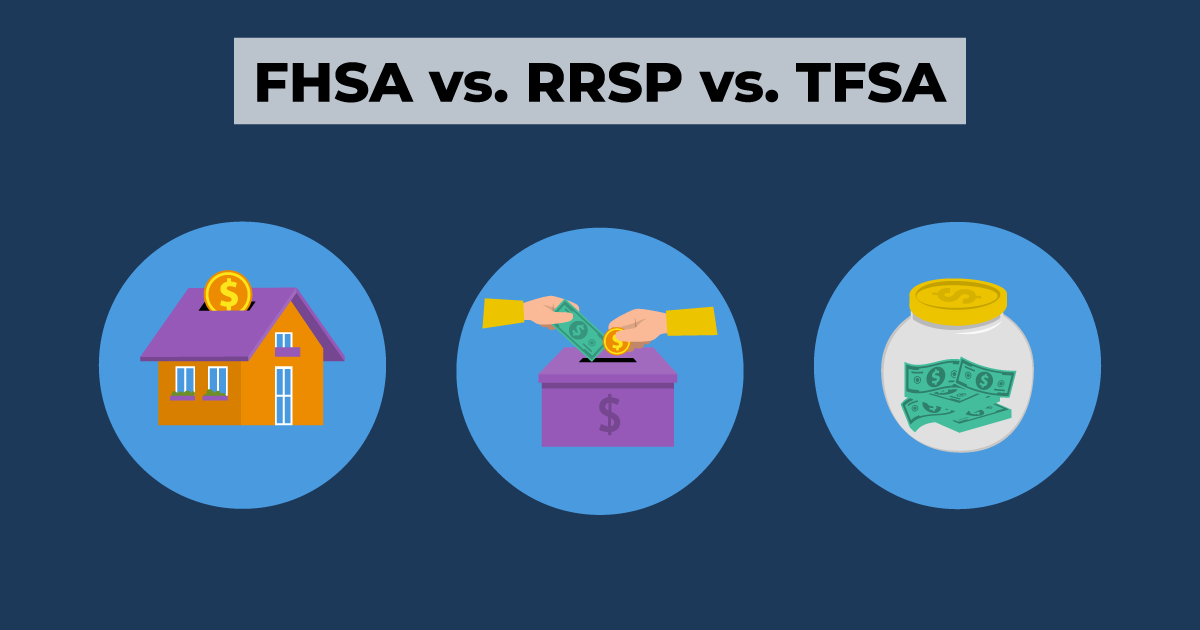
FHSA vs. RRSP HBP vs. TFSA: Which Should You Prioritize?
Choosing where to put your down payment savings depends on your income, timeline, and tax situation. This comparison table breaks down the key differences for how to afford a house renting Vancouver—or any expensive Canadian city.
| Feature | FHSA | RRSP (HBP) | TFSA |
|---|---|---|---|
| Annual Contribution Limit | $8,000 | $32,490 (2025 tax year) / ~$33,000+ (2026 — confirm with CRA) |
$7,000 |
| Tax Deduction on Contributions | Yes | Yes | No |
| Tax-Free Withdrawal for Home | Yes | No (must repay over 15 years) | Yes (any purpose) |
| Maximum for Down Payment | $40,000 lifetime | $60,000 (per person) | No specific limit |
| Repayment Required | No | Yes (15 years) | No |
| Best For | First priority for all first-time buyers | High-income earners wanting extra funds | Flexibility and closing costs |
The optimal order for most renters: Max out FHSA first → Add to RRSP if you’re in a 30%+ tax bracket → Use TFSA for remaining savings and flexibility. If you’re buying with a partner, you can combine two FHSAs ($80,000), two HBPs ($120,000), and two TFSAs for a substantial down payment fund.
How to Create a Realistic Down Payment Savings Plan
Now let’s get practical. Here’s a step-by-step approach to save for a down payment while renting that accounts for the real constraints of expensive city living.
Step 1: Calculate Your True Target Number
Don’t just aim for “a down payment.” Calculate exactly what you need:
- 5% down payment on first $500,000 = $25,000
- 10% down payment on portion between $500,001-$1,000,000
- Closing costs: Budget 1.5-4% of purchase price
- Emergency buffer: 3 months of mortgage payments
For an $800,000 Toronto condo: $25,000 (5% of $500K) + $30,000 (10% of $300K) = $55,000 minimum down payment. Add $20,000 for closing costs and a buffer. Your real target: approximately $75,000.
Step 2: Audit Your Current Spending Ruthlessly
Open your last three months of bank statements. Categorize every single transaction. Most renters find $300-$600 monthly in “invisible spending”—subscriptions they forgot about, premium services they could downgrade, and convenience purchases that add up.
Common wins for Toronto and Vancouver renters:
- Switching from Big 5 bank accounts to no-fee options like EQ Bank or Wealthsimple Cash (saves $15-30/month)
- Negotiating internet and phone plans (Rogers, Bell, and Telus all have retention departments—call and ask)
- Meal prepping instead of ordering delivery twice weekly (saves $200-400/month easily)
Step 3: Automate Your Savings on Payday
Set up automatic transfers to your FHSA and TFSA the day your paycheque arrives. If you’re paid bi-weekly, that’s $308 per pay period to max your FHSA ($8,000 ÷ 26 pay periods). Add $269 bi-weekly for your TFSA to hit the $7,000 limit.
Combined, that’s $577 bi-weekly or $15,000 annually in tax-advantaged savings. At this rate, you’d accumulate $45,000 in three years—not counting investment returns.
Real Example — 3-Year Down Payment Plan:
Single renter, $75,000 income, Toronto:
Year 1:
- FHSA: $8,000 (+ tax refund ~$2,000)
- TFSA: $7,000
- Total: $15,000 + $2,000 refund = $17,000
Year 2:
- FHSA: $8,000
- TFSA: $7,000
- Total: +$15,000 = $32,000
Year 3:
- FHSA: $8,000
- TFSA: $7,000
- Investment growth (~5%): +$3,200
- Total: ~$52,000
Add roommate income: +$13,200/year
3-year total with roommate: ~$65,000+ 🎯
Step 4: Invest Your Savings Appropriately
Don’t let your down payment fund sit in a 0.5% savings account. Based on your timeline:
- Buying in 1-2 years: High-interest savings account (EQ Bank offers 4%+ in 2026) or GICs
- Buying in 3-5 years: Conservative balanced ETF portfolio (60% bonds, 40% stocks)
- Buying in 5+ years: Growth-oriented ETF portfolio (70-80% stocks)
Platforms like Wealthsimple, Questrade, or the robo-advisors offered by RBC, TD, and BMO make this easy with low-cost index ETFs. Learn more in our comparison of the best investment accounts for Canadians.
Smart Money Moves to Accelerate Your Down Payment
Beyond basic budgeting, here are advanced strategies that can shave years off your savings timeline.
House Hacking While Renting
If you’re renting a two-bedroom apartment, consider getting a roommate and banking the difference. In Toronto, a two-bedroom averages $3,400/month. Split with a roommate, you’re paying $1,700 instead of $2,800 for a one-bedroom. That’s $1,100 monthly—$13,200 annually—directly into your down payment fund.
💡 Pro Tip: In Ontario and BC, subletting to a roommate while renting is generally allowed with landlord
consent. Check your lease agreement and provincial tenancy laws before bringing in a roommate.
Boost Income with Strategic Side Hustles
The fastest way to save for a down payment while renting isn’t cutting expenses—it’s increasing income. Focus on side hustles that leverage your existing skills:
- Freelancing in your professional field (often $50-150/hour versus minimum wage gig work)
- Teaching or tutoring (especially in-demand: French tutoring, coding, test prep)
- Selling unused items (most households have $1,000-$3,000 in sellable belongings)
Commit 100% of side income to your FHSA. Even $500/month extra accelerates your timeline by 18+ months.
Take Advantage of Employer Benefits
Many employers offer RRSP matching programs. If your employer matches 50% of contributions up to 4% of your salary, you’re leaving free money on the table by not participating. On a $70,000 salary, that’s $1,400 in free money annually—money you can later access through the Home Buyers’ Plan.
Consider Geographic Arbitrage
If remote work is an option, living in a lower-cost city while earning a Toronto or Vancouver salary supercharges your savings. Moving from Vancouver ($2,600/month rent) to Calgary ($1,500/month) saves $13,200 annually—without changing your income.
Key Takeaways
- Maximize your FHSA first—$8,000 annually with tax-deductible contributions and tax-free withdrawals is unbeatable for down payment savings
- Combine FHSA ($40,000) + HBP ($60,000) to access up to $100,000 per person in tax-advantaged down payment funds
- Automate savings on payday: $577 bi-weekly maxes out both your FHSA and TFSA for $15,000 annually
- House hacking with a roommate can redirect $10,000-$15,000 annually to your down payment fund
- Match your investment strategy to your timeline—GICs for 1-2 years, balanced ETFs for 3-5 years
- Calculate your true target number including closing costs (1.5-4% of purchase price) and emergency buffer
Frequently Asked Questions
How much should I save for a down payment while paying rent?
You should aim to save at least 5% of your target home’s purchase price, but 10-20% is ideal to avoid CMHC mortgage insurance and reduce monthly payments. For an $800,000 home, that means saving $55,000-$160,000. Most financial experts recommend saving 20% of your take-home pay for housing goals, though in expensive cities like Toronto and Vancouver, even 10-15% while covering rent is a significant achievement.
Can I use my FHSA and RRSP together for a down payment in Canada?
Yes, you can absolutely combine your FHSA and RRSP Home Buyers’ Plan withdrawals for your down payment. The FHSA allows up to $40,000 in tax-free withdrawals, while the HBP permits up to $60,000 from your RRSP (which must be repaid over 15 years). Together, that’s $100,000 per person or $200,000 for a couple buying together. This combination is one of the most powerful tools for first-time Canadian homebuyers.
What percentage of income should renters save for a house?
Financial experts typically recommend saving 15-20% of your gross income for long-term goals including a down payment. However, if you’re a renter in Toronto or Vancouver paying 40-50% of income on rent, a more realistic target is 10-15% of take-home pay. The key is consistency—even $400-$600 monthly adds up to $14,400-$21,600 over three years, not including investment growth.
Learning how to save for a down payment while renting in expensive Canadian cities isn’t easy—but it’s absolutely achievable with the right strategy. By maximizing tax-advantaged accounts like the FHSA and HBP, automating your savings, and making strategic lifestyle adjustments, you can build your down payment fund even while paying Toronto or Vancouver rent. The sooner you start, the sooner you’ll reach your homeownership goal. Ready to take the next step? Explore more money-saving strategies and Canadian personal finance guides at Getwealthy.blog.
Get free Canadian money tips every week
TFSA updates, CRA changes, mortgage strategies — straight to your inbox every Thursday. No spam, unsubscribe anytime.
Certified Financial Planner (CFP) and Chartered Investment Manager (CIM) with over 17 years of experience in Canadian personal finance. Spent 10+ years at one of Canada's Big Five banks, the last 7 focused exclusively on high-net-worth clients. Every guide is written with the same depth I bring to real client work — Canada-specific, CRA-verified, and always free.
Disclaimer: This article is for informational and educational purposes only and does not constitute financial, tax, or legal advice. Always consult a qualified financial advisor or tax professional for personalized advice.