If you’re a first-time home buyer in Canada, understanding mortgage pre-approval Canada is the single most important step before you start shopping for homes. Here’s a fact worth taking seriously: according to Bank of Canada research, Canadians renewing mortgages in 2026 could see payments jump by an average of around 6% – making it more critical than ever to lock in your rate early through pre-approval. In this guide, you’ll learn exactly how the pre-approval process works, what documents you need, how it differs from pre-qualification, and how to use it strategically in today’s competitive housing market.

?? Table of Contents
- What Is Mortgage Pre-Approval in Canada and Why Does It Matter?
- How Does the Mortgage Pre-Approval Process Work Step by Step?
- Pre-Approval vs Pre-Qualification Canada: Understanding the Key Differences
- How Long Does Mortgage Pre-Approval Last in Canada?
- Common Mortgage Pre-Approval Mistakes to Avoid
- Maximizing Your Down Payment with Canadian Programs
- Key Takeaways
- Frequently Asked Questions
What Is Mortgage Pre-Approval in Canada and Why Does It Matter?
A mortgage pre-approval is a conditional commitment from a lender to loan you up to a certain amount of money at a specific interest rate before you buy a home. According to RBC, this commitment gives you a clear picture of your budget and demonstrates to sellers that you’re a serious buyer with financing already in place.
Think of pre-approval as your financial green light. Without it, you’re essentially house hunting blindfolded – you might fall in love with a property only to discover you can’t afford it. In hot markets like Toronto or Vancouver, sellers often won’t even consider offers from buyers who haven’t been pre-approved.
The Rate Hold Advantage
One of the most valuable benefits of pre-approval is the rate hold. When a lender pre-approves you, they typically guarantee your interest rate for 90 to 120 days. This protection matters in 2026’s uncertain rate environment: some forecasters (like Ratehub) suggest five-year fixed rates could rise modestly toward the end of the year, while others expect rates to hold roughly where they are – with the Bank of Canada’s overnight rate steady at 2.25% and most major banks split on whether 2027 brings a hold or a modest increase. Locking in a rate hold protects you either way: if rates rise during your home search, you’re protected; if rates drop, most lenders will give you the lower rate instead.
How Much Can You Actually Borrow?
Your borrowing power depends on two key ratios that Canadian lenders use. According to Scotiabank, mortgage applicants are limited to spending a maximum of 39% of their gross income on housing costs (this is called the Gross Debt Service ratio or GDS). Additionally, you can only borrow up to 44% of your gross income when all debts are included (the Total Debt Service ratio or TDS). These rules apply across all major Canadian banks including TD, BMO, CIBC, and National Bank.
How Does the Mortgage Pre-Approval Process Work Step by Step?
The mortgage pre-approval process typically takes 1-5 business days, depending on your financial situation and how quickly you provide documentation. Here’s exactly what to expect when you apply with any Canadian lender.
Step 1: Gather Your Financial Documents
Before you even contact a lender, collect these essential documents:
- Government-issued photo ID (driver’s license or passport)
- Proof of income: Recent pay stubs, T4 slips, or Notice of Assessment from the CRA
- Employment letter confirming your position, salary, and length of employment
- Bank statements from the past 90 days showing your down payment savings
- List of current debts including car loans, student loans, and credit card balances
- If self-employed: Two years of T1 Generals and business financial statements
Having these ready will dramatically speed up your approval. Many first-time buyers delay their application by weeks simply because they’re scrambling for paperwork.
Step 2: Submit Your Application
You can apply for pre-approval online, over the phone, or in person at your chosen lender. National Bank, for example, offers a complete online pre-approval process through their website. During this step, you’ll provide details about your income, employment, assets, and the type of property you’re looking to buy.
The lender will also ask about your down payment. Remember, if you’re putting down less than 20%, you’ll need CMHC mortgage insurance, which protects the lender if you default. This adds to your overall costs, so factor it into your budget.
Step 3: Credit Check and Verification
The lender will pull your credit report and verify all the information you’ve provided. They’ll contact your employer, confirm your bank balances, and review your debt obligations. This is where pre-approval differs significantly from pre-qualification – actual verification happens, not just a surface-level estimate.
Step 4: Receive Your Pre-Approval Letter
If everything checks out, you’ll receive a pre-approval letter stating the maximum amount you can borrow and the interest rate you’re locked into. This letter is your ticket to house hunting with confidence. Show it to your real estate agent and include it with offers to strengthen your position.
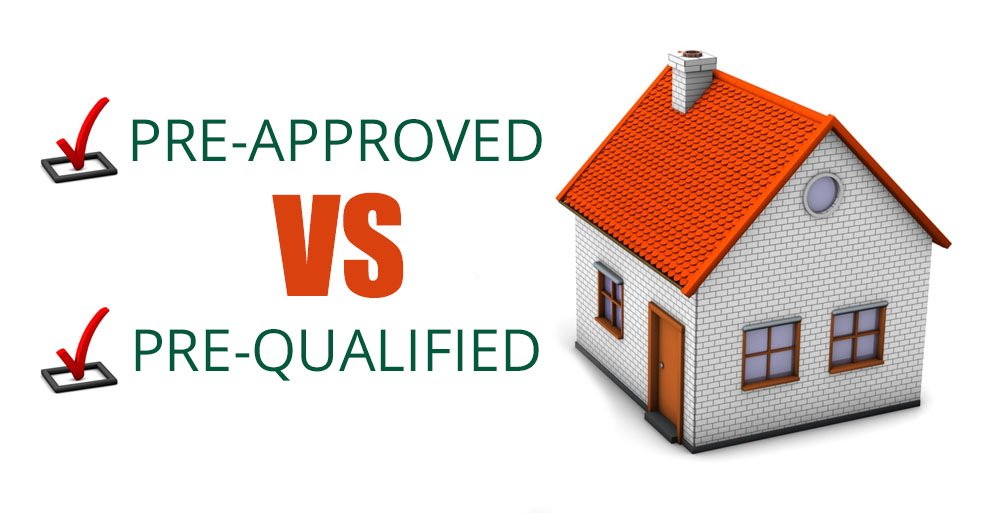
Pre-Approval vs Pre-Qualification Canada: Understanding the Key Differences
Many first-time buyers confuse pre-approval vs pre-qualification Canada, but they’re fundamentally different products. As the Financial Consumer Agency of Canada notes, the terms are sometimes used interchangeably by lenders, which adds to the confusion. Here’s what actually separates them.
| Feature | Pre-Qualification | Pre-Approval |
|---|---|---|
| Level of Commitment | Informal estimate only | Conditional commitment from lender |
| Credit Check Required | Usually soft check or none | Hard credit inquiry |
| Income Verification | Self-reported, not verified | Fully verified with documents |
| Rate Lock | No rate protection | Rate held for 90-120 days |
| Time to Complete | Minutes to hours | 1-5 business days |
| Strength with Sellers | Weak – not taken seriously | Strong – shows you’re qualified |
Pre-qualification is essentially a quick estimate based on information you provide. It’s useful for getting a rough idea of your budget, but it carries no weight with sellers. Pre-approval, on the other hand, involves the lender actually certifying that they’re committed to providing you with financing, as National Bank explains on their website.
For first-time buyers serious about purchasing in 2026, pre-approval is the only option that makes sense. The small amount of extra effort upfront saves significant stress and positions you as a qualified buyer in competitive situations.
How Long Does Mortgage Pre-Approval Last in Canada?
Understanding how long does mortgage pre-approval last helps you time your home search strategically. Most Canadian lenders offer pre-approvals that are valid for 90 to 120 days. Some lenders, particularly mortgage brokers working with multiple institutions, may secure holds of up to 180 days in certain circumstances.
What Happens When Your Pre-Approval Expires?
If your pre-approval expires before you find a home, you’ll need to reapply. This means another credit check, updated documentation, and potentially a different interest rate – which could be higher or lower depending on how the market has moved.
Here’s a smart strategy: if your pre-approval is approaching expiration and you haven’t found a home, contact your lender about renewing it before it expires. Many lenders will extend your rate hold if you’re actively searching, especially if you’ve been a responsive and organized applicant.
Can You Get Pre-Approved by Multiple Lenders?
Yes, and it’s often a smart move. Shopping around helps you find the best rate. However, be aware that each pre-approval triggers a hard credit inquiry. Multiple inquiries within a short period (typically 14-45 days) for the same type of credit are usually treated as a single inquiry by credit bureaus, so try to do your rate shopping within this window.
Consider working with a mortgage broker who can shop your application to multiple lenders simultaneously. This approach often yields better rates than going directly to your bank. If you’re debating this option, our guide on choosing between a mortgage broker and bank breaks down the pros and cons.
Common Mortgage Pre-Approval Mistakes to Avoid
Even with a solid pre-approval in hand, first-time buyers often make errors that jeopardize their mortgage. Here are the most common pitfalls and how to sidestep them.
Changing Jobs During the Process
Your employment situation is a cornerstone of your pre-approval. Switching jobs, even for higher pay, can complicate or void your approval. Lenders want to see stable employment, ideally with the same employer for at least two years. If a job change is unavoidable, notify your lender immediately and be prepared to provide additional documentation.
Making Large Purchases Before Closing
That new car or furniture for your future home? Wait until after you’ve closed on your property. Large purchases increase your debt load and change your debt service ratios. Even if you were pre-approved at 44% TDS, a new car payment could push you over the limit and result in a denied mortgage.
Forgetting About Closing Costs
Your pre-approval tells you how much house you can afford, but it doesn’t account for closing costs. Budget an additional 1.5% to 4% of the purchase price for land transfer taxes, legal fees, title insurance, and home inspection. In provinces like Ontario and British Columbia, land transfer taxes alone can exceed $10,000 on an average home.
Ignoring the Stress Test
Even if you’re pre-approved at a 4.5% rate, you must qualify at the stress test rate – currently the greater of your contract rate plus 2% or 5.25%. This means your actual borrowing power is lower than it might seem. Don’t skip the stress test math when budgeting for your home purchase.
Maximizing Your Down Payment with Canadian Programs
First-time buyers in Canada have access to several programs that can boost your down payment. Combining these strategically can significantly increase how much home you can afford.
The First Home Savings Account (FHSA) allows you to contribute $8,000 per year up to a $40,000 lifetime maximum, with contributions being tax-deductible like an RRSP and withdrawals for a home purchase being completely tax-free. If you haven’t opened one yet, consider reading our analysis on how to prioritize TFSA vs RRSP vs FHSA to maximize your savings strategy.
The Home Buyers’ Plan lets you withdraw up to $60,000 from your RRSP tax-free for a down payment (raised from $35,000 in the 2024 federal budget). You must repay this amount over 15 years, but it’s essentially an interest-free loan from yourself.
Combining both programs, a couple could potentially access up to $200,000 in tax-advantaged down payment funds ($80,000 combined FHSA + $120,000 combined HBP). This is a game-changer for first-time buyers struggling to save in expensive markets.
Key Takeaways
- Mortgage pre-approval locks in your interest rate for 90-120 days – valuable protection given genuinely mixed forecasts about where rates head through the rest of 2026 and into 2027
- You must keep your GDS under 39% and TDS under 44% of gross income to qualify with Canadian lenders
- Pre-approval requires full document verification unlike pre-qualification, which is just an estimate
- Avoid major financial changes (new job, large purchases, new credit) between pre-approval and closing
- Combine FHSA ($40,000 lifetime per person) and HBP ($60,000 per person) to maximize your down payment – up to $200,000 for a couple
- Shop multiple lenders within a 14-45 day window to minimize credit score impact while finding the best rate
Frequently Asked Questions
Does mortgage pre-approval hurt your credit score in Canada?
Yes, mortgage pre-approval typically involves a hard credit inquiry, which may temporarily lower your credit score by 5-10 points. However, this impact is minor and short-lived, usually recovering within a few months. Credit bureaus also recognize rate shopping – multiple mortgage inquiries within a 14-45 day period are generally treated as a single inquiry, so you can compare lenders without compounding the effect.
What is the difference between pre-approval and pre-qualification?
Pre-qualification is an informal estimate of how much you might borrow based on self-reported financial information, with no verification or commitment from the lender. Pre-approval, on the other hand, is a conditional commitment where the lender verifies your income, employment, credit, and assets before certifying they’ll provide financing up to a specific amount. Pre-approval carries significantly more weight with sellers and includes a rate hold that pre-qualification doesn’t offer.
How long does a mortgage pre-approval last in Canada?
Most mortgage pre-approvals in Canada are valid for 90 to 120 days, depending on the lender. Some institutions or mortgage brokers may offer extended holds of up to 180 days in certain situations. If your pre-approval expires before you purchase, you’ll need to reapply, which means another credit check and potentially a different interest rate.
Understanding mortgage pre-approval Canada puts you in the strongest possible position as a first-time home buyer. By getting pre-approved, you’ll know exactly what you can afford, protect yourself against rate uncertainty in either direction, and show sellers you’re a serious, qualified buyer. Explore more home buying and mortgage strategies on Getwealthy to make your path to homeownership as smooth as possible.
Get free Canadian money tips every week
TFSA updates, CRA changes, mortgage strategies — straight to your inbox every Thursday. No spam, unsubscribe anytime.
Certified Financial Planner (CFP) and Chartered Investment Manager (CIM) with over 17 years of experience in Canadian personal finance. Spent 10+ years at one of Canada's Big Five banks, the last 7 focused exclusively on high-net-worth clients. Every guide is written with the same depth I bring to real client work — Canada-specific, CRA-verified, and always free.
Disclaimer: This article is for informational and educational purposes only and does not constitute financial, tax, or legal advice. Always consult a qualified financial advisor or tax professional for personalized advice.