If you’re exploring new account promotions Canada 2026, you’re looking at one of the easiest ways to earn hundreds — even thousands — of dollars just for moving your money. Right now, Canadian banks are offering sign-up bonuses up to $900 (BMO) and some investment account promotions reaching $3,000. But here’s what most people miss: chasing bonuses without understanding TFSA transfer rules or RRSP contribution limits can trigger CRA penalties that wipe out your gains entirely. In this guide, you’ll learn which 2026 bank bonuses are actually worth your time, how to avoid costly mistakes, and whether that flashy offer is truly free money.
📋 Table of Contents
- What Are New Account Promotions Canada 2026 and How Do They Work?
- Which Bank Switching Bonus 2026 Offers Are Actually Worth It?
- Comparison: Top Canadian Bank Account Promotions July 2026
- How to Maximize Your TFSA Sign-Up Bonus Without CRA Problems
- RRSP Transfer Bonus Canada: What You Need to Know
- Common Mistakes That Cost Canadians Money When Chasing Bank Bonuses
- Key Takeaways
- Frequently Asked Questions
What Are New Account Promotions Canada 2026 and How Do They Work?
Bank bonuses are cash rewards, bonus interest rates, or rewards points that financial institutions offer when you open a new account and meet specific requirements. In July 2026, Canadian banks are competing aggressively for your deposits, making this an excellent time to capitalize on these offers.
Types of Bank Bonuses Available
Canadian banks typically offer four main types of promotions:
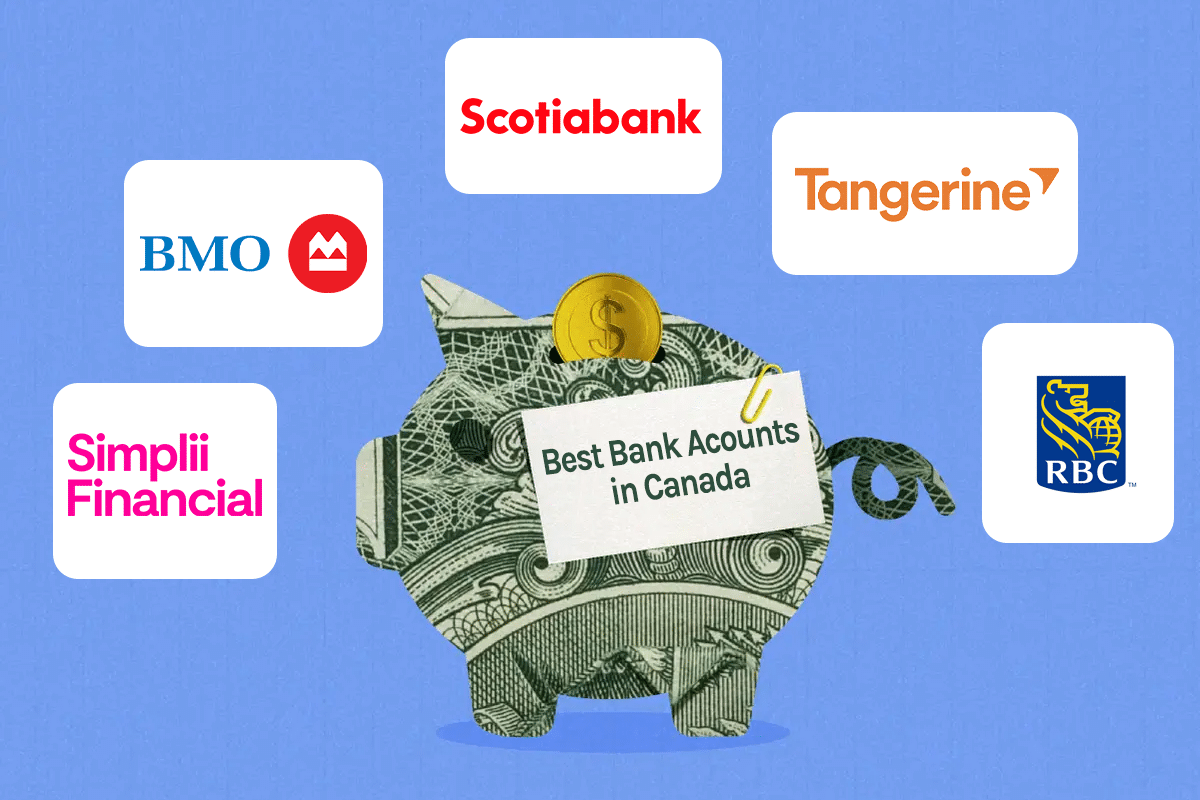
Cash bonuses are the most straightforward — open an account, meet the requirements, and receive a direct deposit. BMO’s current offer of up to $900 for new chequing accounts is a prime example. You’ll usually need to set up direct deposit or maintain a minimum balance for 90 days.
TFSA sign-up bonuses reward you for opening or transferring funds into a Tax-Free Savings Account. These are particularly valuable because the bonus itself isn’t taxable when deposited into your TFSA — though it does count toward your contribution room in some cases, which is a critical detail covered below.
RRSP transfer bonuses target investors with existing retirement savings. Banks want your long-term assets, so they’ll pay $50 to $500+ to convince you to move your RRSP from a competitor. The 2026 RRSP contribution limit is $33,810 (18% of your 2025 earned income, whichever is less), and transfer bonuses don’t affect this room since you’re moving existing funds, not making new contributions.
Bonus interest rates offer elevated savings rates — sometimes 3.5% to 5% — for a promotional period (typically 3–6 months). These can be worth more than cash bonuses if you have significant savings. Always verify the ongoing rate after the promotional period ends, as banks typically revert to much lower standard rates.
Why Banks Pay You to Switch
Banks aren’t being generous — they’re investing in customer acquisition. The average Canadian banking relationship lasts 14 years, so paying $500 to acquire you makes financial sense for them. Your job is to capture these bonuses while avoiding the strings attached.
Which Bank Switching Bonus 2026 Offers Are Actually Worth It?
Not all promotions deliver equal value. A $400 bonus that requires you to pay $15/month in fees for a year actually nets you only $220. Let’s break down the current landscape and identify the truly valuable offers.
Evaluating the True Value
Before jumping on any bank switching bonus 2026 offer, calculate the net benefit:
Net Bonus = Cash Bonus − (Monthly Fees × Required Months) − Transfer Fees − Opportunity Cost
For example, if a bank offers $600 but requires a $5,000 minimum balance in a no-interest account for 6 months, you’re also losing potential interest. At EQ Bank’s current rates, that $5,000 could earn roughly $75–$90 in a high-interest savings account during the promotional period. Your true bonus is closer to $510–$525.
Red Flags to Watch For
Beware of promotions that require you to open products you don’t need (like credit cards with annual fees), lock your money for extended periods, or have complicated tiered structures where only a small percentage of customers qualify for the advertised maximum. Always read the full terms and conditions — the headline number is often the best-case scenario.
If you’re considering moving investments between account types, understanding the differences between non-registered and registered accounts will help you avoid costly tax mistakes during the transfer process.
Comparison: Top Canadian Bank Account Promotions July 2026
Here’s how the major Canadian banks stack up with their current new account offers. Promotions change frequently — verify current terms directly with each bank before applying.
| Bank | Bonus Amount | Account Type | Key Requirements | Net Value (After Fees) |
|---|---|---|---|---|
| BMO | Up to $900 | Chequing | Direct deposit, 90-day hold | $720–$900 (depends on plan) |
| TD | Up to $450 | Chequing | $5,000 deposit, direct deposit | $350–$450 |
| RBC | Up to $500 | Chequing + Savings | Multiple products, 6-month hold | $400–$500 |
| Scotiabank | Up to $400 | Chequing | Direct deposit, Scotia Rewards | $300–$400 |
| CIBC | Up to $600 | Chequing | $6,000 deposit, 4-month hold | $500–$600 |
| Wealthsimple | Varies ($25–$3,000) | Investment/Cash | Deposit tier-based | Full value (no fees) |
💡 Always verify fees before committing. Monthly account fees, minimum balance requirements, and early exit penalties can significantly reduce the net value. Contact each institution directly to get current terms in writing.
How to Maximize Your TFSA Sign-Up Bonus Without CRA Problems
The 2026 TFSA annual limit is $7,000, bringing cumulative lifetime room to approximately $109,000 for anyone who was 18 or older in 2009 and has been a Canadian resident throughout. When chasing a TFSA sign-up bonus, understanding how transfers work is essential to avoiding penalties.
Step 1: Know Your Contribution Room
Before moving any money, log into your CRA My Account to verify your exact TFSA contribution room. This number updates every February and includes any unused room from previous years. Don’t rely on bank statements — only the CRA has the official number.
Step 2: Transfer Properly (Never Withdraw and Redeposit)
This is where many Canadians make expensive mistakes. If you withdraw $50,000 from your TFSA at Bank A and deposit it into a new TFSA at Bank B, you’ve just used $50,000 of contribution room — even though you already held these funds in a TFSA. If you don’t have $50,000 of available room, you’ll face a 1% per month penalty on the overcontribution.
Instead, initiate a direct TFSA-to-TFSA transfer through the receiving institution. Yes, some banks charge $50–$150 for outgoing transfers, but this is far cheaper than CRA penalties. Many promotions also reimburse transfer fees.
Step 3: Time Your Bonus Deposits Carefully
If a bank deposits a cash bonus directly into your TFSA, this counts as a contribution. A $500 bonus deposited into a TFSA uses $500 of your contribution room. If you’re near your limit, ask the bank to deposit the bonus into a non-registered account instead, then manually move it if you have room available.
Step 4: Wait for Contribution Room to Reset
If you’ve maximized this year’s TFSA room, any withdrawals you make in 2026 won’t become available as new contribution room until January 1, 2027. Plan your bonus-chasing timeline accordingly.
RRSP Transfer Bonus Canada: What You Need to Know
RRSP transfer promotions are among the most lucrative offers available because banks want your long-term retirement assets. However, the rules differ significantly from TFSA transfers.
Transfers Don’t Affect Contribution Room
When you transfer an existing RRSP to a new institution, you’re not making a new contribution — you’re simply moving assets. This means a $100,000 RRSP transfer won’t use any of your $33,810 contribution limit for 2026. You can transfer and still make your full annual contribution.
Use Form T2033 (Direct Transfer of a Single Amount) to initiate the transfer. Never withdraw RRSP funds and redeposit them — that counts as a withdrawal (fully taxable) and a new contribution (uses your remaining room for the year).
Watch for Locked-In Provisions
Some RRSP transfer promotions require you to keep funds at the new institution for 1–2 years, or you’ll have to repay the bonus. If you’re considering another switch soon — perhaps to chase next year’s promotion — factor this into your decision.
Consider Investment Options, Not Just the Bonus
A $500 transfer bonus means nothing if the new institution charges 2% management fees on a portfolio that could cost 0.25% elsewhere. Over 20 years, that difference on $100,000 compounds to tens of thousands of dollars lost to fees. Always compare ongoing costs alongside the sign-up bonus.
If you’re new to optimizing your registered accounts, our guide on asset management tips for TFSAs and RRSPs covers the fundamentals of building a tax-efficient portfolio.
Common Mistakes That Cost Canadians Money When Chasing Bank Bonuses
Even sophisticated investors make errors when pursuing new account promotions Canada 2026. Here are the most expensive mistakes and how to avoid them.
Mistake 1: Ignoring Opportunity Cost
Moving $50,000 from a competitive high-interest savings account earning 3–3.5% (typical ongoing rates at EQ Bank and similar institutions in mid-2026) to a 0.5% standard savings account for a $400 bonus means losing roughly $62–$75 per month in interest. If the promotional terms require a 6-month hold, you’ve likely lost more in interest than you gained in the bonus.
Always calculate what your money could be earning elsewhere — not just during the promotional period, but at the standard rate once the promotion ends.
Mistake 2: Overcontributing to Registered Accounts
The excitement of bonus-chasing leads some Canadians to accidentally exceed their TFSA or RRSP limits. The CRA charges:
- 1% per month on TFSA overcontributions (no grace amount)
- 1% per month on RRSP overcontributions beyond the $2,000 lifetime buffer
A $1,000 overcontribution left uncorrected for a year costs $120 in penalties — potentially more than your bonus. Always verify your room in CRA My Account before making any contribution or transfer that adds money to a registered account.
Mistake 3: Forgetting About Fees
Transfer-out fees, account closure fees, and monthly maintenance fees can quietly erode your bonus. Before switching, ask both your current and new institution about all applicable fees. Get fee reimbursement commitments in writing when offered.
Mistake 4: Opening Too Many Accounts
While there’s no legal limit to bank accounts, opening multiple accounts in a short period can trigger fraud alerts, complicate your financial organization, and create tax reporting headaches. Strategic bonus-chasing means targeting 2–3 high-value offers per year, not every promotion available.
Mistake 5: Letting Bonuses Expire
Many promotions require you to meet conditions within 30–90 days. Set calendar reminders for every deadline: direct deposit setup dates, minimum balance requirements, and bonus claim windows. Missing a single requirement can forfeit the entire bonus — and customer service often can’t reinstate it once the window closes.
Key Takeaways
- BMO currently offers up to $900 for new chequing accounts — one of the highest cash bonuses available in July 2026; always verify current terms before applying
- Always use direct TFSA-to-TFSA transfers to avoid using contribution room; your 2026 annual limit is $7,000 (cumulative ~$109,000)
- RRSP transfer bonuses don’t affect your $33,810 contribution limit for 2026 — you’re moving existing funds, not making new contributions
- Calculate net bonus value by subtracting fees, opportunity costs, and required holding periods from the advertised amount
- Cash bonuses deposited into registered accounts count as contributions — request non-registered deposits if you’re near your limit
- Set calendar reminders for all promotional deadlines to avoid forfeiting bonuses due to missed requirements
- Ongoing HISA rates in mid-2026 are approximately 3–3.5% at competitive online banks — factor this into your opportunity cost calculation when evaluating bonus requirements
Frequently Asked Questions
Do I lose TFSA contribution room if I transfer for a bonus?
No, you don’t lose contribution room if you complete a direct institution-to-institution transfer. The key is never withdrawing funds and redepositing them yourself — that counts as a new contribution. Always initiate transfers through the receiving bank’s official TFSA transfer process, and your contribution room stays intact. However, if the bank deposits a cash bonus directly into your TFSA, that amount does count as a contribution and uses room.
Which Canadian banks have the best RRSP transfer bonuses in 2026?
As of July 2026, the best RRSP transfer bonuses range from $150 to $3,000+ depending on the amount transferred. Wealthsimple, Questrade, and the Big Five banks (TD, RBC, BMO, Scotiabank, CIBC) all offer tiered bonuses that increase with larger transfer amounts. For transfers over $100,000, online brokerages typically offer the highest bonuses, while traditional banks may provide better offers for full-service investment management relationships. Always compare the ongoing management costs alongside the sign-up bonus.
Are investment account promotions taxable in Canada?
Yes, cash bonuses deposited into non-registered investment accounts are generally considered taxable income in the year received. However, bonuses deposited directly into your TFSA grow tax-free (though they use contribution room), and bonuses deposited into your RRSP are tax-deferred until withdrawal. The tax treatment depends on which account receives the bonus, not the type of promotion. Consult a tax professional if you receive a large bonus, as it may be reported on a T4A slip.
Understanding new account promotions Canada 2026 can help you earn hundreds or thousands of extra dollars this year — but only if you navigate the rules carefully. Whether you’re pursuing a TFSA sign-up bonus, an RRSP transfer bonus Canada offer, or a simple bank switching bonus 2026, the key is calculating true value, protecting your registered account room, and avoiding CRA penalties. Take your time, read the fine print, and treat bonus-chasing as a strategic activity rather than an impulsive one. For more strategies to optimize your registered accounts and build long-term wealth, explore our other guides here at Getwealthy.
Get free Canadian money tips every week
TFSA updates, CRA changes, mortgage strategies — straight to your inbox every Thursday. No spam, unsubscribe anytime.
Certified Financial Planner (CFP) and Chartered Investment Manager (CIM) with over 17 years of experience in Canadian personal finance. Spent 10+ years at one of Canada's Big Five banks, the last 7 focused exclusively on high-net-worth clients. Every guide is written with the same depth I bring to real client work — Canada-specific, CRA-verified, and always free.
Disclaimer: This article is for informational and educational purposes only and does not constitute financial, tax, or legal advice. Always consult a qualified financial advisor or tax professional for personalized advice.