The Prairie housing market in 2026 is outperforming Ontario by most measures — and that’s the opposite of what many Canadians expected when trade tensions escalated. While Toronto-area homeowners watch values slide, cities like Calgary, Edmonton, Regina, and Winnipeg are posting steady or modestly rising prices. The explanation isn’t luck. It’s exposure. In this post, you’ll learn exactly why Prairie provinces are weathering the trade war better, what the verified numbers actually show, and whether shifting your real estate strategy westward makes financial sense.
Quick Answer:
- Ontario’s manufacturing-dependent economy is absorbing the brunt of U.S. tariff impacts — the GTA benchmark price sits around $927,800, down roughly 6.5% year-over-year, while Prairie markets remain flat to slightly positive
- Energy, potash, fish, and critical minerals are explicitly exempt from the tariffs that took effect August 22, 2026 — but motor vehicles were specifically named, which is why Ontario’s exposure is structural
- CREA’s forecast of approximately $688,955 nationally for 2026 masks dramatic regional splits
- Prairie rental yields (5–7.5%) substantially exceed GTA yields (3.5–4.2%), favouring cash flow over appreciation strategies
Why the Prairie Housing Market Is Outperforming Ontario
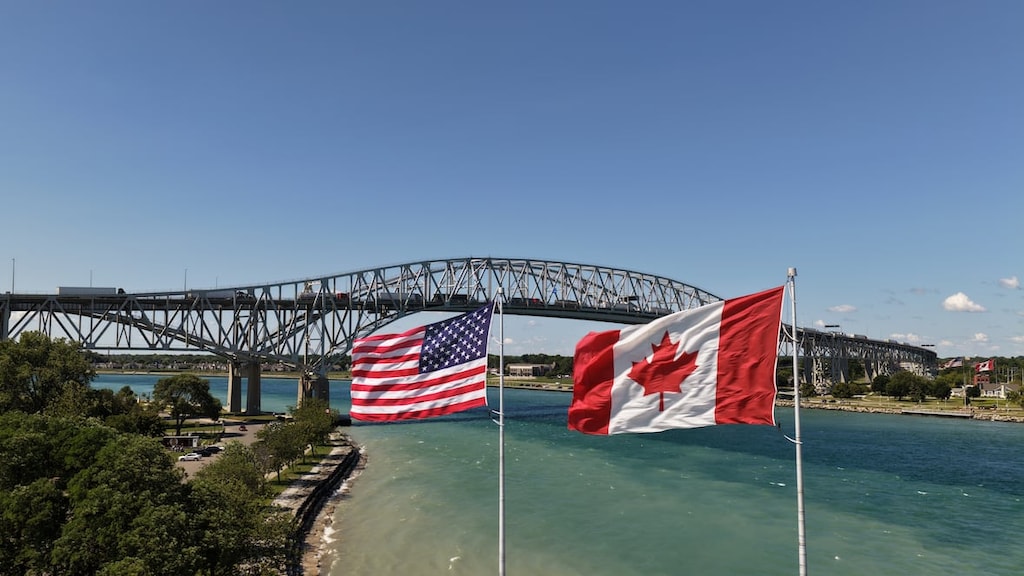
The short answer: economic exposure to a specific, verifiable tariff list.
The Tariff Exposure Map
The 50% U.S. tariffs took effect August 22, 2026 (delayed from an original August 19 date) after trade negotiations collapsed. They cover roughly $20 billion in annual exports — about 5% of Canadian exports to the United States. Canada announced dollar-for-dollar retaliation effective September 8, 2026.
What matters for regional housing is which sectors landed where:
Explicitly named in the U.S. proclamations: motor vehicles, dairy, alcoholic beverages — plus wood products, chemicals, textiles, and various manufactured goods.
Explicitly exempt: energy (oil and natural gas), potash, fish and seafood, critical minerals, and steel and aluminum (which remain under separate, pre-existing Section 232 measures).
This exemption list is the entire story of the regional split. Alberta and Saskatchewan’s economic engines — oil, natural gas, potash, uranium — are carved out. Ontario’s auto sector was specifically targeted.
The Manufacturing Vulnerability Factor
Ontario produces roughly 40% of Canada’s manufacturing GDP. The auto sector alone employs over 100,000 workers directly, with hundreds of thousands more in supporting industries.
Canada’s auto industry is deeply integrated into continental supply chains where parts cross the border multiple times before a vehicle is complete. Each crossing where tariffs apply compounds costs. With motor vehicles explicitly named in the proclamations, this exposure is direct rather than incidental.
Housing markets don’t crash overnight from economic stress — they deflate gradually. Job uncertainty leads to fewer buyers, which leads to longer listing times, which leads to price reductions. The Ontario decline isn’t a panic; it’s a slow squeeze.
Prairie Economic Insulation
Alberta learned painful lessons from the 2014–2016 oil crash and has since invested in tech, logistics, and food processing. Calgary hosts growing tech hubs, while Edmonton has expanded healthcare and education sectors.
Saskatchewan benefits from being a breadbasket economy with global reach. Potash, uranium, and agricultural exports flow to markets worldwide, reducing dependence on any single trading partner — and potash specifically appears on the exemption list.
What the 2026 Regional Numbers Actually Show
CREA’s April 2026 forecast projects the national average home price at approximately $688,955 for 2026, rising modestly to $695,094 in 2027. But that national figure hides a meaningful regional split.
Greater Toronto Area
Toronto’s benchmark price — which better reflects typical home sales than the average, since averages get skewed by luxury transactions — sits around $927,800, down roughly 6.5% year-over-year. That decline layers on top of earlier drops from the early-2022 peak; CREA’s Home Price Index nationally declined for 14 consecutive months and now sits roughly 20% below that peak.
💡 A note on price figures: You’ll see GTA “average” prices quoted well above $1 million in some coverage. Average and benchmark measure different things — averages include high-end transactions that skew the number upward. When comparing regions, use the same measure consistently.
Days on market have stretched considerably from the frenzied 2021–2022 period. Condo markets in particular face elevated inventory, partly due to investor exits.
Calgary and Edmonton
Alberta’s major cities have posted flat to slightly positive price growth. Calgary’s average home price hovers around $585,000, while Edmonton sits near $420,000. Both benefit from continued interprovincial migration — Canadians relocating from BC and Ontario seeking affordability.
Regina and Winnipeg
Regina’s average sits around $325,000, while Winnipeg averages approximately $365,000. These markets haven’t boomed, but they haven’t declined meaningfully either. Stability has become the differentiator.
The Interprovincial Migration Pattern
Alberta has continued attracting substantial net interprovincial migration — many young professionals and families priced out of Toronto and Vancouver who can work remotely or transfer within national companies. This migration sustains Prairie housing demand even as broader economic uncertainty lingers.
Ontario vs. Prairies: Regional Comparison
| Factor | Greater Toronto Area | Calgary | Regina/Winnipeg |
|---|---|---|---|
| Benchmark/Average Price (Aug 2026) | ~$927,800 benchmark | $575,000–$595,000 | $325,000–$375,000 |
| Year-over-Year Price Change | Approximately −6.5% | +1% to +3% | Flat to +2% |
| Rental Yield (Typical) | 3.5%–4.2% | 5.0%–6.0% | 6.0%–7.5% |
| New Tariff Exposure | High (autos named) | Low (energy exempt) | Low (potash exempt) |
| Job Market Outlook 2026–2027 | Uncertain/Softening | Stable | Stable |
| Minimum Down Payment (5% tier) | ~$46,400 on benchmark | ~$29,000 | ~$16,250–$18,750 |
The down payment difference is striking. Note that homes above $500,000 use a tiered structure — 5% on the first $500,000 plus 10% on the portion above — so a $927,800 GTA purchase requires roughly $67,780, not a flat 5%.
How Tariffs Are Reshaping Real Estate Investment Strategy
The Concentration Risk Problem
Many Canadian real estate investors concentrated portfolios in the GTA and Greater Vancouver because “those markets always go up.” The 2026 correction challenges that assumption. Markets can decline, and economic shocks hit different regions very differently.
Canadian regional housing markets offer diversification benefits similar to holding different asset classes. When Ontario manufacturing struggles, Prairie energy and agriculture may hold steady.
Cash Flow vs. Appreciation
Ontario investors traditionally chased appreciation — buying condos that barely broke even monthly, betting on price gains to build wealth. That strategy has struggled in the current environment.
Prairie markets, with rental yields of 5–7.5% versus 3.5–4.2% in Toronto, favour cash flow strategies. You generate income each month regardless of whether prices rise — a more resilient approach during uncertainty.
The Foreign Buyer Ban Expiry: Verified Timeline
Canada’s Prohibition on the Purchase of Residential Property by Non-Canadians Act expires January 1, 2027, following a two-year extension announced in February 2024. As of August 2026, the federal government has not announced an extension, repeal, or replacement — meaning the default outcome is that it lapses.
Legal analysis from July 2026 indicates the Carney government is weighing a new framework rather than a straight extension, potentially channeling offshore capital toward new construction rather than shutting it out entirely.
Important context often missed: provincial and municipal foreign buyer taxes are separate laws unaffected by the federal ban’s expiry. In Toronto, a non-resident buyer still faces roughly 35% in combined speculation taxes. Alberta has no foreign buyer tax at all — a detail worth noting if you’re comparing regions on this factor.
Should You Buy in the Prairies Instead of Ontario?
The honest answer depends entirely on your circumstances.
Step 1: Clarify Your Primary Goal
For principal residences: Your job location matters most. Buying a cheap house in Regina doesn’t help if your career requires you in Toronto. Remote work has expanded options, but not universally.
For investment properties: Cash flow and long-term appreciation potential become central. Prairie markets offer better current yields; Ontario has historically offered stronger appreciation — though that pattern is being tested.
Step 2: Run the Actual Numbers
Model a specific property purchase in each region. Account for:
- Down payment requirements (remember the tiered structure above $500,000)
- Provincial land transfer taxes (Ontario’s are notably higher, and Toronto adds a municipal LTT)
- Expected rental income versus carrying costs
- Property tax rates (vary significantly by municipality)
- Vacancy rate assumptions
Step 3: Assess Your Risk Tolerance
Ontario’s decline could represent a buying opportunity if prices recover. Some investors are betting on exactly that. But there’s no guarantee prices return to previous highs within any particular timeframe — CREA projects only modest national growth through 2027, with full recovery to 2022 peak levels not expected until around 2029.
Prairie markets offer more stability but potentially less dramatic upside.
Step 4: Use the FHSA Advantage
First-time buyers should maximize the First Home Savings Account regardless of region. You can contribute $8,000 per year (up to $40,000 lifetime), get a tax deduction on contributions, and withdraw tax-free for a qualifying home purchase.
Here’s where it gets interesting: the FHSA’s $40,000 lifetime limit covers a much larger share of a Prairie down payment. On a $400,000 Winnipeg home, a maxed FHSA could cover the entire minimum down payment with room to spare. On a $927,800 GTA benchmark home requiring roughly $67,780 down, $40,000 covers about 59%.
Common Mistakes When Buying in Unfamiliar Markets
Mistake 1: Ignoring Neighbourhood-Level Differences
Every city has strong and weak neighbourhoods, and you can’t assess them from Google Maps. Edmonton’s $420,000 average spans everything from struggling inner-city areas to thriving suburban developments. Visit in person, talk to local agents, and understand what you’re actually buying.
Mistake 2: Underestimating Remote Property Management
Managing a rental from 3,000 km away is harder than it looks. Budget for professional property management (typically 8–10% of gross rent) or prepare for regular travel. Self-managing from a distance rarely goes well.
Mistake 3: Forgetting Climate Considerations
Prairie winters are significantly colder than Ontario winters. Heating costs run higher, and properties face more freeze-thaw cycles that stress roofing and foundations. Factor these maintenance realities into expense projections.
Mistake 4: Assuming All Prairie Markets Are Identical
Calgary ≠ Edmonton ≠ Regina ≠ Winnipeg. Calgary has higher prices but stronger tech sector growth. Edmonton offers better affordability but more oil-price sensitivity. Regina has the lowest prices but limited economic diversity. Winnipeg has a stable economy but slower appreciation history.
Mistake 5: Overleveraging Because Prices Seem Cheap
Lower prices tempt investors to buy more properties with more leverage. This is dangerous — a correction affects leveraged investors far more severely. If you’d normally buy one property with 20% down, resist buying two with 10% down each just because Prairie prices make it mathematically possible.
What Happens When Trade Tensions Resolve?
Nobody knows when or how this resolves. Notably, these particular tariffs use Section 338 of the Tariff Act of 1930, apply even to CUSMA-compliant goods, and have no expiry date. USTR Jamieson Greer stated on August 22 that no future talks were currently planned.
Scenario A — Resolution: If tariffs are rolled back, Ontario manufacturing recovers, employment stabilizes, and GTA housing demand likely rebounds. Buyers who purchased during the decline could see solid appreciation.
Scenario B — Prolonged conflict: Extended tariffs could permanently reshape Canadian manufacturing. Some facilities may close or relocate. This scenario favours Prairie markets structurally.
Scenario C — Permanent feature: If North American trade policy has fundamentally shifted, Canada’s economy adapts over 5–10 years, potentially benefiting energy-exporting provinces and logistics hubs.
Key Takeaways
- The GTA benchmark sits around $927,800, down roughly 6.5% year-over-year, while Prairie markets hold flat to +3% — a genuine split, though smaller than the “8–12% decline” figure sometimes cited
- Energy, potash, fish, and critical minerals are explicitly exempt from the August 22 tariffs, while motor vehicles were specifically named — this exemption list explains the regional divergence
- CREA forecasts approximately $688,955 nationally for 2026 and $695,094 for 2027, with peak recovery not expected until around 2029
- Prairie rental yields of 5–7.5% substantially exceed GTA yields of 3.5–4.2%, favouring cash flow strategies
- The foreign buyer ban expires January 1, 2027 — verified, with no extension announced as of August 2026 — but provincial and municipal speculation taxes remain unaffected
- First-time buyers using the FHSA ($40,000 lifetime) cover a far larger share of a Prairie down payment than a GTA one
- Remote property ownership requires budgeting 8–10% of rent for professional management
Frequently Asked Questions
How are the 2026 tariffs affecting Ontario housing prices?
The tariffs that took effect August 22, 2026 specifically named motor vehicles — directly hitting the sector that employs over 100,000 Ontarians and hundreds of thousands more in supporting industries. Job uncertainty reduces buyer participation, lengthens listing times, and pressures prices. Toronto’s benchmark price now sits around $927,800, down roughly 6.5% year-over-year, with steeper declines in manufacturing-heavy areas like Windsor and Oshawa. The impact is a gradual squeeze rather than a sudden crash.
Why are Alberta and Saskatchewan home values more stable than Toronto?
Their economies depend primarily on energy, agriculture, and mining — and critically, energy, potash, fish, and critical minerals are all explicitly exempt from the August 22 tariffs. Oil and natural gas exports continue flowing; potash and grain find buyers worldwide. Both provinces have also diversified since the 2014 oil crash, building tech, healthcare, and logistics sectors. Less tariff exposure plus stronger diversification has insulated Prairie property values.
When does Canada’s foreign buyer ban expire?
The Prohibition on the Purchase of Residential Property by Non-Canadians Act expires January 1, 2027, following a two-year extension announced in February 2024. As of August 2026, Ottawa has not announced an extension, repeal, or replacement — so the default outcome is that it lapses. However, provincial and municipal foreign buyer taxes are separate laws that continue regardless: Ontario’s 25% non-resident speculation tax plus Toronto’s additional 10% remain in place, while Alberta has no foreign buyer tax at all.
Should I buy property in the Prairies instead of Ontario right now?
It depends on your circumstances rather than market conditions alone. If your job allows location flexibility and you’re seeking cash flow, Prairie markets offer rental yields nearly double Toronto’s. If your career requires an Ontario presence, buying during a decline could prove wise if prices recover — though CREA’s forecast suggests only modest national growth through 2027. Run specific numbers on both scenarios, factor in management costs if buying remotely, and never buy more than you can afford to hold through several years of flat prices.
The Prairie housing market story in 2026 isn’t about one region winning and another losing — it’s about understanding that Canadian regional markets respond to different economic forces, and that the tariff exemption list explains most of the divergence. Whether you’re buying your first home or expanding an investment portfolio, geographic awareness has become essential. Use this moment to think critically about where your real estate exposure sits. For more insights on Canadian housing and personal finance, explore the full library at Getwealthy.
Get free Canadian money tips every week
TFSA updates, CRA changes, mortgage strategies — straight to your inbox every Thursday. No spam, unsubscribe anytime.
Certified Financial Planner (CFP) and Chartered Investment Manager (CIM) with over 17 years of experience in Canadian personal finance. Spent 10+ years at one of Canada's Big Five banks, the last 7 focused exclusively on high-net-worth clients. Every guide is written with the same depth I bring to real client work — Canada-specific, CRA-verified, and always free.
Disclaimer: This article is for informational and educational purposes only and does not constitute financial, tax, or legal advice. Regional housing data and trade policy are both changing rapidly — verify current figures before making decisions. Always consult a qualified financial advisor or tax professional for personalized advice.