If you’re wondering about registered accounts maxed out what next, the short answer is: open a non-registered (taxable) investment account and focus on tax-efficient asset location. You’ve already done the hard part — maximizing your TFSA, RRSP, and FHSA. Now it’s about keeping more of your returns by choosing investments that minimize the tax drag in a taxable account. This guide walks you through exactly how to invest after your registered accounts are full, which assets belong where, and how to structure your non-registered portfolio for long-term wealth building in Canada.
Quick Answer:
- After maxing your TFSA ($7,000/year in 2026), RRSP (up to $33,810 for 2026 contributions), and FHSA ($8,000/year), open a non-registered account at any major brokerage
- Prioritize Canadian dividend-paying stocks and broad ETFs like XEQT in your taxable account — they’re taxed more favourably than interest income
- Keep bonds and GICs inside registered accounts where possible, since interest is taxed at your full marginal rate
- Consider corporate class funds or swap-based ETFs for additional tax deferral in taxable accounts (though options have narrowed post-2017)
What Does “Registered Accounts Maxed Out” Actually Mean?
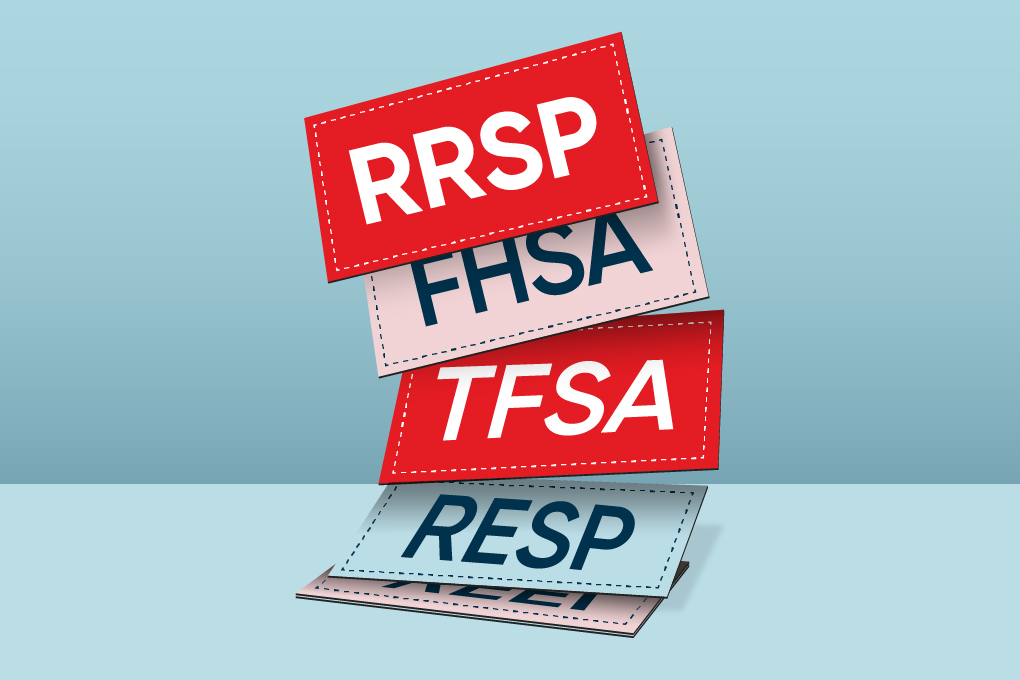
Before diving into non-registered investing, let’s confirm you’ve truly exhausted your registered account room. Many Canadians overestimate how “maxed out” they are because contribution limits reset annually and unused room carries forward.
As of 2026, here’s what “maxed out” looks like for a typical investor:
| Account Type | 2026 Annual Limit | Lifetime Maximum (if eligible since inception) | Key Tax Benefit |
|---|---|---|---|
| TFSA | $7,000 | ~$109,000 (eligible since 2009, age 18+) | Tax-free growth and withdrawals |
| RRSP | 18% of 2025 earned income, max $33,810 | Depends on income history + unused room | Tax-deferred growth; deduction now, taxed on withdrawal |
| FHSA | $8,000 | $40,000 lifetime | Tax-deductible contributions; tax-free withdrawal for home purchase |
| RESP (per child) | No annual limit, but $2,500/year gets max CESG | $50,000 lifetime per beneficiary | Tax-deferred growth; CESG grants up to $7,200 |
Check your actual room by logging into CRA My Account. Your RRSP deduction limit and TFSA contribution room appear under the “RRSP and TFSA” section.
If you still have RESP room and children who might pursue post-secondary education, that’s worth filling before moving to taxable accounts. The 20% Canada Education Savings Grant (CESG) on the first $2,500 annually is essentially free money. For a deeper look at whether an RESP makes sense for your situation, see our guide on what an RESP is and how education savings work in Canada.
Once you’ve genuinely filled every registered account available to you — TFSA, RRSP, FHSA, and any applicable RESPs — then it’s time for the non-registered world.
Registered Accounts Maxed Out What Next: Your Non-Registered Investing Roadmap
Opening a non-registered (taxable) investment account is straightforward. You can do it at the same brokerage where you hold your TFSA and RRSP — Wealthsimple, Questrade, TD Direct Investing, RBC Direct Investing, or any other platform. The mechanics are nearly identical to your registered accounts: you transfer cash, buy investments, and watch them grow.
The difference? Every dividend, capital gain, and interest payment is now taxable in the year you receive it (or realize it, in the case of capital gains). This changes how you should think about portfolio construction.
Step 1: Understand the Three Types of Investment Income
In a non-registered account, the CRA treats investment income differently depending on its source:
Interest income (from GICs, bonds, savings accounts, money market funds) is taxed at your full marginal rate — the same as employment income. If you’re in a 40% combined federal/provincial bracket, $1,000 of interest becomes $600 after tax.
Canadian dividends from eligible corporations receive the dividend tax credit, which significantly reduces the effective tax rate. Depending on your province and income, eligible dividends might be taxed at an effective rate of 15–25% — far less than interest.
Capital gains are the most tax-efficient. Only 50% of the gain is included in your taxable income (the “inclusion rate”). If you’re in a 40% bracket, $1,000 of capital gains costs you roughly $200 in tax — less than half what you’d pay on interest.
This hierarchy — capital gains and Canadian dividends beat interest — should guide every decision in your taxable account.
Step 2: Practice Asset Location, Not Just Asset Allocation
Asset allocation is what you own (60% stocks, 40% bonds, for example). Asset location is where you hold each asset across your accounts. When you have both registered and non-registered accounts, location matters as much as allocation.
The general principle:
- Hold tax-inefficient assets (bonds, GICs, REITs) inside registered accounts where the interest or distributions won’t be taxed annually
- Hold tax-efficient assets (Canadian dividend stocks, broad equity ETFs) in your non-registered account where the favourable tax treatment applies
For example, if your overall target is 70% equities and 30% bonds, you might hold all your bonds inside your RRSP (where they grow tax-deferred) and keep your non-registered account 100% in equities. The total portfolio still hits your target allocation, but you’ve minimized taxes along the way.
This is why investors with significant sums to invest often think in terms of their “total portfolio” across all accounts rather than treating each account as a standalone unit.
Step 3: Choose Your Non-Registered Investments
For most Canadians, the simplest approach is a low-cost, broadly diversified all-in-one ETF like XEQT (100% equities) or XBAL (60/40). These hold thousands of stocks globally, rebalance automatically, and charge management fees under 0.25%.
In a non-registered account, XEQT is particularly attractive because:
- Equity returns come primarily as capital gains (deferred until you sell) and dividends (taxed favourably)
- The Canadian equity portion qualifies for the dividend tax credit
- There’s minimal turnover inside the fund, meaning fewer taxable events you don’t control
If you prefer more control, you could build a three-ETF portfolio: a Canadian equity ETF (like XIC), a U.S. equity ETF (like VUN or XUU), and an international equity ETF (like XEF). This adds complexity — you’ll need to rebalance manually — but lets you fine-tune your tax situation (for instance, some investors hold U.S. equities in their RRSP to avoid U.S. withholding tax on dividends, a nuance that doesn’t apply to Canadian or international holdings in the same way).
Step 4: Minimize Taxable Events
In a registered account, you can sell and buy freely without tax consequences. In a non-registered account, every sale is a taxable event if you have a gain. This changes your behaviour:
Avoid frequent trading. Each profitable sale triggers capital gains tax now rather than later.
Don’t chase yesterday’s winners. Switching from one ETF to another might cost you 10–15% of your gain in taxes.
Use new contributions to rebalance instead of selling. If equities have grown and you’re overweight, direct new cash to other asset classes (in whichever account makes sense) rather than selling equities and triggering a gain.
The buy-and-hold approach that works well in any account is especially valuable in a taxable account. This is one reason passive investing beats active stock-picking for most people in non-registered accounts — constant trading is expensive.
How Are Non-Registered Account Investments Taxed in Canada?
:max_bytes(150000):strip_icc()/Non-RegisteredAccount-3069f2fcc81d4d59901a6c1e00f07c85.jpg "Registered Accounts Done? Where to Invest Next in Canada")
Understanding the mechanics helps you plan. Let’s walk through a concrete example of non-registered account investing Canada tax treatment.
Suppose you invest $50,000 in XEQT in a non-registered account. Over the year, XEQT pays distributions totalling $800, and by year-end your holdings are worth $54,000.
What’s taxable this year?
The $800 in distributions is taxable. XEQT distributions are typically a mix of Canadian dividends, foreign income, and sometimes return of capital. Your brokerage issues a T3 slip breaking this down. Canadian-eligible dividends get the dividend tax credit; foreign income is taxed at your marginal rate; return of capital isn’t taxable immediately but reduces your adjusted cost base (ACB).
The $4,000 unrealized gain ($54,000 current value minus $50,000 cost)? Not taxable — yet. You only owe tax on capital gains when you sell. If you hold for 20 years and sell at $150,000, you’ll pay tax on the full $100,000 gain at that point, but you’ve had decades of tax-deferred compounding.
When you do sell:
If your ACB (adjusted cost base) is $50,000 and you sell at $70,000, your capital gain is $20,000. Only 50% ($10,000) is included in your taxable income. At a 40% marginal rate, you’d owe $4,000 in tax on that gain (verified).
Compare that to $20,000 of GIC interest: at 40%, you’d owe $8,000 (verified). Capital gains are literally half the tax cost.
This is why, after TFSA and RRSP are full, equity-heavy portfolios in taxable accounts often make sense — especially for investors with long time horizons who can defer gains for years or decades.
The Capital Gains Inclusion Rate: What to Watch
The 50% capital gains inclusion rate has been Canada’s rule for over two decades, but it’s not guaranteed forever. Budget proposals have occasionally floated increasing it — most recently a proposal in the 2024 federal budget, which was officially cancelled by the federal government in March 2025 and never took effect. As of September 2026, the rate remains a flat 50% for individual investors, at every gain amount. Stay aware of federal budgets — any future change would significantly affect your after-tax returns in non-registered accounts.
Taxable Account Strategy Canada: Advanced Considerations
Once you’ve covered the basics — asset location, tax-efficient investments, buy-and-hold discipline — a few advanced tactics can squeeze out additional savings.
Tax-Loss Harvesting
If one of your holdings drops below what you paid, you can sell it to “realize” the capital loss. Capital losses offset capital gains, reducing your tax bill. You can then buy a similar (but not identical) investment to maintain your market exposure.
Example: You bought XIC (Canadian equities) at $30,000 and it’s now worth $25,000. You sell, realizing a $5,000 capital loss. You immediately buy XIU (a similar but not identical Canadian equity ETF). The loss offsets gains elsewhere; your portfolio stays invested in Canadian stocks.
The CRA’s “superficial loss” rule prevents you from buying the identical security within 30 days before or after the sale. Buying a similar ETF from a different provider typically avoids this rule, though interpretations can vary — consult a tax professional if amounts are significant.
Corporate Class Funds and Swap-Based ETFs
Before 2017, corporate class mutual funds were a popular tax-deferral tool — you could switch between funds within the same corporate structure without triggering gains. Federal rule changes largely closed this loophole for new purchases.
Swap-based ETFs (like Horizons’ total return ETFs) use derivatives to convert income into capital gains, deferring tax until you sell. The CRA has scrutinized these structures, and some have been restructured to reduce their tax advantages. They can still be useful, but they’re more complex and less certain than simply holding a standard equity ETF.
For most investors, the simple approach — holding a low-cost, tax-efficient equity ETF and avoiding unnecessary trades — captures most of the available tax benefit without the complexity or regulatory risk of exotic structures.
Holding U.S. Stocks: Where and How
If you want direct U.S. equity exposure, where you hold it matters:
RRSP: U.S. dividends are exempt from the 15% U.S. withholding tax under the Canada-U.S. tax treaty. This makes the RRSP the ideal home for U.S. dividend-paying stocks or U.S.-listed ETFs.
TFSA and non-registered: The 15% withholding tax applies, reducing your returns. For this reason, some investors prefer Canadian-listed ETFs that hold U.S. stocks (the fund pays the withholding tax, but it’s less visible) or simply accept the drag.
If you’ve already maxed your RRSP and still want U.S. exposure in a non-registered account, consider holding U.S. equities through a Canadian-domiciled ETF (like VUN) rather than buying U.S.-listed ETFs directly. Currency conversion fees and U.S. estate tax considerations (for accounts over US$60,000 held by non-citizens) add complexity to holding U.S.-listed securities directly.
What Comes Before Non-Registered Investing? A Quick Priority Check
This post assumes you’ve already filled your registered accounts, but it’s worth double-checking your order of operations. The optimal priority for most Canadians:
1. Employer RRSP/DPSP match: If your employer matches contributions to a group RRSP or Deferred Profit Sharing Plan (DPSP), contribute enough to get the full match. This is an immediate 50–100% return.
2. FHSA (if planning to buy a first home): The $8,000 annual contribution room is use-it-or-lose-it for the first year, but unused room carries forward after that. The combination of an upfront deduction and tax-free withdrawal makes the FHSA extraordinarily powerful.
3. TFSA: Tax-free growth forever, no income tax on withdrawals, no clawback of government benefits. The $7,000 annual room (2026) is precious.
4. RRSP (up to your limit): Especially valuable if you’re in a higher tax bracket now than you expect to be in retirement. The deduction saves tax at your current rate; withdrawals are taxed at your (hopefully lower) future rate.
5. RESP (if you have children): The 20% CESG grant on contributions up to $2,500/year is hard to beat. Even if your child doesn’t pursue education, you can transfer growth to your RRSP (within limits) or to another beneficiary.
6. Non-registered investing: Only after the above are genuinely full. This is where you are now.
Key Takeaways
- Once your TFSA ($7,000/year in 2026), RRSP (up to $33,810 for 2026), and FHSA ($8,000/year) are maxed, open a non-registered account at your existing brokerage
- Hold bonds and GICs inside registered accounts; keep tax-efficient equity investments (Canadian dividend stocks, broad ETFs) in your non-registered account to minimize annual tax drag
- Capital gains are taxed at half the rate of interest income (verified: $4,000 vs. $8,000 tax on a $20,000 gain) — favour investments that generate gains over income when investing in taxable accounts
- Avoid frequent trading in non-registered accounts; every profitable sale triggers capital gains tax and accelerates your tax bill
- Verify your actual TFSA (~$109,000 cumulative) and RRSP room through CRA My Account before assuming you’re “maxed out” — unused contribution room carries forward and many Canadians have more room than they realize
- The capital gains inclusion rate remains a flat 50% as of 2026 — a proposed increase was cancelled in March 2025 and never took effect
- If you hold U.S. equities, keep them in your RRSP when possible to avoid the 15% U.S. withholding tax on dividends
Frequently Asked Questions
What happens after I max out all my registered accounts in Canada?
You open a non-registered (taxable) investment account and continue building wealth outside the tax-sheltered system. The key difference is that investment income — dividends, interest, and realized capital gains — becomes taxable each year. Focus on tax-efficient investments (equities over bonds) and minimize trading to defer taxes as long as possible.
Should I pick stocks or buy XEQT in a non-registered account?
For most investors, XEQT or a similar all-in-one equity ETF is the better choice. It’s instantly diversified across thousands of global stocks, rebalances automatically, and generates minimal taxable turnover. Picking individual stocks requires more time, expertise, and trading — each sale is a taxable event. Unless you have a specific edge and the discipline to hold long-term, the simplicity and tax efficiency of a broad ETF wins.
How are non-registered account investments taxed in Canada?
Three types of income get different treatment. Interest (from GICs, bonds, savings accounts) is taxed at your full marginal rate — the same as employment income. Canadian eligible dividends receive a dividend tax credit that lowers your effective rate significantly. Capital gains are the most favourable: only 50% of the gain is included in taxable income (at every gain amount, since the proposed higher rate was cancelled in 2025), so you effectively pay half the tax rate compared to interest. Structure your non-registered holdings to maximize capital gains and Canadian dividends while minimizing interest income.
Understanding what to do when your registered accounts maxed out what next is the final piece of Canada’s investing puzzle. You’ve already captured the best tax shelters available — now it’s about thoughtful asset location, tax-efficient investing, and the discipline to let compounding work in your favour. Keep your costs low, your trades infrequent, and your focus on the long term. For more strategies on building wealth across every account type, explore the rest of Getwealthy’s guides.
Get free Canadian money tips every week
TFSA updates, CRA changes, mortgage strategies — straight to your inbox every Thursday. No spam, unsubscribe anytime.
Certified Financial Planner (CFP) and Chartered Investment Manager (CIM) with over 17 years of experience in Canadian personal finance. Spent 10+ years at one of Canada's Big Five banks, the last 7 focused exclusively on high-net-worth clients. Every guide is written with the same depth I bring to real client work — Canada-specific, CRA-verified, and always free.
Disclaimer: This article is for informational and educational purposes only and does not constitute financial, tax, or legal advice. Always consult a qualified financial advisor or tax professional for personalized advice.