As the clock struck 12:01 a.m. on September 8, 2026, the Canadian financial landscape entered a new era of cross-border friction. The federal government’s $27.6-billion retaliatory counter-tariff package is officially active, deploying matching duties of 15%, 25%, and 50% on a targeted sweep of U.S. imports — confirmed categories including steel, dairy, appliances, agricultural equipment, pulp and paper, and electronics.
Coupled with the Bank of Canada’s recent decision to hold the policy interest rate at 2.25% and signs of labour market softening, these border levies are forcing investors on the Toronto Stock Exchange (TSX) to reassess Q4 earnings expectations. For portfolio managers and everyday retail investors alike, understanding how this trade shock trickles down into corporate balance sheets is no longer optional — it is critical for capital preservation.
This guide breaks down how the new tariffs impact Canadian retail and industrial corporations, provides a real-world scenario of margin compression, and outlines actionable strategies to protect your TSX portfolio.
🚀 Key Takeaways (TL;DR)
- The Tariff Reality: A $27.6 billion barrier has been erected, inflating wholesale supply costs for Canadian businesses relying on U.S. materials in the targeted categories.
- Industrial Vulnerability: TSX companies utilizing imported U.S. steel, agricultural equipment, and pulp/paper products face significant cost increases on fixed-price contracts.
- Retail Margin Squeeze: Consumer discretionary stocks in affected categories (appliances, electronics) must navigate the choice of absorbing import duties or passing costs to inflation-weary shoppers.
- Portfolio Rotation: Investors should consider highly regulated, domestically insulated sectors like telecommunications, utilities, and financial services — while verifying current yield figures directly before investing.
1. The Macro Backdrop: Why Tariffs Change the TSX Landscape
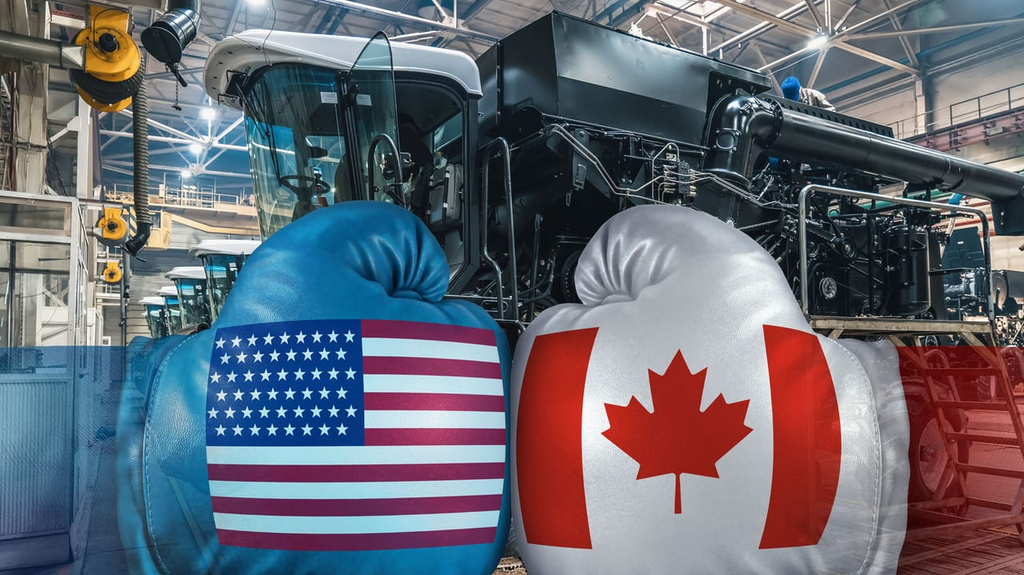
To understand the stock market reaction, we must look at the supply chain mechanics. A tariff is a tax paid by the importing Canadian company at the border, not by the U.S. manufacturer. This means new tax burdens have landed on the balance sheets of Canadian corporations importing from the confirmed target categories.
When input costs spike, companies face “margin compression.” They must either:
- Raise retail prices, risking a drop in consumer demand.
- Absorb the cost internally, directly affecting their quarterly net income and, consequently, their stock price valuations.
💡 A note on labour market data: Some commentary cites specific August 2026 job-loss figures (in the tens of thousands). Confirm the current, official Statistics Canada Labour Force Survey release directly before treating any specific monthly figure as settled — Canada’s unemployment rate was confirmed at 5.8% as of July 2026, and month-to-month figures should be verified against the latest release rather than a single cited number.
2. Deep Dive: TSX Industrial Sector Impacts
The industrial side of the TSX faces meaningful exposure from these countermeasures. The confirmed target list includes tariffs on U.S. steel, agricultural equipment, and pulp and paper products, among the other named categories.
Auto-Parts and Heavy Equipment Manufacturers
Canadian companies that forge vehicle components, aerospace parts, or heavy machinery using specialized U.S. steel face genuine cost pressure.
- The Fixed-Contract Trap: Many TSX industrial manufacturers operate on long-term, fixed-price supply agreements with global giants. If a Canadian auto-parts maker is contracted to deliver a component at a fixed price, but their steel cost jumps due to the tariff, their profit margin compresses. Contractual terms typically prevent immediately passing that cost through.
- Capital Expenditure (CapEx) Considerations: Facing reduced cash flow, affected companies may reconsider dividend growth plans, pause buybacks, or slow hiring, adding near-term volatility to their stock prices.
Transportation and Logistics Buffer
Not all industrial stocks face equal exposure. Domestic rail operators (like CN and CPKC) may see a relative buffer, since cross-border trucking of tariffed goods becomes more complex and costly. Domestic rail networks transporting Canadian-sourced raw materials across provinces continue to see steady demand independent of this specific trade action — though verify current company-specific guidance before drawing investment conclusions.
3. Deep Dive: TSX Retail and Consumer Discretionary
Canadian retail companies face a genuine pricing dilemma. The confirmed tariff categories include duties on appliances and electronics — both directly relevant to major retail categories.
The “Pricing Power” Stress Test
TSX retail stocks in the affected categories face a stress test for “pricing power” — the ability to raise prices without losing customers.
| Retail Category | Tariff Impact | Pricing Power | TSX Stock Outlook |
|---|---|---|---|
| Grocery Essentials | Low for most items (dairy has some exposure; general produce is not on the confirmed list) | High (Inelastic demand) | Defensive. Most domestic groceries remain largely insulated. |
| Big-Box Electronics & Appliances | Confirmed exposure (appliances and electronics both named categories) | Low (Consumers may delay purchases) | Vulnerable. Margin pressure likely in Q4 for U.S.-sourced inventory. |
| Discount Dollar Stores | Depends on sourcing — many goods from Asia, not directly targeted | High (Consumers seek bargains) | Relatively resilient, subject to specific product-line exposure. |
| General Apparel | Not among the explicitly confirmed retaliation categories | Varies | Monitor rather than assume high exposure — verify against the finalized product lists. |
4. Real-World Scenario: The Retail Margin Squeeze
Let’s look at a hypothetical TSX-listed appliance retailer, Can-Appliance Corp, to see how tariffs affect earnings on a confirmed-category product (appliances).
- Pre-Tariff Scenario (August 2026):
- Imports a U.S. refrigerator: $1,000
- Sells to Canadian consumer: $1,400
- Gross Profit: $400 (28.5% margin, verified)
- Post-Tariff Scenario A (Absorbing the Cost):
- Imports the same refrigerator + 25% Tariff: $1,250
- Keeps retail price at $1,400 to maintain sales volume.
- Gross Profit: $150 (margin drops to 10.7%, verified) — Result: earnings pressure if this pattern repeats across the product line.
- Post-Tariff Scenario B (Passing the Cost):
- Imports refrigerator + 25% Tariff: $1,250
- Raises retail price to $1,750 to maintain the original 28.5% margin (verified: $500 profit ÷ $1,750 = 28.57%).
- Result: higher prices risk reduced sales volume, particularly for discretionary big-ticket items.
5. Actionable Strategies to Protect Your Portfolio
To manage exposure to this trade situation, consider these approaches:
- Assess Domestic Services Exposure: Consider TSX sectors with minimal exposure to the confirmed tariff categories — regulated utilities, telecommunications, and major financial services. Note that utility yields generally run 3.5%–4.5% (verify current figures directly), not the higher ranges sometimes cited.
- Audit Your Discretionary Holdings: Review your portfolio for companies with exposure to the specific confirmed categories (steel, appliances, agricultural equipment, pulp/paper, electronics, dairy). Companies outside these categories may have less direct exposure than headlines suggest.
- Focus on Dividend Coverage Ratios: Industrial companies facing cash-flow pressure may reconsider dividend growth. Prioritize equities with reasonable debt-to-equity ratios and sustainable payout ratios to help protect income streams.
Frequently Asked Questions (FAQ)
Q: Will the TSX crash because of the September 8 tariffs?
A: A full market crash is unlikely, in part because the TSX is heavily weighted toward Financials and Energy — and energy is explicitly exempt from the related U.S. tariffs that prompted this response. However, specific retail and manufacturing sub-sectors with confirmed exposure will likely see more meaningful price adjustments.
Q: Are Canadian bank stocks affected by the tariffs?
A: Not directly. However, if manufacturing companies face financial strain from tariff pressures and default on commercial loans, banks may need to increase their Provisions for Credit Losses (PCLs), which could modestly affect quarterly earnings.
Q: How long will these counter-tariffs last?
A: This is genuinely uncertain. Unlike some prior trade measures, the U.S. tariffs that prompted this Canadian response were imposed under Section 338 of the Tariff Act of 1930 and have no expiry date; as of late August 2026, U.S. trade officials indicated no further negotiations were currently planned. Investors should avoid assuming a specific resolution timeline (whether near-term or a fixed “through 2027” duration) and instead monitor official announcements from both governments for developments.
What adjustments are you making to your TSX portfolio this fall? Let us know in the comments below!
Get free Canadian money tips every week
TFSA updates, CRA changes, mortgage strategies — straight to your inbox every Thursday. No spam, unsubscribe anytime.
Certified Financial Planner (CFP) and Chartered Investment Manager (CIM) with over 17 years of experience in Canadian personal finance. Spent 10+ years at one of Canada's Big Five banks, the last 7 focused exclusively on high-net-worth clients. Every guide is written with the same depth I bring to real client work — Canada-specific, CRA-verified, and always free.