If you’re searching for guidance on financial planning at 55 single woman Canada, you’re not alone – and you’re not too late. Here’s a surprising truth: one Canadian woman recently shared that she paid off $150,000 in debt over just five years while supporting two adult daughters in university, yet she still has only $110,000 in investments at 55. Her story proves that progress is possible at any stage. In this post, you’ll learn exactly where to start, which accounts to prioritize, how to catch up on retirement savings in your 50s, and the specific Canadian benefits waiting for you. Let’s build your plan together.
?? Table of Contents
- Why Is Financial Planning at 55 Single Woman Canada Different?
- How Much Should You Really Have Saved by 55 in Canada?
- Where Should You Put Your Money First? TFSA vs RRSP at 55
- How Can Single Women Catch Up on Retirement Savings in Their 50s?
- What Government Benefits Can Single Women Access at 55 and Beyond?
- Common Mistakes Single Women Make With Retirement Planning at 55
- Key Takeaways
- Frequently Asked Questions
Why Is Financial Planning at 55 Single Woman Canada Different?
Financial planning in your 50s as a single woman comes with unique challenges – and unique opportunities. You’re likely managing everything on one income, possibly supporting family members, and facing a shorter runway to retirement than you’d like. But here’s what makes this moment powerful: you likely have your highest earning years ahead, fewer dependent expenses coming, and access to catch-up strategies that can make a real difference.
The Single Income Reality
Without a partner’s income to fall back on, every financial decision carries more weight. You can’t split housing costs, share benefits, or rely on someone else’s pension. This means your planning needs to be more precise – but it also means you have complete control. No compromising on investment choices or retirement timelines. According to FP Canada’s 2026 Projection Assumption Guidelines, financial planners now emphasize personalized projections for inflation, investment returns, and longevity risk, which is especially critical for single women who statistically live longer than men.
The Emotional Load
Let’s be honest: feeling behind on retirement planning single income Canada can be overwhelming. Many women in their 50s carry guilt about not starting sooner or shame about their current numbers. Release that. The woman who paid off $150K in debt while supporting her daughters? She’s proof that determination matters more than a perfect start. Your next decade of decisions will shape your retirement far more than the previous ones.
How Much Should You Really Have Saved by 55 in Canada?
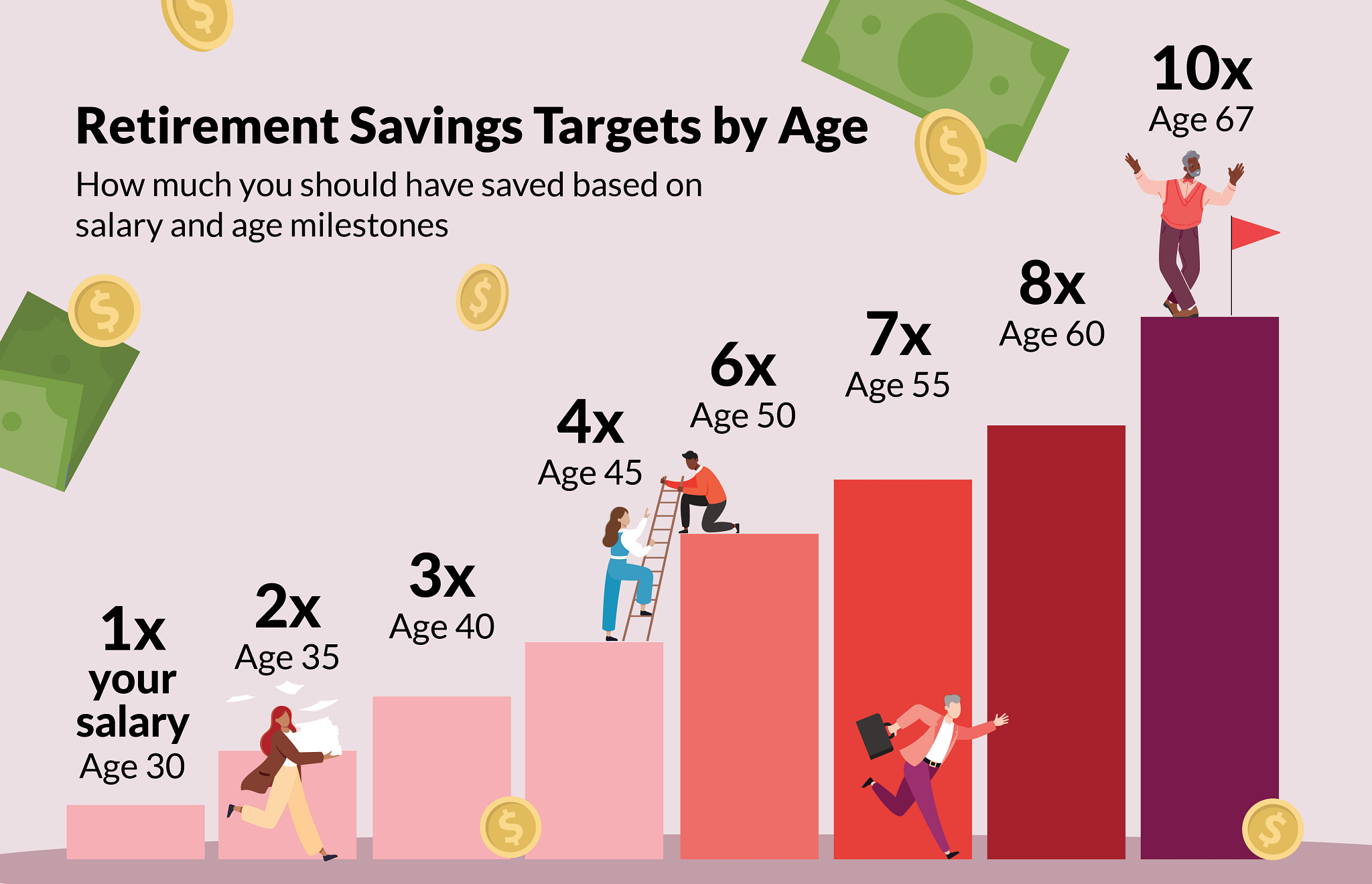
The internet is full of intimidating benchmarks, but let’s talk real numbers for real Canadians. Many experts suggest having 7-10 times your annual salary saved by retirement – but that assumes you started in your 20s. For late start retirement savings 50s situations, a more practical approach is calculating what you actually need.
The Realistic Math
If you earn $70,000 annually and want to replace 70% of your income in retirement, you’d need roughly $49,000 per year. Here’s the good news: you won’t need to fund all of that yourself. CPP and OAS will cover a significant portion. In 2026, the maximum CPP benefit at age 65 is $1,507.65 per month, while OAS currently provides approximately $751.97 monthly as of the July 2026 quarterly adjustment (ages 65-74). That’s potentially over $27,100 per year in government benefits alone – before touching your savings.
Closing the Gap
If you have $110,000 saved today (like our example), aggressive saving over the next 10 years can transform your situation. Contributing $15,000 annually with a 5% average return could grow your portfolio to approximately $350,000-$370,000 by age 65. Combined with government benefits, that’s a solid foundation. If you’re unsure where that money should go, understanding how registered accounts work in Canada is your essential first step.
Where Should You Put Your Money First? TFSA vs RRSP at 55
This is the question that keeps single women up at night. With limited funds and limited time, choosing the right account matters enormously. Let’s compare your two main options for catch up retirement savings Canada 2026.
| Feature | TFSA | RRSP |
|---|---|---|
| 2026 Annual Limit | $7,000 | 18% of income, max $33,810 |
| Lifetime Contribution Room (2026) | $109,000 (if eligible since 2009) | Based on accumulated room |
| Tax Treatment on Contribution | No deduction (after-tax money) | Tax deduction (pre-tax money) |
| Tax Treatment on Withdrawal | Completely tax-free | Taxed as income |
| Impact on OAS/GIS | No impact on benefits | Withdrawals count as income – can affect GIS eligibility |
| Best For at 55 | Lower income earners, flexibility, OAS protection | Higher income earners, tax reduction now |
For most single women at 55, a balanced approach works best. If you’re earning over $60,000, RRSP contributions reduce your tax bill now when you’re in a higher bracket. But don’t ignore the TFSA – those tax-free withdrawals won’t affect your OAS or GIS eligibility later. The cumulative TFSA limit in 2026 is $109,000 if you’ve been eligible since 2009, which represents serious tax-free growth potential.
?? The GIS connection: If you anticipate having modest retirement income, the TFSA is especially important. Because TFSA withdrawals are invisible to the CRA for benefit calculations, you can draw income without affecting your Guaranteed Income Supplement eligibility – a major advantage that many seniors only learn about after it’s too late to plan for.
How Can Single Women Catch Up on Retirement Savings in Their 50s?
The decade between 55 and 65 is your power decade. Kids leaving home, debts paid down, career at its peak – this is when aggressive saving becomes possible. Here’s your step-by-step plan for retirement planning single income Canada.
Step 1: Calculate Your Exact Numbers
Log into your My Service Canada Account to check your CPP statement. It shows your estimated benefit based on your actual contribution history. Many women are surprised to find their CPP is lower than the maximum because of years out of the workforce or lower-earning periods. Knowing your personal CPP estimate – not the theoretical maximum – lets you plan accurately.
Remember, you can start CPP as early as 60 if you’ve contributed, but taking it early reduces your benefit by 0.6% per month before 65 – a total of 36% less at age 60. Each year you delay beyond 65 (up to age 70) increases your benefit by 8.4%.
Step 2: Maximize Employer Benefits
If your employer offers RRSP matching, this is free money you cannot afford to miss. Even if it means temporarily reducing other savings, capture every dollar of employer match first. A 50% match on 6% of your salary is an instant 50% return – no investment can beat that.
Step 3: Automate Aggressive Contributions
Set up automatic transfers on payday – before you see the money. In your 50s, aim to save 20-25% of your gross income if possible. Open accounts with low-fee platforms like Wealthsimple or Questrade, or use high-interest options like EQ Bank for your emergency fund. Every dollar saved now has 10 years to compound.
Step 4: Consider Working Income Sources
Can you negotiate a raise, take on consulting work, or monetize a skill? Even an extra $500 monthly invested over 10 years at 5% grows to over $77,000. For single women doing late start retirement savings 50s, increasing income often has a bigger impact than cutting expenses further.
What Government Benefits Can Single Women Access at 55 and Beyond?
Canada’s retirement benefits system changes at specific ages. Understanding these milestones helps you optimize your timing and maximize your income.
At Age 55
You can withdraw from a Locked-In Retirement Account (LIRA) in some provinces. You may also qualify for early retirement provisions in certain pension plans. Some employer benefits allow bridge payments starting at 55. This is the ideal age to start seriously modeling your retirement income scenarios and stress-testing different assumptions.
At Age 60
CPP becomes available, though at a reduced rate. Taking CPP at 60 instead of 65 means a 36% permanent reduction. For a single woman relying solely on her own income, waiting often makes sense – unless health concerns or job loss change the equation. Each year you delay past 65 (up to 70) increases your benefit by 8.4%.
At Age 65
OAS begins at approximately $751.97 monthly (July 2026 rate for ages 65-74, adjusted quarterly for inflation). The Guaranteed Income Supplement (GIS) provides up to approximately $1,109.85 per month for single low-income seniors in 2026 – significantly more than many people realize. GIS is particularly important for single women with modest savings, and TFSA withdrawals don’t count as income for GIS eligibility, which is why building your TFSA matters so much in your planning.
?? GIS planning tip: If your retirement income (excluding OAS and TFSA withdrawals) is under approximately $22,488 in 2026, you may qualify for full or partial GIS. This means carefully structuring your withdrawal strategy – drawing from TFSA first rather than RRSP – can mean the difference between qualifying for GIS support or not.
At Age 71
Your RRSP must convert to a RRIF, and minimum withdrawals begin. Planning for this now helps you avoid surprise tax bills later. This is also when many women discover they’re facing OAS clawbacks because their RRIF withdrawals pushed their income over the clawback threshold (currently $93,454 based on 2025 income for the July 2026 to June 2027 payment period). Strategic early withdrawals in your 60s – while your income is lower – can prevent this.
Common Mistakes Single Women Make With Retirement Planning at 55
Avoiding these pitfalls can save you years of retirement income. Each mistake is fixable, but prevention is easier than correction.
Mistake 1: Keeping Too Much in Cash
Fear of market losses keeps many women holding GICs and savings accounts exclusively. While a 6-12 month emergency fund in cash makes sense, your long-term retirement savings need growth. At 55, you still have 10+ years of investment horizon – enough time to weather market cycles. A balanced portfolio appropriate for your risk tolerance will likely outperform GICs over that timeframe.
Mistake 2: Not Claiming All Tax Credits
Single women often miss valuable tax credits: the Canada Caregiver Credit (approximately $8,159 in 2026) if supporting aging parents, medical expense credits, or the Disability Tax Credit if applicable. These credits reduce your tax bill, leaving more money to invest. Many Canadians overlook significant benefits hiding in plain sight.
Mistake 3: Ignoring Estate Planning
Without a spouse to automatically inherit, your estate planning matters more. Naming beneficiaries directly on your RRSP and TFSA accounts allows these funds to bypass probate and transfer immediately to your named beneficiaries. Ontario, for example, charges probate fees of 1.5% on estates over $50,000 – which can cost thousands unnecessarily. Review your beneficiary designations annually to ensure they’re current.
Mistake 4: Delaying the Start
Every month you wait to begin is a month of compound growth lost. The best time to start was 20 years ago. The second best time is today. Even imperfect action beats perfect planning that never happens.
Key Takeaways
- At 55, you still have 10+ years to build wealth – one Canadian woman paid off $150,000 in debt in just 5 years at this stage
- Your 2026 TFSA contribution room could be up to $109,000 if unused – tax-free withdrawals won’t affect GIS or OAS benefits
- CPP max at 65: $1,507.65/month + OAS: $751.97/month (July 2026) = over $27,100 annually in government benefits before touching savings
- For single women, TFSA often beats RRSP for flexibility, but higher earners benefit from RRSP tax deductions now – the 2026 RRSP limit is $33,810
- GIS maximum for single seniors: approximately $1,109.85/month in 2026 – a significant income source for those with modest retirement savings (not the much lower figures often cited in older articles)
- Automate savings of 20-25% of income and capture every dollar of employer RRSP matching
- Structure your retirement withdrawals to protect GIS eligibility: draw from TFSA first, as it’s invisible to CRA for benefit calculations
Frequently Asked Questions
Is it too late to start retirement planning at 55 in Canada?
No, it’s absolutely not too late. You have at least 10 working years ahead to save aggressively, plus access to CPP, OAS, and potentially GIS benefits. The maximum CPP at 65 is $1,507.65/month and OAS is $751.97/month as of July 2026 (adjusted quarterly) – over $27,100 per year in guaranteed government income. Many Canadians have successfully built substantial retirement funds starting in their 50s by maximizing contributions to TFSAs (up to $109,000 lifetime) and RRSPs (up to $33,810 in 2026) while reducing expenses.
How much should a single 55-year-old have saved for retirement?
Traditional benchmarks suggest 7-10 times your annual salary, but that assumes an early start. A practical target for a single 55-year-old Canadian earning $70,000 is $300,000-$400,000 in savings by age 65. Combined with CPP, OAS ($751.97/month July 2026), and potentially GIS (up to $1,109.85/month for single low-income seniors), this can support a comfortable retirement. Aggressive saving of 20-25% over the next decade, plus employer matching and tax-advantaged growth, can help you reach that target.
Should I pay off my mortgage or invest at 55?
This depends on your mortgage interest rate, expected investment returns, and risk tolerance. If your mortgage rate is below 5% and you haven’t maximized your TFSA or employer RRSP matching, investing likely wins mathematically. However, entering retirement mortgage-free provides invaluable peace of mind and flexibility on a single income. A balanced approach – accelerating mortgage payments while contributing to registered accounts – often works best for single women seeking both security and growth.
Financial planning at 55 as a single woman in Canada isn’t about perfection – it’s about progress. You have more time, more options, and more government support than you might realize. The GIS alone can provide over $1,100 monthly for low-income seniors; OAS and CPP can cover $27,000+ annually. The key is starting today: calculate your numbers, choose your accounts strategically, automate your savings, and give yourself grace for the past while taking control of your future. Your retirement can still be everything you want it to be. Explore more strategies and tools at Getwealthy to keep building your financial confidence.
Get free Canadian money tips every week
TFSA updates, CRA changes, mortgage strategies — straight to your inbox every Thursday. No spam, unsubscribe anytime.
Certified Financial Planner (CFP) and Chartered Investment Manager (CIM) with over 17 years of experience in Canadian personal finance. Spent 10+ years at one of Canada's Big Five banks, the last 7 focused exclusively on high-net-worth clients. Every guide is written with the same depth I bring to real client work — Canada-specific, CRA-verified, and always free.
Disclaimer: This article is for informational and educational purposes only and does not constitute financial, tax, or legal advice. Always consult a qualified financial advisor or tax professional for personalized advice.