When comparing term vs whole life insurance Canada, most families are shocked to learn that term life can cost up to 10 times less than whole life coverage for the same death benefit. That’s thousands of dollars saved every year — money you could redirect toward your TFSA, RRSP, or your kids’ RESP. In this guide, you’ll discover exactly how these two insurance types differ, which one fits your family’s needs, and how to make the smartest choice for your budget in 2026. Let’s break down the real numbers so you can protect your loved ones without overpaying.
📋 Table of Contents
- What Is Term vs Whole Life Insurance Canada and How Do They Differ?
- Why Is the Cheapest Life Insurance Canada Option Often the Best for Families?
- Term Life Insurance Benefits: What Makes It Ideal for Canadian Families?
- Whole Life Insurance Cost Comparison: Understanding the Premium Gap
- How to Choose the Right Life Insurance for Your Family in 2026
- Common Mistakes When Choosing Life Insurance in Canada
- Key Takeaways
- Frequently Asked Questions
What Is Term vs Whole Life Insurance Canada and How Do They Differ?
Understanding the fundamental differences between these two insurance types is the first step toward making a confident decision. Both provide a death benefit to your beneficiaries, but that’s where the similarities end. Let’s examine what sets them apart.
Term Life Insurance: Coverage When You Need It Most
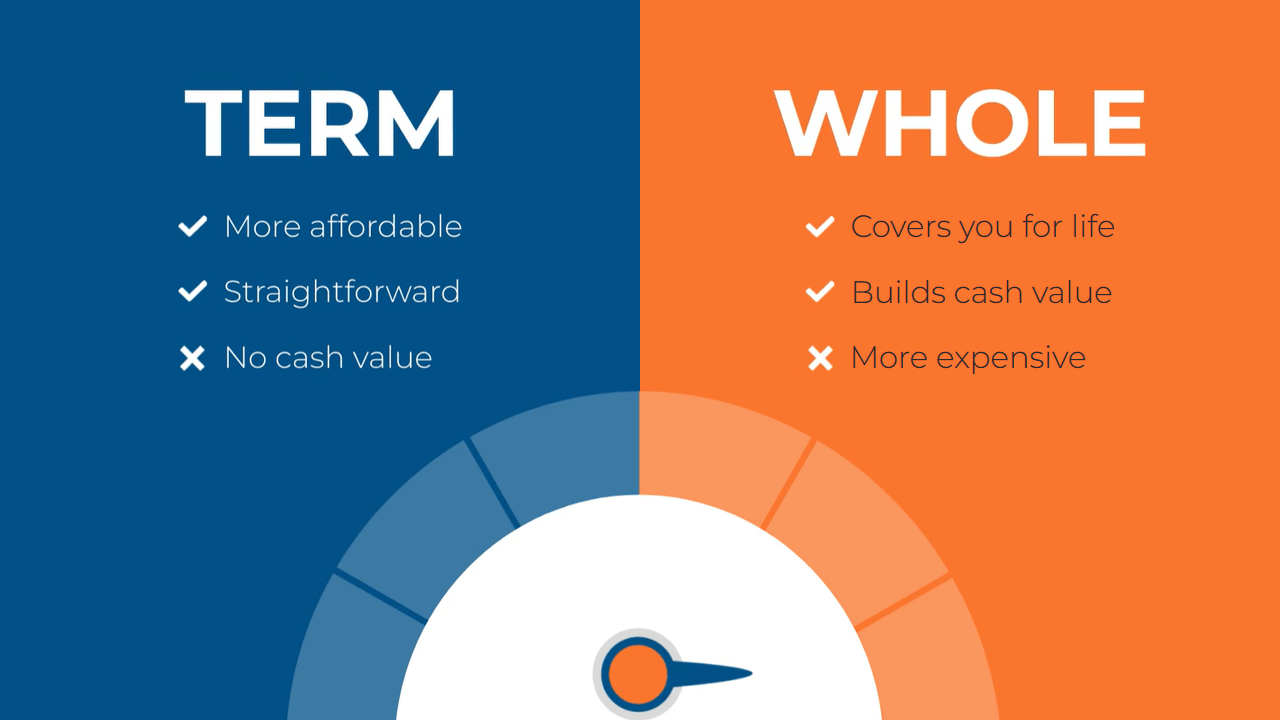
Term life insurance covers you for a specific period — typically 10, 20, or 30 years. If you pass away during this term, your beneficiaries receive the death benefit. If the term expires and you’re still alive, the coverage simply ends with no payout. For most Canadians, term life insurance is the more affordable and practical choice because it allows you to end your coverage once you no longer have dependents or a mortgage to protect.
Think of term insurance like renting an apartment. You pay for exactly what you need, when you need it. A 35-year-old non-smoking parent in good health might pay $25–$40 per month for $500,000 in term coverage over 20 years. That’s less than many Canadians spend on streaming subscriptions.
Whole Life Insurance: Lifetime Coverage with a Cash Value
Whole life insurance covers you throughout your life — not just for a set period. As long as you pay your premiums, your beneficiaries will receive a death benefit whenever you pass away. Additionally, whole life policies build a cash value over time that grows tax-deferred, which you can borrow against or withdraw.
The tradeoff? Dramatically higher premiums. That same 35-year-old might pay $300–$500 per month for a comparable whole life policy. That’s a difference of $3,000–$5,500 annually — money that could otherwise go toward maxing out your TFSA’s $7,000 annual contribution limit or building an emergency fund.
Why Is the Cheapest Life Insurance Canada Option Often the Best for Families?
When you’re raising a family in 2026, every dollar matters. With Ontario home insurance averaging $2,235 per year (about $186 monthly, confirmed via Rates.ca Q2 2026) and EI premiums now calculated on maximum insurable earnings of $68,900, your budget is already stretched. Here’s why term life’s affordability makes it the smart choice for most Canadian parents.
The “Buy Term and Invest the Difference” Strategy
Financial planners often recommend buying affordable term coverage and investing the premium savings yourself. Let’s say you save $4,000 annually by choosing term over whole life. If you invest that difference in a diversified portfolio earning 6% annually over 20 years (contributing at the start of each year), you’d accumulate approximately $156,000 — verified — and you’d control that money entirely.
Compare this to whole life’s cash value, which typically earns 1–3% and comes with surrender charges if you access it early. By using your TFSA and RRSP strategically, you can build wealth more efficiently while maintaining flexibility.
Matching Coverage to Your Actual Needs
Here’s a truth insurance agents rarely emphasize: your life insurance needs decrease over time. When your kids are young, you need maximum coverage to replace decades of income. But once they’re adults, your mortgage is paid off, and you’ve built retirement savings, your dependents’ financial needs drop dramatically.
Term insurance lets you match coverage to this reality. Buy a 20-year term when your children are born, and by the time it expires, they’ll be independent adults. Why pay for lifetime coverage when you won’t need it?
Term Life Insurance Benefits: What Makes It Ideal for Canadian Families?
Beyond affordability, term life offers several advantages that align perfectly with how young Canadian families build financial security.
Simplicity and Transparency
Term policies are straightforward. You choose your coverage amount, select your term length, and pay a fixed premium. There are no complex investment components, no fluctuating cash values, and no confusing dividend schedules. You know exactly what you’re paying and exactly what your family will receive.
Higher Coverage Amounts Within Your Budget
The CPP death benefit is a one-time payment of just $2,500 — nowhere near enough to support a family. With term insurance, you can afford meaningful coverage. A $1 million term policy might cost $50–$70 monthly for a healthy 30-something, providing genuine financial security for your spouse and children.
Consider this: if you earn $80,000 annually and want to replace 10 years of income for your family, you need $800,000 in coverage minimum. With whole life premiums, that level of protection might be financially impossible. Term makes it achievable.
Flexibility for Changing Circumstances
Life changes. You might have another child, start a business, or relocate. Term policies can be layered — you might buy a 30-year term for base coverage, then add a 10-year term when you take on a larger mortgage. This “laddering” strategy lets you customize protection as your responsibilities evolve.
Whole Life Insurance Cost Comparison: Understanding the Premium Gap
Let’s put real numbers on the table. This comparison shows typical monthly premiums for a healthy, non-smoking 35-year-old Canadian seeking $500,000 in coverage.
| Feature | Term Life (20-Year) | Whole Life |
|---|---|---|
| Monthly Premium | $30–$45 | $350–$500 |
| Annual Cost | $360–$540 | $4,200–$6,000 |
| Total Cost Over 20 Years | $7,200–$10,800 | $84,000–$120,000 |
| Cash Value at Year 20 | $0 | $40,000–$60,000 |
| Coverage After Age 55 | Ends (unless renewed) | Continues for life |
| Premium Flexibility | Fixed for term | Fixed for life |
Even accounting for whole life’s cash value, you’d come out ahead investing the premium difference in your TFSA or RRSP. With a $7,000 TFSA limit in 2026 and compound growth, your self-directed investments could significantly outperform whole life’s conservative returns.

How to Choose the Right Life Insurance for Your Family in 2026
Making this decision doesn’t have to be overwhelming. Follow these steps to determine which coverage type fits your situation.
Step 1: Calculate Your Coverage Needs
Start by listing your family’s financial obligations: mortgage balance, other debts, childcare costs, future education expenses, and income replacement needs. A common formula is 10–12 times your annual income, but your specific situation matters more than any rule of thumb.
If you recently bought a home, understanding CMHC insurance and your mortgage obligations helps you calculate how much coverage your family would need to stay in your home.
Step 2: Determine Your Coverage Timeline
Ask yourself: when will my dependents no longer need this protection? If your youngest child is 5 years old, a 20-year term covers them until age 25 — likely past graduation and into their career. Match your term to your longest-lasting obligation.
Step 3: Compare Quotes from Multiple Providers
Premiums vary significantly between insurers. Get quotes from at least three providers. In Canada, you can compare rates through brokers or online platforms that aggregate quotes from companies like Sun Life, Manulife, Canada Life, and newer digital insurers like PolicyMe.
Step 4: Review Your Health and Lifestyle
Your health dramatically impacts premiums. Non-smokers pay significantly less than smokers. Some insurers offer “preferred” rates for applicants with excellent health metrics. If you’ve recently improved your health, shop around — you might qualify for better rates than your current policy.
Step 5: Consider Conversion Options
Many term policies include a conversion privilege, allowing you to convert to whole life without a new medical exam. This feature provides flexibility if your needs change later. Confirm your policy includes this option before signing.
Common Mistakes When Choosing Life Insurance in Canada
Avoid these pitfalls that cost Canadian families money and peace of mind.
Mistake 1: Buying Whole Life for “Forced Savings”
Some agents promote whole life as a savings vehicle. But with cash value growth rates of 1–3% and high fees, you’re better off with a high-interest savings account from EQ Bank or investing in low-cost index funds. Don’t conflate insurance with investment — they serve different purposes.
Mistake 2: Underinsuring to Save Money
A $100,000 policy might seem affordable, but it won’t replace a decade of income. If cost is a concern, choose adequate term coverage over inadequate whole life. Your family’s security depends on having enough protection, not on having the “fancier” policy type.
Mistake 3: Ignoring Group Coverage Limitations
Employer-provided life insurance is convenient but usually limited to 1–2 times your salary — and it ends when you leave the job. Treat group coverage as a bonus, not your primary protection. Own your policy independently so it stays with you regardless of employment changes.
Mistake 4: Waiting Too Long to Apply
Premiums increase with age, and health conditions can make coverage expensive or unavailable. A healthy 30-year-old pays far less than a 45-year-old with high blood pressure. Lock in coverage while you’re young and healthy. If you’re managing household expenses during inflation, optimizing your cash flow can help you afford the protection your family needs.
Key Takeaways
- Term life insurance typically costs 5–10 times less than whole life for the same coverage amount, freeing up thousands annually for TFSA and RRSP contributions (up to $7,000 and $33,810 respectively for 2026)
- The “buy term and invest the difference” strategy often builds more wealth than whole life’s cash value component, especially when using tax-advantaged accounts
- Term coverage aligns with your actual protection timeline — matching insurance to when your dependents truly need it, not paying for lifetime coverage unnecessarily
- Most term policies include conversion privileges, letting you switch to whole life later without a medical exam if your needs change
- Avoid common mistakes like underinsuring, relying solely on employer coverage, or treating whole life as a primary savings vehicle
- Get quotes from multiple Canadian insurers — premiums vary significantly, and shopping around can save hundreds annually
Frequently Asked Questions
How much cheaper is term life insurance than whole life in Canada?
Term life insurance typically costs 5–10 times less than whole life insurance for equivalent coverage. A healthy 35-year-old might pay $35 monthly for a $500,000 term policy versus $400+ monthly for comparable whole life coverage. Over a 20-year period, this difference adds up to $80,000–$100,000 in savings that you could invest elsewhere.
When does whole life insurance make sense for Canadian families?
Whole life insurance makes sense in specific situations: when you have a lifelong dependent (such as a child with disabilities), when you have a large estate and want to cover estate taxes, or when you’ve already maximized all tax-advantaged accounts like TFSAs, RRSPs, and FHSAs. For most young Canadian families focused on building wealth and protecting dependents temporarily, term remains the practical choice.
Can I convert my term life policy to whole life insurance later?
Yes, most term life policies from major Canadian insurers include a conversion privilege that allows you to convert to whole life without a new medical examination. This conversion must typically occur before a certain age (often 65–70) or before the term expires. Conversion premiums will be based on your age at conversion, not your original application age, so costs will be higher than if you’d purchased whole life initially.
When evaluating term vs whole life insurance Canada, the answer for most families is clear: term life provides the affordable, flexible protection you need during your peak earning and child-raising years. By choosing cheapest life insurance Canada options through term coverage, you free up money to build wealth through investments you control. The key is matching your coverage to your family’s actual needs — not paying for lifetime protection when temporary coverage serves you better. Ready to take the next step in securing your family’s financial future? Explore more expert Canadian finance guides on Getwealthy to make every dollar work harder for you.
Get free Canadian money tips every week
TFSA updates, CRA changes, mortgage strategies — straight to your inbox every Thursday. No spam, unsubscribe anytime.
Certified Financial Planner (CFP) and Chartered Investment Manager (CIM) with over 17 years of experience in Canadian personal finance. Spent 10+ years at one of Canada's Big Five banks, the last 7 focused exclusively on high-net-worth clients. Every guide is written with the same depth I bring to real client work — Canada-specific, CRA-verified, and always free.
Disclaimer: This article is for informational and educational purposes only and does not constitute financial, tax, or legal advice. Always consult a qualified financial advisor or tax professional for personalized advice.