If you’re wondering about TFSA or emergency fund first Canada, you’re not alone—it’s one of the most common money questions Canadians face in 2026. Here’s a surprising fact: nearly 40% of Canadians couldn’t cover an unexpected $1,000 expense without going into debt. Yet many are still prioritizing maxing out their TFSA before building any cash cushion. In this post, you’ll learn exactly how to balance these competing priorities, why order matters more than you think, and how to create a strategy that protects you while still growing your wealth tax-free.
Should You Prioritize TFSA or Emergency Fund First Canada?
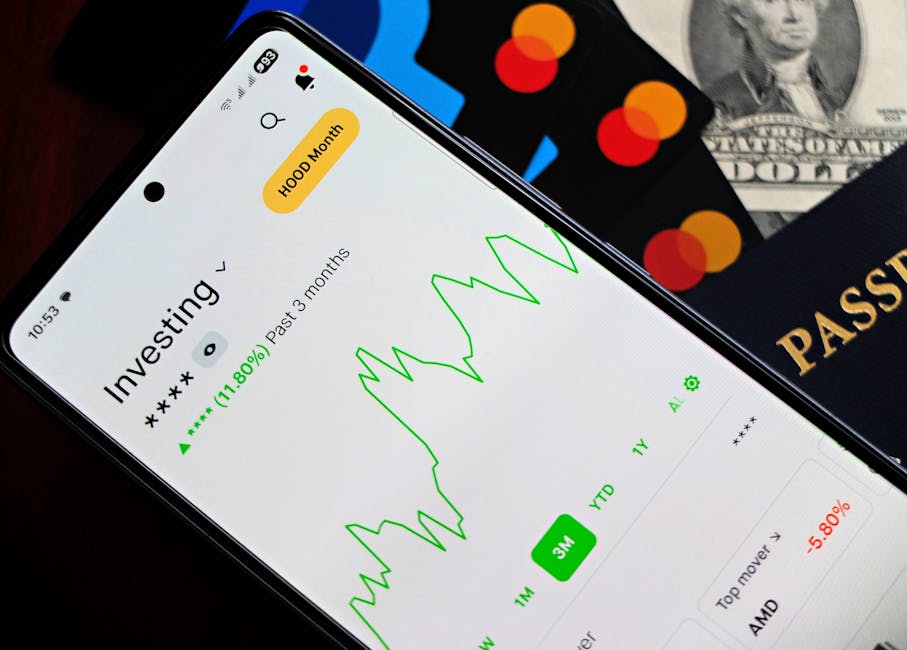
The short answer? Build your emergency fund first—but the reality is more nuanced than that. Financial experts across Canada, including guidance from the Financial Consumer Agency of Canada, recommend having 3-6 months of essential expenses saved before aggressively investing. This isn’t about choosing one over the other forever; it’s about strategic sequencing.
Why Emergency Funds Come First
An emergency fund provides something no investment can guarantee: immediate liquidity without penalties. When your car breaks down, you lose your job, or face a medical expense, you need cash you can access within hours—not money tied up in investments that might be down 20% when you need them most.
With the Bank of Canada’s policy interest rate sitting at 2.25% as of April 2026, high-interest savings accounts are still offering competitive returns. You’re not sacrificing much growth by keeping three months of expenses in cash, especially compared to the potential cost of selling investments at a loss or racking up credit card debt at 20%+ interest.
The Real Cost of No Emergency Fund
Let’s say you’ve maxed your TFSA with $109,000 invested, but you have zero emergency savings. Your furnace dies in January and costs $5,000 to replace. Your options are:
- Withdraw from your TFSA (potentially selling investments at a loss)
- Put it on a credit card at 20% interest
- Take out a personal loan at 8-12% interest
None of these are ideal. Worse, if you withdraw from your TFSA, you don’t get that contribution room back until the following year. That’s tax-free growth space you’ve permanently delayed.
How Much Emergency Fund Do You Need Before Investing in Canada 2026?
The classic advice is 3-6 months of expenses, but your specific number depends on your situation. Someone earning $70,000 with stable government employment needs less cushion than a freelancer with variable income.
Calculating Your Personal Emergency Fund Target
Start by listing your essential monthly expenses—not your entire budget, just what you’d need to survive:
- Rent or mortgage payment
- Utilities (hydro, gas, water, internet)
- Groceries (basic, not dining out)
- Transportation (car payment, insurance, gas, or transit pass)
- Minimum debt payments
- Insurance premiums
For most Canadians earning $50K-$90K, this essential amount lands between $2,500 and $4,500 per month. Multiply by three for your minimum target, or six for a more comfortable cushion.
The Income Stability Factor
Your job security should influence your target. If you work in a volatile industry or have irregular income, lean toward six months. If you have a unionized position, strong job security, or a working spouse who could cover basics, three months might suffice.
New arrivals to Canada face unique considerations. According to Questrade’s 2026 guide for newcomers, building a small cash buffer should be a priority while you learn the Canadian financial system. Your TFSA contribution room generally starts accumulating from the year you become a resident, so you’re not losing anything by focusing on stability first.
TFSA for Emergency Fund 2026: Comparison of Where to Keep Your Cash
Here’s where it gets interesting: you can actually use your TFSA to hold your emergency fund. A TFSA isn’t an investment itself—it’s a registered account that can hold various assets, including plain old savings. RBC’s emergency fund guide specifically suggests keeping emergency savings inside a TFSA using a high-interest savings account or cashable GIC, so you earn tax-free interest.
| Feature | Regular HISA | TFSA HISA | TFSA with Investments |
|---|---|---|---|
| Accessibility | Immediate | Immediate | 1-3 business days |
| Interest/Returns (2026) | 3-4% (taxable) | 3-4% (tax-free) | Variable (tax-free) |
| Risk Level | None | None | Market dependent |
| Uses TFSA Room | No | Yes | Yes |
| Best For | Already maxed TFSA | Emergency fund + tax savings | Long-term growth |
Institutions like EQ Bank, Wealthsimple, and the big banks (TD, RBC, BMO, Scotiabank, CIBC) all offer TFSA savings accounts. This hybrid approach lets you build your emergency fund while still benefiting from tax-free growth—even if that growth is just savings interest.
Investment Priorities Canada 2026: A Step-by-Step Approach
Now that you understand why emergency funds matter, let’s build a practical framework for investment priorities Canada 2026. This isn’t about ignoring your TFSA—it’s about optimizing your financial foundation.
Step 1: Build a Starter Emergency Fund ($1,000-$2,000)
Before anything else, get at least $1,000-$2,000 in a savings account. This “mini” emergency fund prevents small surprises from derailing your finances or forcing you into high-interest debt. This should take most people 1-3 months of focused saving.
Open a TFSA HISA to hold this money. You’ll use some of your $7,000 annual contribution room (or your accumulated room if you’ve never contributed), but the interest you earn will be completely tax-free. Check out our guide on the best TFSA savings accounts to find the highest rates available right now.
Step 2: Capture Free Money (Employer RRSP Match)
If your employer offers RRSP matching, contribute enough to get the full match—even before finishing your emergency fund. A 50% or 100% match is an instant, guaranteed return you can’t get anywhere else. For 2025, the RRSP contribution limit is 18% of earned income up to $32,490.
This is the one exception to the “emergency fund first” rule. Free money beats everything.
Step 3: Complete Your Full Emergency Fund
Now build your emergency fund to the full 3-6 months of essential expenses. Continue using your TFSA HISA so the interest grows tax-free. At current rates around 3-4%, a $15,000 emergency fund earns $450-$600 annually—tax-free if it’s in a TFSA, or taxable at your marginal rate if it’s not.
According to Canada.ca’s guidance on emergency funds, this is also a great time to redirect money from paid-off debts. If you just finished paying off a car loan, put those payments directly into your emergency fund instead of increasing your lifestyle.
Step 4: Consider Your FHSA (If Homeownership Is a Goal)
Planning to buy your first home? The First Home Savings Account (FHSA) offers $8,000 in annual contribution room (up to $40,000 lifetime) with both tax-deductible contributions AND tax-free withdrawals for a qualifying home purchase. It’s essentially an RRSP and TFSA combined for home buyers.
If you’re saving for a home in 2-3 years, experts recommend using high-interest savings accounts, short-term GICs, and an FHSA to protect your down payment from market volatility. Read our complete FHSA guide for first-time buyers to maximize this account.
Step 5: Max Your TFSA with Investments
With your emergency fund complete and employer match captured, now it’s time to invest aggressively in your TFSA. You have up to $109,000 in lifetime contribution room as of 2026 (assuming you were 18+ and a Canadian resident since 2009). Even if you’ve used some room for your emergency fund HISA, you can gradually shift that money out as your invested TFSA grows.
Common Mistakes When Investing Before Emergency Fund
Investing before emergency fund is one of the most tempting mistakes Canadians make. Here’s why it backfires and how to avoid the most common pitfalls.
Mistake #1: Treating Your TFSA Investments as an Emergency Fund
Yes, you can withdraw from your TFSA anytime. But if your emergency happens during a market downturn, you’re forced to sell low. In 2022, many Canadians saw their TFSAs drop 15-20%. Imagine needing $10,000 for an emergency and having to sell $12,500 worth of investments to get it because the market was down.
Keep your emergency fund in cash or cash-equivalents. Your invested TFSA is for long-term wealth building.
Mistake #2: Waiting for a “Perfect” Emergency Fund Before Starting
You don’t need six months of expenses saved before contributing a single dollar to your TFSA. The hybrid approach works: open a TFSA HISA, build your emergency fund inside it, and once complete, start directing new contributions to investments. You’re using the TFSA structure all along.
Mistake #3: Ignoring Contribution Room Timing
TFSA contribution room accumulates every January 1st. If you withdraw $5,000 for an emergency in March, you don’t get that room back until the following January. Plan for this by keeping your emergency fund accessible but separate from your investment contributions.
Mistake #4: Forgetting About Other Financial Goals
Investment priorities Canada 2026 isn’t just about TFSAs. Consider whether high-interest debt repayment (anything above 6-7%) should come before investing. A guaranteed 19.99% return from paying off credit card debt beats any realistic investment return.
Key Takeaways
- Build at least $1,000-$2,000 in a starter emergency fund before investing, then complete 3-6 months of essential expenses before maxing your TFSA with investments.
- Use a TFSA HISA (available at EQ Bank, Wealthsimple, and major banks) to hold your emergency fund tax-free while maintaining instant access.
- The one exception: always capture employer RRSP matching first—it’s an instant 50-100% return you can’t beat elsewhere.
- Your 2026 TFSA contribution limit is $7,000, with cumulative room up to approximately $109,000 if you’ve been eligible since 2009.
- If buying a home in the next few years, prioritize your FHSA ($8,000/year) alongside your emergency fund for tax-deductible contributions and tax-free withdrawals.
- Never treat invested TFSA funds as your emergency fund—market timing could force you to sell at a loss when you need money most.
Frequently Asked Questions
Can I use my TFSA as an emergency fund instead of saving separately?
Yes, but only if you use a TFSA high-interest savings account or cashable GIC rather than investments. A TFSA can hold cash savings that earn tax-free interest while remaining fully accessible. However, if your TFSA holds stocks or ETFs, treating it as an emergency fund is risky because you might need to sell during a market downturn. Keep your emergency fund in a separate TFSA HISA or use a portion of your TFSA specifically for cash savings.
How much emergency fund do I need before investing in Canada 2026?
Most financial experts recommend 3-6 months of essential expenses before aggressively investing. For Canadians earning $50K-$90K, this typically means $7,500 to $27,000 depending on your monthly costs and job stability. Start with at least $1,000-$2,000 as a starter fund, then build to your full target. If you have very stable employment or a working spouse, three months may suffice; variable income earners should aim for six months.
Should I stop TFSA contributions to build my emergency fund faster?
Not necessarily—you can do both simultaneously by contributing to a TFSA HISA. This lets you build your emergency fund inside your TFSA while earning tax-free interest. Once your emergency fund is complete, redirect new contributions to TFSA investments. The only reason to completely pause TFSA contributions is if you’re using that money to pay off high-interest debt (above 6-7%), which provides a guaranteed return higher than most investments.
Deciding between TFSA or emergency fund first Canada doesn’t have to be an either/or choice. The smartest approach combines both: build your cash cushion inside a TFSA savings account, capture any employer RRSP matching, then shift to aggressive investing once your foundation is secure. This strategy protects you from financial emergencies while still maximizing your tax-free growth potential. Ready to optimize your complete financial plan? Explore more guides on investing basics for Canadians at Getwealthy to keep building your wealth.
Get free Canadian money tips every week
TFSA updates, CRA changes, mortgage strategies — straight to your inbox every Thursday. No spam, unsubscribe anytime.
Certified Financial Planner (CFP) and Chartered Investment Manager (CIM) with over 17 years of experience in Canadian personal finance. Spent 10+ years at one of Canada's Big Five banks, the last 7 focused exclusively on high-net-worth clients. Every guide is written with the same depth I bring to real client work — Canada-specific, CRA-verified, and always free.
Disclaimer: This article is for informational and educational purposes only and does not constitute financial, tax, or legal advice. Always consult a qualified financial advisor or tax professional for personalized advice.