How does the US trade war affect Canadian investments, and what should you do to protect your portfolio right now? After trade negotiations collapsed on August 21, 2026, the United States imposed 50% tariffs on approximately $20 billion worth of Canadian goods — roughly 5% of Canada’s total exports to the U.S. Prime Minister Mark Carney responded by announcing dollar-for-dollar retaliatory tariffs taking effect September 8. In this guide, you’ll learn exactly which sectors face real risk (and which are exempt), how to reposition your portfolio proportionately, and why the headline “50%” number requires important context before you make any changes.
Quick Answer:
- The 50% U.S. tariffs took effect August 22, 2026 (delayed from the originally announced August 19) after trade talks failed — they cover roughly $20 billion, or about 5% of Canadian exports
- Critically, energy, potash, fish, critical minerals, and steel/aluminum are exempt from these particular tariffs (steel and aluminum remain under separate Section 232 measures)
- Canada is retaliating with matching tariffs effective September 8, 2026, targeting U.S. steel, dairy, appliances, agricultural equipment, pulp and paper, and electronics
- Don’t panic-sell — the affected share of Canadian exports is meaningful but narrower than headlines suggest, and diversified Canadian portfolios have limited direct exposure
How Does the US Trade War Affect Canadian Investments in 2026?
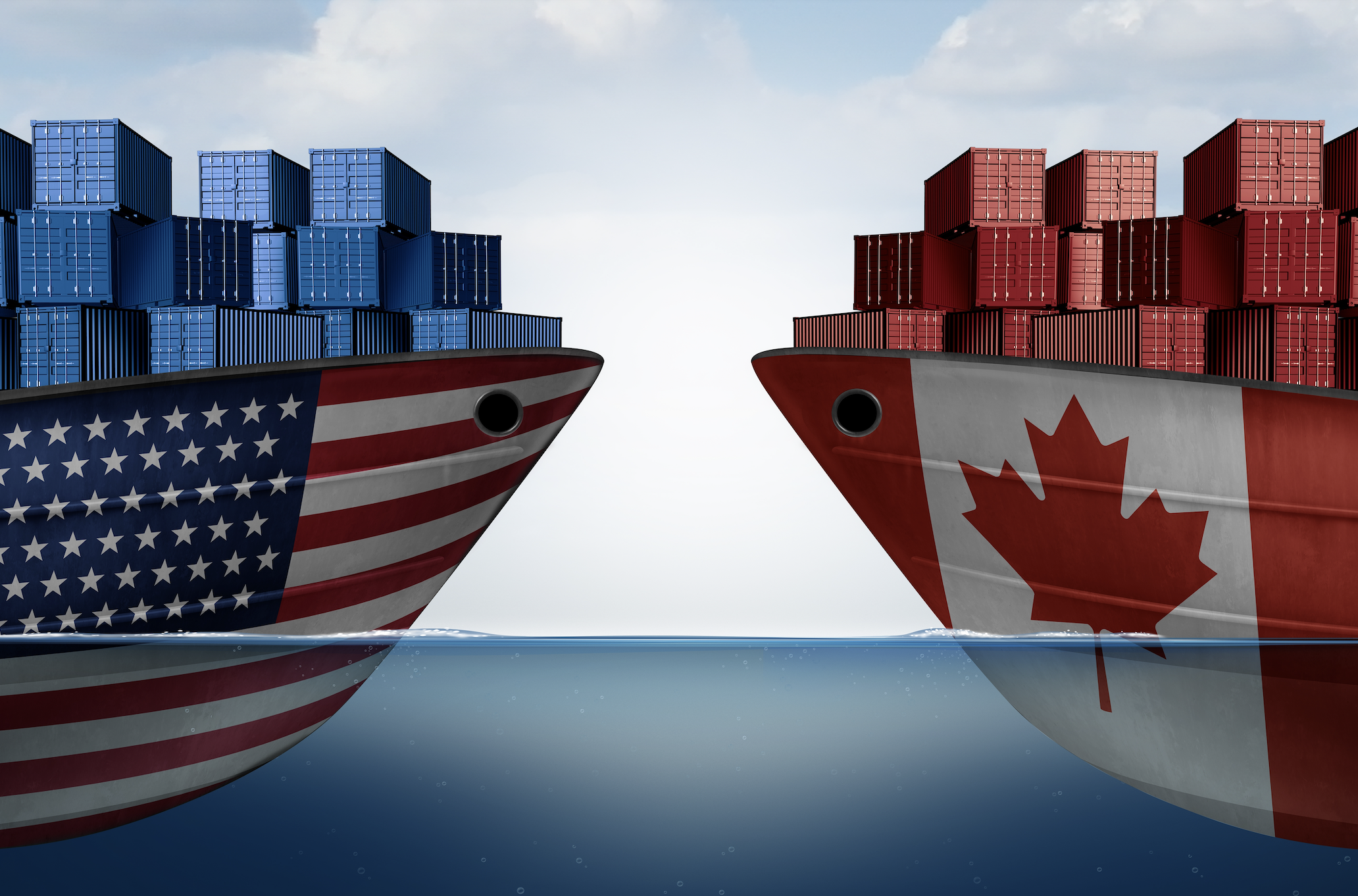
The U.S.-Canada trade relationship has entered its most adversarial phase in modern history — but understanding the actual scope matters more than reacting to headlines.
What Actually Happened, and When
On July 20, 2026, President Trump signed three Presidential Proclamations under Section 338 of the Tariff Act of 1930 — a rarely-used provision authorizing tariffs of up to 50% on imports from countries deemed to discriminate against U.S. commerce. The proclamations specifically cited Canadian policies on dairy, alcoholic beverages, and motor vehicles.
The tariffs were originally set to take effect August 19, 2026, but were delayed to August 22 to allow for final negotiations. Those talks collapsed late on Friday, August 21, and the tariffs took effect at midnight. Prime Minister Carney called the move “a miscalculation” and blamed the breakdown on last-minute U.S. demands he described as “uneconomic” and “unfair.”
The Scope: $20 Billion, or About 5% of Exports
Here’s the context most coverage buries: according to the Office of the U.S. Trade Representative, these tariffs affect approximately $20 billion in annual imports from Canada — roughly 5% of Canadian exports to the U.S.
That’s genuinely significant for the affected industries, but it’s not a blanket tariff on the Canada-U.S. trade relationship. The distinction matters enormously for portfolio decisions. A 50% tariff on 5% of exports is a very different investment thesis than a 50% tariff on everything.
What’s Covered — and What’s Exempt
The affected goods span far beyond the three sectors named in the proclamations. Covered categories include wood products, chemicals, minerals, food products, textiles, apparel, building materials, electronics, hockey sticks, and hundreds of other tariff classifications.
Critically, several major categories are exempt:
- Energy (oil, natural gas)
- Potash
- Fish and seafood
- Critical minerals
- Steel and aluminum products already subject to Section 232 tariffs
This last exemption matters for investors: Canadian steel and aluminum producers are not newly affected by these particular measures, though they remain subject to the separate Section 232 tariffs that have been in place since 2025.
The CUSMA Wrinkle
Unlike previous U.S. tariff actions, these Section 338 tariffs apply even to goods that would otherwise qualify for preferential treatment under CUSMA (the Canada-United States-Mexico Agreement). They also have no expiry date. This removes a protection Canadian exporters have relied on and makes the situation less predictable than prior disputes.
Canada’s Response: September 8
On August 22, Carney announced Canada will match the U.S. tariffs “dollar for dollar,” with measures taking effect September 8, 2026. The Canadian countermeasures will focus on U.S. steel, dairy, appliances, agricultural equipment, pulp and paper, and electronics.
For Canadian investors, this creates a second layer of consideration: Canadian companies that import inputs from these U.S. sectors will face higher costs starting in September. Carney acknowledged this directly, saying the government takes the step “reluctantly because we recognize that some of these measures will raise costs and reduce choice for Canadians.”
Which Canadian Sectors Are Most Vulnerable — and Which Are Protected?
Understanding sector-specific exposure — including the exemptions — helps you avoid overcorrecting.
High-Risk: Direct Tariff Exposure
Dairy and Agriculture: The tariffs specifically target Canadian dairy. Companies like Saputo Inc. (SAP.TO) face direct revenue pressure on U.S.-bound products. Canadian dairy already operates under supply management, creating a double challenge — protected domestic markets but now restricted export opportunities.
Alcohol and Beverages: Canadian breweries, distilleries, and wineries with U.S. distribution face the full 50% tariff. The White House proclamation specifically cited provincial liquor boards’ 2025 decisions to stop purchasing U.S.-produced beverages while continuing to stock products from other countries.
Automotive: The Motor Vehicles Proclamation directly targets Canada’s 25% retaliatory surtax on U.S. vehicles (announced April 2025). Parts manufacturers in Ontario dependent on cross-border supply chains face meaningful disruption.
Wood, Textiles, and Manufactured Goods: These categories are captured in the broader tariff schedules despite not being named in the proclamation headlines. Companies in these sectors should be reviewed individually.
Explicitly Exempt: Lower Direct Risk Than Headlines Suggest
Energy: Oil and gas are exempt from these tariffs. Enbridge (ENB.TO), TC Energy (TRP.TO), and Canadian producers face no direct exposure from this action. Carney pointedly noted: “Canada fuels American growth… I don’t think they want us to stop sending any of that energy.”
Potash and Critical Minerals: Exempt. Nutrien and similar producers avoid direct impact.
Fish and Seafood: Exempt.
Steel and Aluminum: Exempt from these new tariffs, though still subject to pre-existing Section 232 measures — an important distinction from what some coverage suggests.
Lower-Risk: Domestic Focus
Canadian Banks: The Big Five — TD, RBC, BMO, Scotiabank, and CIBC — generate most revenue domestically or through established U.S. subsidiaries not affected by goods tariffs. Their loan books may see stress if Canadian businesses struggle, but this is a secondary, slower-developing risk.
Telecommunications: BCE, Telus, and Rogers operate almost entirely within Canada. Trade wars don’t directly affect wireless subscribers or internet customers.
Utilities: Fortis, Hydro One, and other regulated utilities provide essential services regardless of trade policy, with regulated rate structures providing predictable revenue.
Real Estate: Canadian REITs focused on domestic properties face minimal direct tariff exposure, though broader economic slowdown could affect occupancy and rent growth.
The September 8 Consideration
Canadian companies that import U.S. steel, appliances, agricultural equipment, pulp and paper, or electronics will face higher input costs starting September 8. This is a genuinely new risk factor that didn’t exist before Carney’s announcement — worth reviewing if you hold Canadian manufacturers, retailers, or agricultural operations dependent on U.S. equipment.
Trade War Investment Strategies: Defensive vs. Opportunistic
Canadian investors have two broad approaches: defensive repositioning to protect existing wealth, or opportunistic positioning to capitalize on potential overreactions. Most benefit from a balanced combination — and given that only about 5% of exports are affected, dramatic repositioning may be an overreaction.
| Strategy Element | Defensive Approach | Opportunistic Approach | Balanced Approach |
|---|---|---|---|
| Equity Allocation | Reduce to 40–50% of portfolio | Maintain or increase to 70–80% | Hold at 55–65% |
| Sector Focus | Utilities, telecoms, consumer staples | Beaten-down exporters with strong balance sheets | Core domestic + selective export plays |
| Geographic Mix | Increase international (ex-US) exposure | Overweight Canadian recovery plays | Diversify across Canada, US, international |
| Fixed Income | Increase to 35–45% in bonds/GICs | Minimal — opportunity cost too high | 20–30% in short-to-medium bonds |
| Cash Position | Hold 10–15% for volatility buffer | Deploy cash on market dips | 5–10% dry powder for opportunities |
| Time Horizon Suited For | Retirees, 5-year or less horizon | 25+ year horizon, high risk tolerance | 10–20 year horizon, moderate risk |
Your strategy should align with your personal timeline and risk tolerance. Someone five years from retirement has different priorities than a 30-year-old maximizing their TFSA.
How Can Canadian Investors Protect Their Portfolios?
Here’s a concrete framework — proportionate to the actual exposure.
Step 1: Audit Your Actual Tariff Exposure
Log into your brokerage — Wealthsimple, Questrade, TD Direct Investing, or another platform — and categorize your holdings:
High exposure: Individual Canadian stocks in dairy, alcohol, automotive parts, wood products, textiles
Moderate exposure: Broad Canadian equity ETFs (these contain some affected companies, but also many exempt ones)
Low or no direct exposure: Canadian banks, telecoms, utilities, energy, potash, fish, critical minerals, U.S. or international ETFs
If more than 20% of your portfolio sits in high-exposure categories, you’re carrying concentrated trade war risk. But note that broad Canadian ETFs like XIU or VCN hold substantial weightings in exempt sectors (financials, energy) — their direct tariff exposure is more limited than the headline suggests.
Step 2: Rebalance Toward Domestic-Focused Canadian Equities
You don’t need to abandon Canadian stocks — you may want to shift within Canada toward companies with domestic revenue bases:
- Canadian bank ETFs (ZEB, ZWB) or individual Big Five shares
- Telecom holdings (BCE, Telus, Rogers)
- Utility companies (Fortis, Emera, Hydro One)
- Canadian REIT ETFs focused on domestic properties (ZRE, VRE)
Step 3: Add International Diversification (Beyond the U.S.)
International developed and emerging markets offer geographic diversification. ETFs like XEF (iShares International Developed) or VIU (Vanguard FTSE Developed ex North America) provide exposure to Europe, Japan, Australia, and other economies not directly involved in this dispute.
Notably, Carney explicitly signalled this direction for the country: “We can chart a new course by building Canada strong and diversifying our trading relationships abroad.” Canadian companies successfully diversifying export markets may benefit over time.
Step 4: Consider Fixed Income as a Volatility Buffer
Canadian bond ETFs like ZAG, VAB, or XBB offer modest yields while reducing overall portfolio volatility.
If you prefer guaranteed returns, GICs offer competitive rates. With your TFSA contribution room at $7,000 for 2026 (and cumulative room up to approximately $109,000 if you’ve never contributed — confirm via CRA’s official TFSA calculator), sheltering GIC interest from taxes makes sense during uncertain periods.
Step 5: Maintain Tax-Efficient Positioning
Don’t let urgency override tax strategy. Selling investments in a non-registered account triggers capital gains. Note that the capital gains inclusion rate remains a flat 50% for 2026 — the proposed increase to 66.67% was cancelled by the federal government in March 2025 and never took effect.
Prioritize rebalancing within your TFSA and RRSP where trades don’t create tax events. Direct new contributions toward your target allocation rather than selling existing holdings at a loss.
Common Mistakes Canadian Investors Make During Trade Wars
Mistake #1: Reacting to the Headline Percentage, Not the Actual Scope
“50% tariffs” sounds catastrophic. “50% tariffs on about 5% of exports, with energy and minerals exempt” is a very different picture. Size your response to the actual exposure in your specific holdings, not to the headline number.
Mistake #2: Panic Selling at the Bottom
Volatility isn’t the same as permanent loss. When you sell after prices have already dropped, you lock in losses and miss eventual recovery. The 2018–2019 U.S.-China trade war saw significant volatility followed by new highs.
Unless your fundamental thesis on a company has changed, holding through volatility typically outperforms timing attempts.
Mistake #3: Over-Concentrating in “Safe” Sectors
Utilities and telecoms seem safe — and they are, relatively. But piling your entire portfolio into these sectors creates new risks: interest rate sensitivity, regulatory changes, and missing recovery when tensions ease.
Mistake #4: Ignoring Your Investment Time Horizon
If you’re 35 with a 30-year timeline, current tariffs are one chapter in a long investing career. If you’re 60 and retiring in five years, capital preservation matters more. Adjust based on when you’ll actually need the money.
Mistake #5: Assuming Trade Wars Last Forever
Trade policy is inherently political. The September 2025 removal of most Canadian counter-tariffs on U.S. imports shows de-escalation happens. That said, these particular tariffs have no expiry date and USTR Jamieson Greer stated on August 22 that no future talks are currently planned — so a quick resolution shouldn’t be assumed either. Position for uncertainty in both directions rather than betting on one outcome.
Mistake #6: Neglecting Ongoing Contributions
Continuing regular TFSA and RRSP contributions during volatility works in your favour through dollar-cost averaging. Your 2026 RRSP contribution limit is 18% of your 2025 earned income, up to $33,810 — see CRA’s official RRSP deduction page for the current rules. Maximizing this during a market dip means buying more shares with the same dollars — and getting the tax deduction.
Key Takeaways
- The 50% U.S. tariffs took effect August 22, 2026 (delayed from August 19) after trade talks collapsed — covering approximately $20 billion, or about 5% of Canadian exports
- Energy, potash, fish, critical minerals, and steel/aluminum are exempt from these tariffs — a crucial distinction that limits exposure for major Canadian sectors
- The tariffs use Section 338 of the Tariff Act of 1930, apply even to CUSMA-compliant goods, and have no expiry date
- Canada retaliates September 8, 2026 with dollar-for-dollar tariffs on U.S. steel, dairy, appliances, agricultural equipment, pulp and paper, and electronics — this raises input costs for some Canadian companies
- Lower-risk sectors include Canadian banks, telecoms, utilities, energy, and domestically-focused REITs
- Rebalance within your TFSA (up to $109,000 cumulative room) and RRSP ($33,810 max for 2026) to avoid triggering taxable events
- Capital gains remain at a flat 50% inclusion rate — the proposed increase was cancelled in March 2025
- Size your response to actual exposure: a 50% tariff on 5% of exports is meaningfully different from a blanket trade embargo
Frequently Asked Questions
How much of Canada’s exports are actually affected by the new 50% tariffs?
Approximately $20 billion in annual imports — about 5% of Canadian exports to the United States. While the tariff rate is severe and the affected product list spans hundreds of tariff classifications, major categories including energy, potash, fish, critical minerals, and steel/aluminum are explicitly exempt. This is a significant but targeted action rather than a blanket tariff on all Canada-U.S. trade, which matters when sizing your portfolio response.
Which Canadian goods are exempt from the August 2026 tariffs?
Energy products (oil and natural gas), potash, fish and seafood, critical minerals, and steel and aluminum products already subject to Section 232 tariffs are all exempt from the new Section 338 measures. This means Canadian energy infrastructure companies, potash producers, and fisheries face no direct exposure from this particular action — though steel and aluminum remain subject to the separate Section 232 tariffs in place since 2025.
What is Canada doing in response, and when?
Prime Minister Mark Carney announced on August 22, 2026 that Canada will match the U.S. tariffs “dollar for dollar,” with measures taking effect September 8, 2026. The Canadian countermeasures will target U.S. steel, dairy, appliances, agricultural equipment, pulp and paper, and electronics. For investors, this creates a second consideration: Canadian companies that import from these U.S. sectors will face higher input costs starting in September.
Should Canadian investors diversify away from US markets in 2026?
Consider reducing over-concentration rather than abandoning U.S. markets entirely. Adding international developed market exposure (Europe, Japan, Australia) through ETFs like XEF or VIU provides genuine geographic diversification. The U.S. market remains the world’s largest and most liquid. A balanced approach maintains meaningful U.S. exposure while increasing international holdings and keeping a Canadian core of domestic-focused companies. Complete withdrawal from U.S. markets risks missing recovery when tensions ease.
The U.S. trade war facing Canadian investments in August 2026 represents a genuine challenge — but understanding its actual scope prevents costly overreaction. By recognizing which sectors face direct exposure (dairy, alcohol, automotive, wood products) versus which are explicitly exempt (energy, potash, minerals, fish), rebalancing proportionately, and maintaining disciplined contributions to your TFSA and RRSP, you can protect your portfolio while positioning for eventual recovery. Watch for the September 8 Canadian countermeasures, which will bring their own set of considerations. Ready to build a more resilient portfolio? Explore more Canadian investing strategies on Getwealthy.
Get free Canadian money tips every week
TFSA updates, CRA changes, mortgage strategies — straight to your inbox every Thursday. No spam, unsubscribe anytime.
Certified Financial Planner (CFP) and Chartered Investment Manager (CIM) with over 17 years of experience in Canadian personal finance. Spent 10+ years at one of Canada's Big Five banks, the last 7 focused exclusively on high-net-worth clients. Every guide is written with the same depth I bring to real client work — Canada-specific, CRA-verified, and always free.
Disclaimer: This article is for informational and educational purposes only and does not constitute financial, tax, or legal advice. Trade policy is evolving rapidly — verify current tariff status before making investment decisions. Always consult a qualified financial advisor or tax professional for personalized advice.