Imagine you’re scrolling through baby photos on your phone, and it hits you: in 18 years, this little one might be heading off to university. If you’re wondering what is an RESP Canada offers to help families save for that future, you’re asking exactly the right question. A Registered Education Savings Plan is one of the most powerful tools Canadian parents and grandparents have to build an education fund — complete with free government money. In this guide, you’ll learn how RESPs work, the contribution rules, the grants you can claim, and how to open one the right way.
Quick Answer:
- An RESP is a tax-sheltered savings account designed specifically to fund a child’s post-secondary education in Canada
- The federal government adds up to $7,200 in free Canada Education Savings Grant (CESG) money over your child’s lifetime — but only if you contribute at least $2,500/year to capture the full annual match
- There’s no annual contribution limit, but the lifetime maximum is $50,000 per child
- If your child doesn’t pursue post-secondary education, you have several options to recover your money (though grants must be returned)
What Is an RESP in Canada and Why Does It Matter?
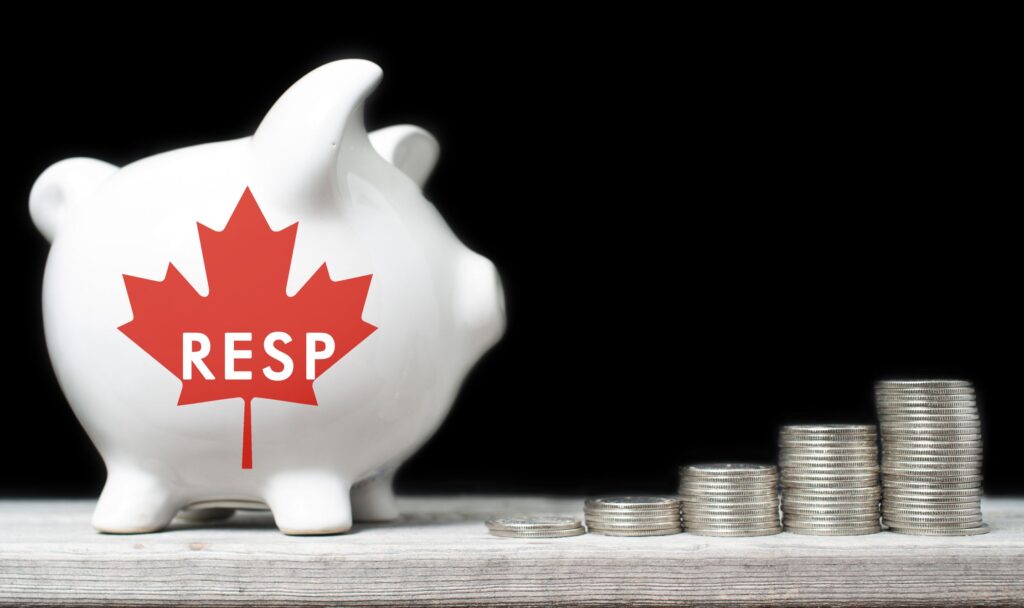
A Registered Education Savings Plan (RESP) is a special investment account registered with the Canada Revenue Agency (CRA) that helps Canadians save for a child’s education after high school. Unlike a regular savings account, an RESP offers two major advantages: tax-sheltered growth and government grants that boost your savings.
Here’s the basic idea: you open an RESP, name a child as the beneficiary, and contribute money over time. That money grows tax-free inside the account. When your child enrolls in a qualifying post-secondary program — whether that’s university, college, trade school, or an apprenticeship — they can withdraw the funds to pay for tuition, books, housing, and other education costs.
The real magic happens with government incentives. The Canada Education Savings Grant (CESG) matches 20% of your annual contributions, up to $500 per year (or $1,000 if you have unused grant room from previous years). Over a child’s lifetime, that’s up to $7,200 in free money from the federal government — but this maximum requires you to contribute at least $2,500 per year. Lower-income families may qualify for even more through the Additional CESG and the Canada Learning Bond.
How RESP Tax Benefits Work
When you contribute to an RESP, you don’t get a tax deduction like you would with an RRSP. However, all the investment growth inside the account — interest, dividends, and capital gains — is completely tax-sheltered while it stays in the plan. This means your money compounds faster than it would in a regular taxable account.
When your child eventually withdraws money for school, the earnings and government grants are taxed in their hands, not yours. Since most full-time students have little to no income, they typically pay zero or very low tax on these withdrawals. It’s an elegant system that shifts the tax burden to someone who likely won’t owe any.
RESP Explained: The Three Types of Plans
Not all RESPs are created equal. There are three main types you’ll encounter:
Individual RESP: You open this for one specific beneficiary. It offers the most flexibility — you control the investments, and you can even name yourself as the beneficiary if you’re planning to return to school.
Family RESP: This covers multiple beneficiaries who are related to you by blood or adoption (siblings, grandchildren, etc.). The advantage is flexibility: if one child doesn’t pursue post-secondary education, another beneficiary can use the funds.
Group RESP: These are pooled plans offered by scholarship plan dealers. You contribute alongside other investors, and the funds are managed collectively. While they can work for some families, they often come with stricter rules, higher fees, and penalties if you withdraw early. Most financial advisors recommend individual or family plans instead.
How Does an RESP Work for Canadian Families?
Understanding how RESP works is straightforward once you break it down into three phases: the contribution phase, the growth phase, and the withdrawal phase.
Phase 1: Contributing to the RESP
Anyone can contribute to an RESP — parents, grandparents, aunts, uncles, or family friends. There’s no annual contribution limit, but the lifetime maximum per beneficiary is $50,000. If you exceed this amount, the CRA charges a 1% monthly penalty on the excess until you withdraw it.
To maximize the Canada Education Savings Grant, you should aim to contribute at least $2,500 per year. The government matches 20% of that amount, giving you $500 in free grant money annually. If you miss a year, you can carry forward unused grant room and catch up later (though there’s a $1,000 maximum grant per year when catching up).
You can contribute to an RESP for 31 years after opening it, and the plan can stay open for up to 35 years. This gives you plenty of time to save, even if you start later.
Phase 2: Growing Your Investment
Inside an RESP, you can hold various investments: savings accounts, GICs, mutual funds, ETFs, stocks, and bonds. The right mix depends on your timeline and risk tolerance. When your child is young, you might choose growth-oriented investments like equity ETFs. As they approach post-secondary age, you’d typically shift toward more conservative options to protect against market downturns.
Major Canadian financial institutions — including TD, RBC, BMO, Scotiabank, CIBC, and online platforms like Wealthsimple — all offer RESP accounts. Online brokerages often have lower fees, while banks may provide more in-person support.
Phase 3: Withdrawing for Education
When your beneficiary enrolls in a qualifying program, they can start receiving Educational Assistance Payments (EAPs). These payments include the accumulated investment earnings and government grants (but not your original contributions, which you can withdraw tax-free at any time).
There’s an $8,000 limit on EAPs during the first 13 weeks of enrollment in a full-time program. After that, there’s no limit as long as the student remains enrolled. Part-time students face a $4,000 EAP limit per 13-week period.
Qualifying programs include universities, colleges, trade schools, CEGEPs in Quebec, and many apprenticeship programs. Some programs outside Canada also qualify — worth checking if your child has international ambitions.
RESP Contribution Rules Every Canadian Should Know
The RESP contribution rules are simpler than many people think, but there are a few key limits and deadlines to keep in mind.
Lifetime Contribution Limit
The maximum lifetime contribution per beneficiary is $50,000. This is a cumulative limit across all RESP accounts for that child. If grandparents and parents both contribute to separate RESPs for the same child, you need to coordinate to avoid exceeding the limit.
Contributions beyond $50,000 trigger a 1% monthly penalty tax on the excess amount. The penalty continues until you withdraw the over-contribution.
Annual Contributions and Grant Maximization
While there’s no annual contribution limit, the CESG is capped at $500 per year (based on 20% of $2,500). Contributing more than $2,500 in a single year won’t earn you extra grant money for that year — though it still grows tax-sheltered.
If you have unused CESG room from previous years (because you contributed less than $2,500), you can carry it forward. When catching up, the maximum CESG you can receive in one year is $1,000 (requiring a $5,000 contribution).
Contribution Deadlines
To receive the CESG for a given year, you must contribute by December 31st of that year. Unlike RRSP contributions, there’s no 60-day grace period into the following year. The last year you can receive CESG is the year the beneficiary turns 17 — but only if you’ve made contributions in earlier years (there are specific rules for 16 and 17-year-olds).
Comparison: RESP vs Other Registered Accounts in Canada
Canadian families have several registered account options. Here’s how the RESP stacks up against other popular choices for saving and investing.
| Feature | RESP | TFSA | RRSP |
|---|---|---|---|
| Primary Purpose | Education savings for a child | Flexible tax-free savings | Retirement savings |
| 2026 Annual Limit | No annual limit ($50,000 lifetime) | $7,000/year (~$109,000 cumulative) | 18% of income, max $33,810 |
| Government Grants | Yes — up to $7,200 CESG lifetime | No | No |
| Tax on Contributions | No deduction (after-tax money) | No deduction (after-tax money) | Tax-deductible |
| Tax on Growth | Tax-sheltered | Tax-free | Tax-deferred |
| Tax on Withdrawals | Taxed to beneficiary (usually low) | Tax-free | Taxed as income |
| Withdrawal Restrictions | Must be for education (or penalties apply) | None — withdraw anytime | Taxed on withdrawal; HBP/LLP exceptions |
| Best For | Parents/grandparents saving for child’s education | Flexible savings goals | High earners saving for retirement |
The RESP’s biggest advantage is the free government money. No other registered account gives you an automatic 20% return through grants. However, the TFSA offers more flexibility since you can withdraw funds for any purpose. Many families use both: an RESP for education savings and a TFSA for other goals.

How to Open an RESP in Canada: Step-by-Step
Opening an RESP is straightforward. Here’s how to do it right.
Step 1: Gather Your Documents
You’ll need a few things before you start:
- Your Social Insurance Number (SIN)
- The child’s SIN (required to receive government grants)
- The child’s birth certificate or proof of birth
- Your government-issued ID
If you don’t have a SIN for your newborn yet, apply through Service Canada as soon as possible. You can open an RESP without the child’s SIN, but the account won’t receive CESG or CLB until you provide it.
Step 2: Choose Your RESP Provider
You have several options for where to open your RESP:
Banks: TD, RBC, BMO, Scotiabank, and CIBC all offer RESPs. You’ll get in-person support and can often link the RESP to your existing accounts. However, fees may be higher, and investment options might be limited to the bank’s own mutual funds.
Online Brokerages: Platforms like Wealthsimple, Questrade, and the online brokerage arms of major banks offer lower fees and wider investment choices (including low-cost ETFs). These work well if you’re comfortable managing investments online.
Robo-Advisors: Services like Wealthsimple Invest or RBC InvestEase manage your RESP investments automatically based on your risk profile. This is a good middle ground between DIY investing and paying for a human advisor.
Group Plan Dealers: Companies like CST Savings offer pooled group RESPs. While these can work for some families, be aware of higher fees, stricter rules, and potential penalties. Read the fine print carefully.
Step 3: Complete the Application
Whether online or in person, you’ll fill out an application form that includes:
- Your personal information and SIN
- The beneficiary’s information and SIN
- The type of plan (individual or family)
- Your investment choices
- Banking information for contributions
You’ll also sign forms to apply for the Canada Education Savings Grant and, if eligible, the Canada Learning Bond.
Step 4: Set Up Automatic Contributions
The easiest way to maximize your RESP is to automate your contributions. Set up a monthly or bi-weekly transfer that adds up to at least $2,500 per year ($208.33/month) to capture the full annual grant. Automating removes the temptation to skip contributions and ensures you don’t miss the CESG each year.
Step 5: Choose Your Investments
How you invest your RESP depends on your child’s age and your risk tolerance. A common approach:
- Ages 0–8: Higher equity allocation (70–80% stocks) for growth potential
- Ages 9–13: Balanced mix (50–60% stocks) to maintain growth while reducing risk
- Ages 14–17: Conservative shift (30–40% stocks) to protect against market drops near withdrawal
Many robo-advisors adjust this automatically through “glide path” or target-date investment strategies.
Common RESP Mistakes and How to Avoid Them
Even with good intentions, some families make mistakes that cost them money. Here’s what to watch out for.
Mistake 1: Waiting Too Long to Start
The earlier you start, the more time your investments have to grow — and the more years of CESG you can collect. Starting at birth gives you 17–18 years of tax-sheltered compounding. Waiting until your child is 10 means you’re racing to catch up on missed grants and have less time for growth.
Even small contributions early on beat larger contributions later, but be realistic about the grant math: contributing $208.33/month ($2,500/year) from birth captures the full $500 annual CESG, totalling the full $7,200 lifetime maximum over 18 years. If you instead contribute a smaller amount — say, $100/month ($1,200/year) — you’d only capture 20% of that, or about $240/year in CESG, totalling roughly $4,300–$4,500 over 18 years rather than the full $7,200. Either way, starting early still beats starting late — but hitting the full grant amount specifically requires the $2,500/year contribution level.
Mistake 2: Not Contributing Enough to Get the Full Grant
The CESG is free money — don’t leave it on the table. If you can afford to contribute $2,500 per year ($208.33/month), you’ll capture the full $500 annual grant. Even if your budget is tight, try to contribute something each year to build up grant room you can catch up on later.
Mistake 3: Over-Contributing Beyond $50,000
Remember: the lifetime limit is $50,000 per beneficiary, not per plan. If multiple family members contribute to separate RESPs for the same child, coordinate to avoid penalties. The 1% monthly tax on over-contributions adds up fast.
Mistake 4: Choosing High-Fee Group Plans Without Understanding the Terms
Group RESPs sometimes promise guaranteed returns or scholarships, but they come with strict rules. If you miss contributions, withdraw early, or your child doesn’t attend a qualifying program, you could lose a significant portion of your money. Always read the plan’s prospectus and fee disclosure before signing up.
Mistake 5: Forgetting About the RESP When Your Child Turns 15
To receive CESG in the year your child turns 16 or 17, you must have contributed at least $2,000 before the end of the calendar year they turned 15 — OR you must have contributed at least $100 per year in any four years before the year they turned 16. Plan ahead so you don’t lose out on the final years of grants.
Key Takeaways
- An RESP lets you save up to $50,000 per child for post-secondary education, with investment growth sheltered from tax until withdrawal
- The Canada Education Savings Grant adds up to $7,200 in free government money per child — but only if you contribute at least $2,500/year; smaller ongoing contributions capture proportionally less grant money
- Start as early as possible: opening an RESP at birth gives you 17+ years of tax-sheltered compounding and grant eligibility
- Choose individual or family RESPs over group plans for flexibility and lower fees — banks, credit unions, and online brokerages like Wealthsimple all offer them
- Coordinate contributions if multiple people contribute to different RESPs for the same child to avoid the 1% monthly over-contribution penalty
- If your child doesn’t pursue post-secondary education, you have options: transfer funds to another beneficiary, roll up to $50,000 of earnings into your RRSP, or withdraw with tax implications
Frequently Asked Questions
What happens to RESP money if my child doesn’t go to school?
If your child doesn’t pursue post-secondary education, you have several options. First, you can transfer the RESP to another eligible beneficiary, such as a sibling. Second, you can transfer up to $50,000 of accumulated earnings to your own RRSP (if you have contribution room) and pay tax on the transfer at your marginal rate, deferred through the RRSP deduction. Third, you can withdraw the earnings as an Accumulated Income Payment (AIP), which will be taxed at your marginal rate plus an additional 20% penalty (12% in Quebec). Your original contributions can always be withdrawn tax-free. However, all government grants (CESG and CLB) must be returned to the government regardless of which option you choose.
How much can you contribute to an RESP each year in Canada?
There’s no annual contribution limit for RESPs — you can contribute as much as you want each year, as long as you don’t exceed the $50,000 lifetime limit per beneficiary. However, to maximize the Canada Education Savings Grant, you should contribute at least $2,500 per year to receive the full $500 annual grant (20% match). Contributing more than $2,500 in a single year won’t earn additional CESG for that year, though it still grows tax-sheltered. Contributing less than $2,500 earns a proportionally smaller grant — for example, $1,200/year earns about $240 in annual CESG.
When is the best age to open an RESP for your child?
The best age to open an RESP is at birth or as soon as you have your child’s Social Insurance Number. Starting early maximizes the benefits in two ways: you get more years to receive the CESG (up to 17 years of grant eligibility), and your investments have more time to compound tax-free. Even if you can only afford small contributions initially, starting at birth generally results in more total savings by age 18 compared to starting at age 5 or 10 — though reaching the full $7,200 lifetime grant specifically requires contributing $2,500 per year throughout.
Now that you understand what is an RESP Canada offers, you’re well-equipped to start building an education fund for your child or grandchild. The combination of tax-sheltered growth and government grants makes the RESP one of the most valuable savings tools available to Canadian families. Whether you’re opening an account for a newborn or catching up for a teenager, every contribution brings you closer to helping the next generation graduate with less debt and more opportunity. Ready to explore more ways to build wealth for your family? Browse more guides on Getwealthy to keep learning.
Get free Canadian money tips every week
TFSA updates, CRA changes, mortgage strategies — straight to your inbox every Thursday. No spam, unsubscribe anytime.
Certified Financial Planner (CFP) and Chartered Investment Manager (CIM) with over 17 years of experience in Canadian personal finance. Spent 10+ years at one of Canada's Big Five banks, the last 7 focused exclusively on high-net-worth clients. Every guide is written with the same depth I bring to real client work — Canada-specific, CRA-verified, and always free.
Disclaimer: This article is for informational and educational purposes only and does not constitute financial, tax, or legal advice. Always consult a qualified financial advisor or tax professional for personalized advice.