Figuring out where to keep emergency fund savings is one of the most important financial decisions you’ll make – yet many Canadians lack sufficient liquid savings to cover an unexpected $1,000 expense without going into debt. With the Bank of Canada holding its overnight rate at 2.25% through mid-2026 and new Consumer-Driven Banking regulations rolling out to make moving money easier, your options for storing emergency cash deserve a careful look. In this guide, you’ll learn exactly which accounts offer the best combination of meaningful interest, instant access, and safety for your emergency fund in today’s Canadian financial landscape.
?? Table of Contents
- Where to Keep Emergency Fund Savings: What Are Your Best Options in Canada?
- How Does a HISA Emergency Fund Compare to Other Options?
- TFSA vs Regular HISA for Emergency Funds: Complete Comparison
- How to Set Up Your High-Yield Emergency Fund Account
- Common Mistakes to Avoid With Your Emergency Fund
- Key Takeaways
- Frequently Asked Questions
Where to Keep Emergency Fund Savings: What Are Your Best Options in Canada?
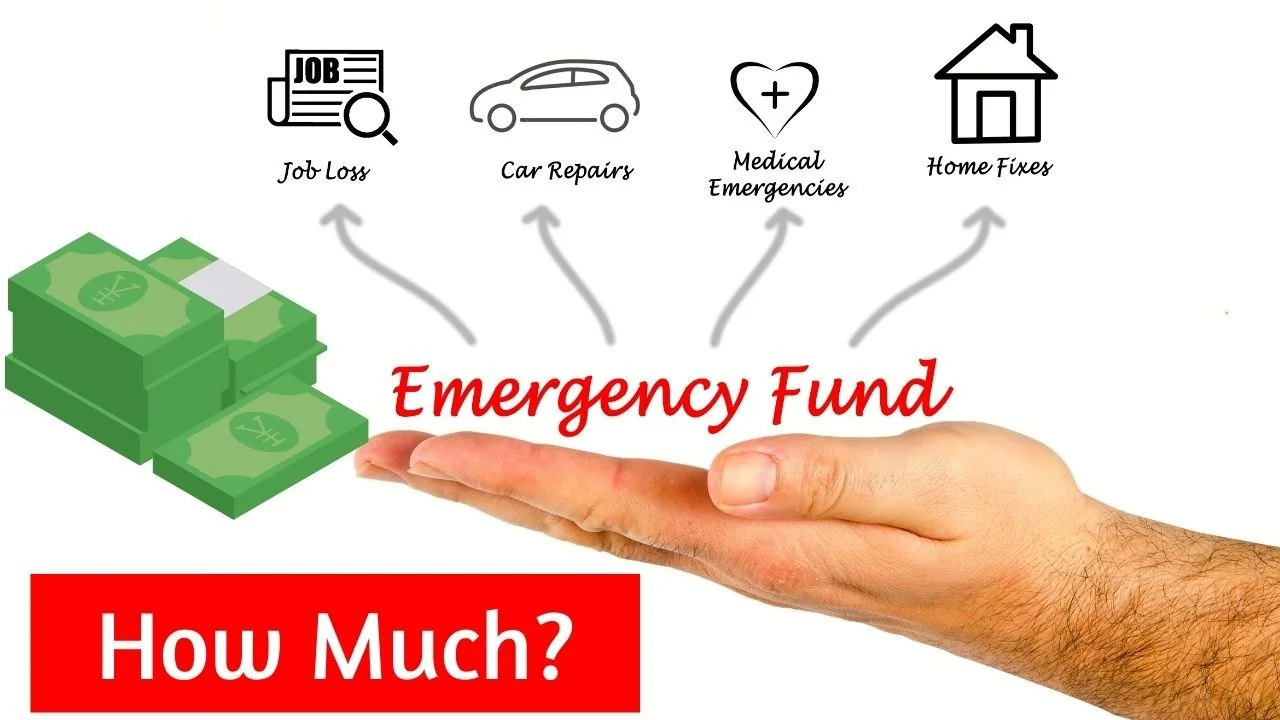
When deciding where to keep emergency fund money, you need to balance three critical factors: accessibility, safety, and growth. Your emergency fund isn’t meant to make you wealthy – it’s financial insurance that needs to be there when life throws you a curveball, whether that’s a job loss, car breakdown, or sudden medical expense.
Your ideal account should offer immediate access, minimal withdrawal penalties, and reasonable interest rates that at least partially keep pace with inflation. Let’s break down your main options as a Canadian saver in July 2026.
High-Interest Savings Accounts (HISAs)
A high-yield savings account Canada option remains the gold standard for emergency funds. These accounts, offered by online banks like EQ Bank and Wealthsimple, and traditional institutions like TD and RBC, earn interest daily and maintain full liquidity.
The beauty of a HISA is simplicity. Your money sits there earning interest daily, and you can withdraw it within one to two business days (sometimes instantly). No lock-in periods, no penalties for withdrawals, and your principal is always protected.
What to expect for rates in July 2026: With the Bank of Canada’s overnight rate at 2.25%, ongoing HISA rates at competitive online banks typically range from approximately 2.5% to 3.5% annually. Some institutions offer higher promotional rates (sometimes 4-5%) for the first few months, but always verify the standard ongoing rate after the promotion ends before opening an account – that’s the rate that will actually apply to most of your savings life.
Tax-Free Savings Accounts (TFSAs) Holding a HISA
A TFSA holding a high-interest savings product is arguably the most tax-efficient place for your emergency fund. With the 2026 TFSA annual contribution limit at $7,000 (and a lifetime contribution room of approximately $109,000 if you’ve been eligible since 2009), many Canadians have space to shelter emergency savings from tax.
When you earn interest inside a TFSA, that growth is completely tax-free – forever. You won’t pay a penny to the CRA on any interest earned, and withdrawals don’t count as taxable income. If you’re still working on prioritizing your TFSA, RRSP, and FHSA contributions, using part of your TFSA room for emergency savings can be a smart first step.
Regular Savings Accounts
A standard savings account at your existing bank offers ultimate convenience – emergency money is just a transfer away. However, traditional big-bank savings accounts at BMO, Scotiabank, and CIBC often pay disappointingly low interest rates, sometimes as little as 0.01% to 0.5%.
While convenience matters, the opportunity cost of parking $15,000 in a low-interest account versus a competitive HISA could mean missing out on $300-$450 annually in interest.
How Does a HISA Emergency Fund Compare to Other Options?
Not all savings vehicles are created equal when it comes to emergency funds. Some accounts that seem attractive for long-term savings are actually poor choices for money you might need tomorrow.
Why GICs Don’t Work for Emergencies
Guaranteed Investment Certificates (GICs) often offer higher interest rates than savings accounts, which makes them tempting. However, most GICs lock your money away for a fixed term – anywhere from 30 days to five years. If you need to break a non-redeemable GIC early, you’ll either pay steep penalties or simply won’t be allowed to access your funds.
Cashable GICs typically offer lower rates and may still require a 30-90 day waiting period before cashing out. This defeats the entire purpose of an emergency fund.
What About Money Market Funds or CASH.TO?
Exchange-traded funds like CASH.TO (Purpose High Interest Savings ETF) have gained popularity as savings alternatives. However, these products carry considerations that pure savings accounts don’t. Unlike traditional savings accounts at CDIC member banks, ETFs aren’t protected by deposit insurance – adding a layer of risk that may not suit emergency fund purposes. For emergency savings where capital preservation is paramount, a direct HISA at a CDIC member institution offers cleaner protection.
Why Not Keep It in a Chequing Account?
While keeping emergency funds in your chequing account offers instant access, you’re essentially losing money to inflation every day. Most chequing accounts pay 0% interest, meaning your purchasing power erodes steadily over time. A dedicated HISA emergency fund keeps your money accessible while earning meaningful interest.
TFSA vs Regular HISA for Emergency Funds: Complete Comparison
One of the most common questions Canadians face is whether to hold their emergency fund inside or outside a TFSA. Both approaches have merit, and the right choice depends on your overall financial picture.
| Feature | TFSA (Holding HISA) | Regular HISA (Non-Registered) |
|---|---|---|
| Tax on Interest Earned | None – completely tax-free | Taxed at your marginal rate |
| Contribution Limits | $7,000/year (2026); ~$109,000 lifetime if eligible since 2009 | No limits – deposit any amount |
| Withdrawal Flexibility | Unlimited withdrawals; room restored January 1 next year | Unlimited withdrawals; no room considerations |
| CDIC Insurance | Up to $100,000 per eligible deposit category | Up to $100,000 per eligible deposit category |
| Best For | Those with TFSA room who want maximum tax efficiency | Those who’ve maxed TFSAs for investments or need amounts over $100,000 |
?? The TFSA tax advantage at current rates: If you’re earning 3% on a $20,000 emergency fund in a non-registered HISA ($600/year in interest), you’ll owe taxes at your marginal rate – up to $240 or more annually, depending on your bracket. The same fund in a TFSA keeps every dollar of interest with zero CRA involvement.
How to Set Up Your High-Yield Emergency Fund Account
Opening a dedicated emergency fund account takes less than 30 minutes in most cases, especially with online banks. Here’s your step-by-step action plan for July 2026.
Step 1: Calculate Your Target Emergency Fund Size
Before opening an account, know your goal. Most financial advisors recommend three to six months of essential expenses – not income. Add up your monthly costs for housing, utilities, groceries, transportation, insurance, and minimum debt payments. If your essential expenses total $4,000 per month, aim for $12,000 to $24,000 in your emergency fund.
Self-employed Canadians or those in volatile industries should consider six to twelve months of expenses for extra security.
Step 2: Choose Between TFSA and Non-Registered HISA
If you have available TFSA contribution room and aren’t using it for investments, a TFSA-HISA combination is typically your best choice – tax-free growth with full flexibility.
If your TFSA is already maxed out with long-term investments (the ideal use of TFSA room), use a regular non-registered HISA. The taxable interest is a minor drawback compared to having no emergency fund at all.
Step 3: Compare HISA Rates at Canadian Institutions
Interest rates vary significantly between institutions. Online banks like EQ Bank and Wealthsimple typically offer rates well above what you’ll find at traditional banks. Crucially, look for the ongoing standard rate, not just the promotional rate – a 5% promotional rate that drops to 2% after 90 days may not be the best deal for long-term emergency savings.
Look for accounts with no monthly fees, no minimum balance requirements, and easy electronic transfers to your primary chequing account. Consumer-Driven Banking initiatives now being implemented in Canada are making it progressively easier to move money between institutions – so don’t feel locked into your current bank.
Step 4: Automate Your Contributions
Set up automatic transfers from your paycheque or chequing account to your emergency fund. Even $100 per pay period adds up to $2,600 annually on a bi-weekly schedule. Automation removes the temptation to skip contributions and makes building your fund effortless.
Common Mistakes to Avoid With Your Emergency Fund
Mistake 1: Keeping Your Emergency Fund Too Accessible
This sounds counterintuitive, but there’s such a thing as too much accessibility. If your emergency fund is in the same account you use for daily spending, you’re more likely to “borrow” from it for non-emergencies. Keep your emergency fund in a separate account – ideally at a different institution – so accessing it requires a deliberate decision.
Mistake 2: Investing Your Emergency Fund
Your emergency fund is not an investment account. While it’s understandable to wish your emergency savings were earning the stock market’s historical 7-10% average annual return rather than a HISA’s 2.5-3.5%, the whole point of emergency savings is stability when you need it most. If a market crash coincides with your job loss – as often happens during recessions – you don’t want your emergency fund cut in half precisely when you need it.
Mistake 3: Not Adjusting for Life Changes
Your emergency fund needs to grow with your expenses. If you had a $10,000 emergency fund as a single renter and you’ve since become a homeowner with a family, that same $10,000 won’t be sufficient. Revisit your emergency fund target annually or whenever you experience major life changes.
Mistake 4: Forgetting About Taxes
Interest earned in a non-registered HISA is taxable as ordinary income. If you’re earning 3% on a $20,000 emergency fund ($600 per year), you’ll owe taxes on that amount at your marginal rate. Your bank will issue a T5 slip, and you’ll need to report this income. Using a TFSA eliminates this concern entirely.
Key Takeaways
- A HISA inside a TFSA offers tax-free growth with full accessibility – the ideal combination for most Canadians with available TFSA room up to the $7,000 annual limit ($109,000 cumulative)
- Ongoing HISA rates at competitive online banks in mid-2026 typically range from 2.5% to 3.5%; promotional rates may be higher but always verify the standard ongoing rate
- Your emergency fund should equal three to six months of essential expenses, with self-employed individuals targeting six to twelve months
- Never invest your emergency fund in stocks, ETFs, or locked-in GICs – liquidity and stability trump growth for this money
- Keep your emergency fund in a separate account from daily spending to reduce the temptation to dip into it for non-emergencies
- CDIC insurance protects eligible deposits up to $100,000 per category at member institutions – verify your bank participates before depositing large amounts
Frequently Asked Questions
Are high-yield savings accounts safe for emergency funds in Canada?
Yes, high-yield savings accounts at CDIC member institutions are among the safest places for your emergency fund. The Canada Deposit Insurance Corporation protects eligible deposits up to $100,000 per depositor, per insured category, at each member bank – meaning your HISA emergency fund is backed by the federal government. Always verify your chosen bank is a CDIC member before depositing funds. EQ Bank (Equitable Bank), Wealthsimple (EQ Bank partnership), and most major banks and credit unions qualify.
How much interest can I earn on my emergency fund in a HISA?
With the Bank of Canada’s overnight rate at 2.25% in mid-2026, ongoing HISA rates at competitive online institutions typically range from approximately 2.5% to 3.5% annually. Some institutions offer promotional rates of 4-5% for the first 3-6 months – these can be valuable, but confirm the standard rate before opening. On a $15,000 emergency fund at 3%, you’d earn approximately $450 per year. Rates adjust as the Bank of Canada’s policy rate changes.
Should I keep my emergency fund in a TFSA or regular savings account?
If you have unused TFSA contribution room, keeping your emergency fund in a TFSA-HISA is generally the better choice because all interest earned is completely tax-free. However, if you’ve already maxed your TFSA with long-term investments – the ideal use of TFSA room – a regular non-registered HISA is perfectly fine. The taxable interest is a minor drawback compared to having no emergency fund at all. Prioritize building the fund first; optimize the account type second.
Knowing where to keep emergency fund savings is essential for financial security, and a high-yield savings account – ideally within a TFSA – offers Canadian savers the perfect balance of accessibility, safety, and growth in 2026. Whether you’re just starting to build your emergency cushion or optimizing an existing fund, the right account can earn you hundreds of extra dollars annually while keeping your money safe and ready when you need it most. Explore more money-saving strategies and Canadian financial tips here on Getwealthy to take control of your complete financial picture.
Get free Canadian money tips every week
TFSA updates, CRA changes, mortgage strategies — straight to your inbox every Thursday. No spam, unsubscribe anytime.
Certified Financial Planner (CFP) and Chartered Investment Manager (CIM) with over 17 years of experience in Canadian personal finance. Spent 10+ years at one of Canada's Big Five banks, the last 7 focused exclusively on high-net-worth clients. Every guide is written with the same depth I bring to real client work — Canada-specific, CRA-verified, and always free.
Disclaimer: This article is for informational and educational purposes only and does not constitute financial, tax, or legal advice. Always consult a qualified financial advisor or tax professional for personalized advice.