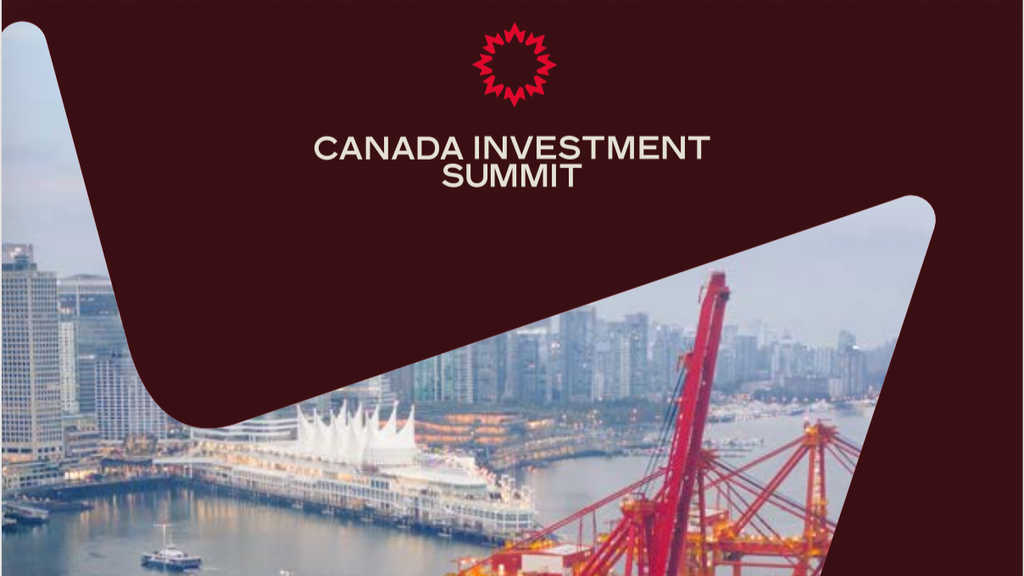
The inaugural Canada Investment Summit wrapped up in Toronto on September 15, 2026, bringing together investors from nearly 30 countries who manage more than $100 trillion in assets. Hosted by Prime Minister Mark Carney with CPP Investments and PSP Investments, the two-day event ended with nearly $500 billion in new investment commitments, a major step toward Ottawa’s goal of helping enable $1 trillion in total investment over five years.
For investors on the Toronto Stock Exchange (TSX), this summit represents a structural inflection point. As cross-border trade realignments accelerate, global capital is seeking stable, resource-rich, and rule-of-law jurisdictions.
Here is a breakdown of the three key TSX sectors targeted for long-term global investment, complete with portfolio positioning strategies for late 2026.
🚀 Key Takeaways (TL;DR)
- Result, Not Just a Pitch: The summit closed with nearly $500 billion in commitments, most of it multi-year bank financing and pension capital rather than cash invested right away.
- TSX Sector Winners: Energy & Utilities, Transport & Logistics Infrastructure, and Critical Mining stand out as primary beneficiaries.
- Institutional Inflows: Large-scale institutional investment can support demand for established TSX market leaders, but it doesn’t guarantee higher share prices.
What Was Actually Committed at the Summit?
According to the Prime Minister’s Office, the nearly $500 billion breaks down roughly as follows:
- Banks (about $325 billion in financing): TD ($150 billion over five years), Scotiabank (over $100 billion over five years), BMO ($70 billion over 10 years), CIBC ($2 billion for defence-related businesses) and RBC (nearly $1.5 billion for technology companies).
- Pension funds and insurers (nearly $100 billion): the new $50 billion Maple Fund from CPP Investments and Brookfield Asset Management for infrastructure and strategic industries, an extra $25 billion in Canada from PSP Investments, $10 billion more from Ontario Teachers’ by the end of 2027 and $5 billion from Sun Life over five years.
- Investment funds (more than $14 billion): Power Sustainable (over $10 billion for power, grid, fibre and data infrastructure) and Radical Ventures ($4 billion for AI scale-ups).
- AI infrastructure: Bell Canada and Saskatchewan announced a $52.5 billion, 1.2-gigawatt AI data centre hub.
Ottawa also announced a new Productivity Mega Deduction to let businesses write off a much broader range of assets immediately, and plans to seek private investment through long-term concessions to operate Canada’s four largest airports. Keep in mind that bank financing commitments are lending capacity, not guaranteed loans, and many amounts are “up to” figures spread over several years.
1. Energy Infrastructure & Grid Modernization
Global institutional funds are prioritizing energy security combined with long-term transition assets. Canada’s dual advantage—massive conventional energy reserves alongside hydro and nuclear generation capacity—makes its energy grid a primary target.
Key Growth Drivers
- Pipeline and Distribution Expansion: Moving crude and natural gas efficiently to coastal export terminals requires billions in private infrastructure capital.
- Electrical Grid Scaling: As industrial electrification demands expand, regulated utility operators are securing long-term capital partnerships to fund grid modernization.
- Power and Data Infrastructure: Power Sustainable’s commitment and Bell’s Saskatchewan AI hub point to growing demand for electricity generation and transmission.
Pro Tip: Watch for follow-on TSX equity flows in the weeks after a summit like this—institutional capital commitments can take months or years to turn into signed deals and actual spending. Don’t expect an immediate pop; track quarterly earnings calls for management commentary on new capital partnerships instead.
2. Transportation, Ports & Logistics
To insulate supply chains from trade shocks, international investors are allocating capital into North American freight, port, and rail networks.
| Infrastructure Segment | Global Capital Focus | TSX Market Opportunity |
|---|---|---|
| Class-1 Rail Networks | Cross-continent freight efficiency | High-barrier-to-entry duopolies with strong pricing power. |
| Port & Terminal Operations | Coastal trade gate expansion | High-yield infrastructure operators tied to trade volume growth. |
| Pipelines & Storage | Export terminals & storage hubs | Regulated, long-term fee-for-service cash flow models. |
3. Critical Minerals & Resource Extraction
The global transition toward high-tech manufacturing, battery storage, and defence systems has elevated lithium, copper, nickel, and uranium into strategic national assets.
- Streamlined Regulatory Approvals: Ottawa’s push to fast-track major resource projects reduces permitting friction for well-capitalized miners.
- Joint Ventures: Watch for pension and infrastructure funds, including the new Maple Fund, to take stakes in Canadian resource projects. At the summit, Ottawa also committed about $140 million through the Canada Growth Fund to Generation Mining’s Marathon copper and palladium project in Northwestern Ontario.
Strategic Portfolio Positioning
- Target Market Leaders: Focus on large-cap TSX dividend payers that feature high barriers to entry and established operational footprints. For income-focused positioning in the energy and utility names discussed above, see our guide to reliable TSX dividend stocks.
- Reinvest Dividends: Let compounding work for you over the long term, rather than trying to time summit-driven news.
- Watch for Follow-Through: Many of the commitments are financing capacity or “up to” amounts spread over five to ten years. The real test is signed projects and capital actually deployed, so judge companies on results, not headlines. If you’re worried about trade risk, our guide to defensive investing in Canadian sectors covers how to balance a portfolio.
Frequently Asked Questions (FAQ)
Q: How does global capital inflow affect everyday retail investors? A: Institutional capital buying into TSX-listed companies can increase trading liquidity and lower corporate borrowing costs, although the pace and scale of any benefit to share prices is uncertain.
Q: Are utility stocks safe during market volatility? A: Regulated utilities offer consistent fee-based revenue models protected by provincial frameworks, making them common defensive income holdings, although higher interest rates and regulatory decisions can still weigh on their share prices.
Q: Did the Canada Investment Summit actually raise $1 trillion? A: Not yet. The summit closed on September 15, 2026 with approximately $500 billion in new investment commitments—a major step toward Ottawa’s goal of enabling $1 trillion in total investment over five years. Much of the $500 billion is multi-year financing, so actual spending will take time.
Which TSX sector do you think will benefit most from international investment? Share your thoughts below!
Get free Canadian money tips every week
TFSA updates, CRA changes, mortgage strategies — straight to your inbox every Thursday. No spam, unsubscribe anytime.
Certified Financial Planner (CFP) and Chartered Investment Manager (CIM) with over 17 years of experience in Canadian personal finance. Spent 10+ years at one of Canada's Big Five banks, the last 7 focused exclusively on high-net-worth clients. Every guide is written with the same depth I bring to real client work — Canada-specific, CRA-verified, and always free.
Disclaimer: This article is for informational and educational purposes only and does not constitute financial or investment advice. Always consult a qualified financial advisor before making investment decisions.