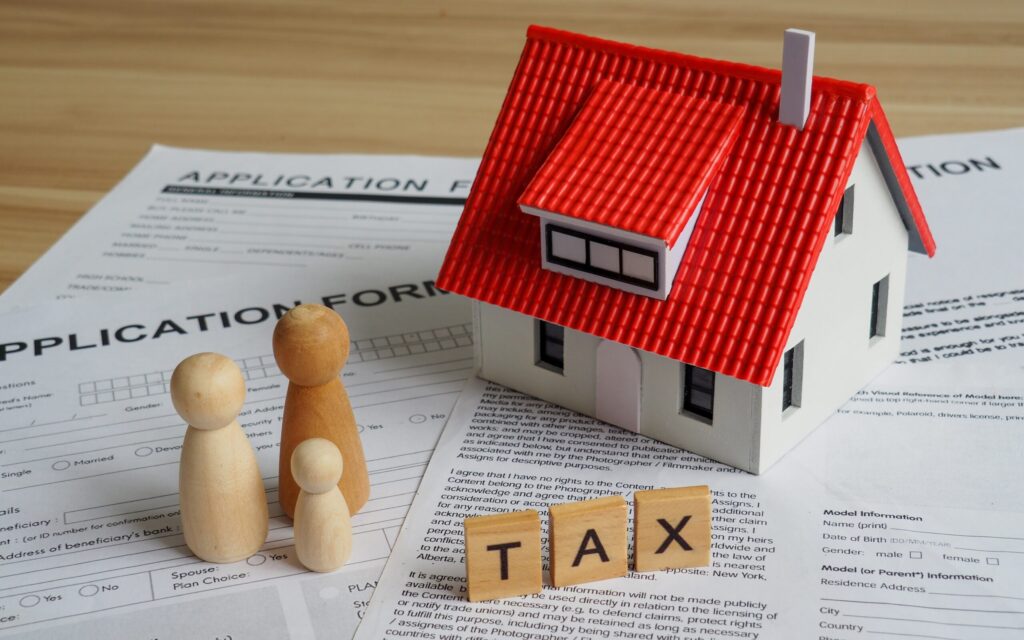
The first-time home buyers’ tax credit is one of the simplest tax breaks you can claim after buying your first home in Canada, yet many buyers forget it or get the amount wrong. It lets you claim a $10,000 “home buyers’ amount” on line 31270 of your tax return. For 2026, the lowest federal tax rate dropped to 14%, so the credit is worth up to $1,400 in federal tax savings, not the $1,500 that many older guides still quote. This guide covers who qualifies, how to claim it step by step, and how it fits with the FHSA, the Home Buyers’ Plan, and the GST rebate.
Quick Answer
- You can claim up to $10,000 on line 31270 for a qualifying home bought in 2026. At the 14% lowest federal rate, that reduces your federal tax by up to $1,400.
- You generally qualify if neither you nor your spouse or common-law partner lived in a home that either of you owned in 2026 before the purchase or in 2022 to 2025.
- The credit is non-refundable, so it only helps if you owe federal tax. Spouses can split the $10,000 between them.
- Claim it on your 2026 return, filed in spring 2027, and keep your purchase documents in case the CRA asks for them.
Pro Tip: Because the credit is non-refundable and can’t be carried forward, who claims it matters as much as whether you claim it. If one partner is on parental leave, studying, or between jobs in the purchase year, put the full $10,000 on the other partner’s return. A claim on a low-income return can simply evaporate.
How Much Is the First-Time Home Buyers’ Tax Credit Worth in 2026?
The federal Home Buyers’ Tax Credit (HBTC) lets you enter a fixed $10,000 amount on line 31270. It is a non-refundable credit, which means the CRA multiplies that $10,000 by the lowest federal tax rate and subtracts the result from your federal tax.
Why the value changed
For years, the lowest federal rate was 15%, so the credit was worth $1,500. Bill C-4, which received Royal Assent on March 12, 2026, cut that rate to 14% effective July 1, 2025 — giving a blended 14.5% for 2025 and a full 14% for 2026 and later years. Since non-refundable credits use the lowest rate, the value of the HBTC changed too:
| Purchase year | Calculation | Credit value |
|---|---|---|
| 2024 and earlier | $10,000 × 15% | $1,500 |
| 2025 | $10,000 × 14.5% | $1,450 |
| 2026 | $10,000 × 14% | $1,400 |
The $10,000 amount itself did not change. The lower tax rate means everyone also pays less tax on their first bracket of income, so most people are not worse off overall. But if you are planning with an older $1,500 figure, update your numbers — and note that the same rate change reduced the value of every other credit calculated at the lowest federal rate, too.
Non-refundable means you need tax to reduce
If your federal tax owing is less than $1,400 before this credit, you will not get the full benefit. The credit cannot create a refund on its own, and unused amounts cannot be carried forward to later years. This is why splitting the claim with a spouse or partner who has more tax owing can matter.
Provincial versions
Some provinces offer their own first-time buyer tax credits. Two examples:
- Saskatchewan: For qualifying homes bought on or after January 1, 2025, the provincial First-Time Homebuyers’ Tax Credit is based on $15,000 (up from $10,000) at a 10.5% rate, worth up to $1,575. You claim it on Form SK428.
- Quebec: Quebec has a non-refundable first-home credit based on $10,000 at Quebec’s lowest rate of 14%, worth up to $1,400, which spouses can share. In April 2026, Quebec also announced a new refundable tax credit for access to homeownership that refunds up to $5,875 of municipal transfer duties (“welcome tax”) for qualifying first homes acquired after December 31, 2025, subject to legislation.
Most other provinces do not have a matching income tax credit, but several offer land transfer tax rebates for first-time buyers, which work differently.
Who Qualifies for the Home Buyers’ Amount?
You must meet two sets of conditions: you must be a first-time home buyer (or qualify under the disability rule), and the home must be a qualifying home. The CRA explains the full rules on its line 31270 home buyers’ amount page.
The “first-time” test
You are considered a first-time home buyer if, in the year you bought the home or in any of the four preceding years, you did not live in another home that you owned or jointly owned. The same applies to your spouse or common-law partner. For a 2026 purchase, that means:
- You did not live in a home owned by you or your spouse at any time in 2022, 2023, 2024, or 2025.
- You also did not live in such a home in 2026 before this purchase.
This is a rolling test, not a lifetime ban. If you sold a home in 2020 and have rented ever since, you can qualify again for a 2026 purchase. That is different from Ontario’s land transfer tax refund, which requires that you have never owned a home anywhere — so you can qualify for the federal credit while failing Ontario’s test.
The disability exception
You do not need to be a first-time buyer if you are eligible for the disability tax credit, or if you buy the home for the benefit of a related person who is eligible. The purpose of the purchase must be to let that person live in a home that is more accessible or better suited to their needs.
What counts as a qualifying home
- The home must be in Canada.
- It must be registered in your name, your spouse’s name, or both, under your province’s land registration system.
- You, or the related person with a disability, must intend to occupy it as a principal residence no later than one year after buying it.
- Existing homes and homes under construction both count.
- Eligible types include single-family houses, semi-detached houses, townhouses, mobile homes, condominium units, and apartments in duplexes, triplexes, fourplexes, or apartment buildings.
- A share in a co-operative housing corporation counts only if it gives you an equity interest in a unit. A share that only gives you the right to live there does not.
Common situations
| Situation | Result for a 2026 purchase |
|---|---|
| You rented, but your partner owned a condo you both lived in during 2024 | Neither of you qualifies — you lived in a home your partner owned within the four-year window |
| Your partner owned a condo that was rented out, and you never lived in it | You may still qualify — the test is about living in an owned home, not owning property. Confirm with the CRA or a tax professional |
| You bought with a friend or sibling | Each eligible buyer can claim part of the $10,000, but the combined total cannot exceed $10,000 |
| You sold your last home in 2020 and have rented since | You qualify — the four-year window starts in 2022 |
How to Claim the Credit on Line 31270
The claim itself is simple. The key is getting the timing and the split right.
Step 1: Confirm the purchase year
You claim the credit for the tax year in which you acquired the home. For most buyers, that is the closing date, when the home is registered to you. If you signed in 2025 but closed in January 2026, claim it on your 2026 return — at the 2026 value of $1,400.
Step 2: Gather your documents
You do not need to send documents when you file, but keep them in case the CRA reviews your claim:
- The agreement of purchase and sale
- The statement of adjustments from your lawyer or notary
- Proof of registration or the deed
- Proof that you moved in, such as a change of address or utility accounts
Step 3: Decide who claims it
If you have a spouse or common-law partner, you can split the $10,000 in any way you choose, as long as the total is not more than $10,000. Usually, it makes sense for the person with enough federal tax owing to absorb the full $1,400. If one of you has low income, for example because of parental leave, put the claim on the higher earner’s return.
Step 4: Enter it on line 31270
In certified tax software, look for “home buyers’ amount” and enter $10,000, or your share of it. The software carries the amount to line 31270 and to Schedule 1. If you are in Saskatchewan or Quebec, also claim the provincial version on your provincial form.
Step 5: File on time
Your 2026 return is due April 30, 2027, for most people. If you forgot to claim the credit in an earlier year, you can generally ask the CRA to adjust that return through My Account or by mail, within the normal time limits for adjustments.
A worked example
Here is a hypothetical example. Priya and Daniel buy their first condo in Regina in May 2026. Neither has lived in an owned home since 2019. Daniel is on parental leave for most of 2026 and owes little tax, while Priya earns $85,000.
- Priya claims the full $10,000 on line 31270, cutting her federal tax by $1,400.
- She also claims the Saskatchewan credit on $15,000, cutting her provincial tax by $1,575.
- Their total tax saving from the first-time buyer credits is $2,975.
If Daniel had claimed the federal amount instead, much of it would have been wasted because he had little tax to reduce — and because the credit can’t carry forward, it would have been lost for good.
How the HBTC Fits With Other First-Home Programs
The home buyers’ amount is small compared with the other federal first-home programs, but you can often use it alongside them. Here is how they compare in 2026.
| Program | What you get | Key 2026 limit | Can you use it with the HBTC? |
|---|---|---|---|
| Home Buyers’ Tax Credit (line 31270) | Non-refundable tax credit | $10,000 amount, worth up to $1,400 | Not applicable |
| First Home Savings Account (FHSA) | Tax-deductible contributions and tax-free qualifying withdrawals | $8,000 a year, $40,000 lifetime | Yes |
| RRSP Home Buyers’ Plan (HBP) | Tax-free RRSP withdrawal, repaid over 15 years | Up to $60,000 per person | Yes |
| First-time home buyers’ GST/HST rebate | Rebate of GST, or the federal part of HST, on a new home | Up to $50,000; full rebate for homes up to $1 million, phased out by $1.5 million | Yes, if the home qualifies |
The GST rebate became law with Bill C-4 in March 2026 and applies to new homes bought under agreements entered into from March 20, 2025 onward. On a new home, it is by far the largest of these benefits — up to $50,000 against the HBTC’s $1,400.
Note also that the HBP’s temporary five-year repayment grace period applied only to withdrawals made from 2022 through 2025; withdrawals made in 2026 are back on the standard two-year grace period before repayments begin.
Each program has its own definition of “first-time buyer,” so qualifying for one does not guarantee you qualify for all of them. If you are deciding how to save for a down payment, the FHSA and RRSP deduction usually matter more than the HBTC. Our guide on how RRSP deductions work explains the deduction side. If you are new to Canada, also read our article on newcomer mortgage down payment rules.
Mistakes to Avoid
- Using the old $1,500 figure in your budget for a 2026 purchase.
- Both spouses claiming $10,000 each. The combined claim is capped at $10,000.
- Claiming for a rental or investment property. The home must be your principal residence within one year.
- Assuming a past home rules you out forever. The test covers only the purchase year and the four years before it.
- Putting the claim on a low-income return where it cannot be fully used.
- Forgetting the provincial credit in Saskatchewan or Quebec.
Key Takeaways
- For a 2026 purchase, the $10,000 home buyers’ amount on line 31270 is worth up to $1,400, based on the new 14% lowest federal rate (it was $1,450 for 2025 and $1,500 before that).
- You qualify if neither you nor your spouse lived in a home either of you owned in 2022 to 2025 or earlier in 2026.
- Put the claim on the return of the spouse or partner with enough federal tax to use it fully — unused amounts don’t carry forward.
- Saskatchewan buyers can also claim up to $1,575 provincially, and Quebec buyers have a separate $1,400 provincial credit plus a new refundable welcome-tax credit of up to $5,875.
- Use the HBTC alongside the FHSA ($8,000 a year), the HBP (up to $60,000), and the GST/HST rebate of up to $50,000 on new homes.
- Keep your purchase agreement and statement of adjustments in case the CRA asks.
FAQ
How much is the first-time home buyers’ tax credit in 2026?
For 2026, it is worth up to $1,400. You claim a $10,000 amount on line 31270, and it is multiplied by the lowest federal rate of 14%. The credit was worth $1,500 when that rate was 15%, and $1,450 for 2025.
Can I claim the home buyers’ amount if I owned a home before?
Yes, if neither you nor your spouse lived in a home either of you owned during the year of purchase or the four previous years. For a 2026 purchase, you look back to 2022. Owning a home more than four years before does not disqualify you.
Can my spouse and I both claim the credit?
You can split it, but the combined claim cannot exceed $10,000. Many couples put the full amount on the return of the person with more tax owing so the credit is not wasted.
Is the first-time home buyers’ tax credit refundable?
No, it is non-refundable. It reduces federal tax you owe, but it cannot create a refund by itself, and unused amounts do not carry forward.
Can I use the HBTC and the FHSA for the same home?
Yes. You can generally use the FHSA, the Home Buyers’ Plan, and the home buyers’ amount for the same qualifying home, as long as you meet each program’s rules. Check each program’s first-time buyer definition, because they are not identical.
Conclusion
The first-time home buyers’ tax credit is easy to claim, but for 2026 it is worth $1,400, not $1,500, because of the lower federal tax rate. Confirm you pass the four-year test, put the claim on the right spouse’s return, and add any provincial credit if you live in Saskatchewan or Quebec. Save your purchase documents now in a folder labelled for your 2026 tax return. When you file next spring, the claim takes a minute, and it adds a useful bit of savings to your first year of home ownership.
Get plain-English money tips for Canadians
Join the GetWealthy newsletter and get the free Canadian Money Planner 2026 Edition (PDF). No spam, unsubscribe anytime.
Your one-stop guide to everything Canadians need to know about money. Written by the GetWealthy editorial team, based on official CRA, FINTRAC and government sources and reviewed every year.
Turn what you just read into a plan
The Canadian Money Planner keeps your budget, savings, debt and goals in one place. It's free.
Get the free 2026 Planner
This article is for educational purposes only and is not personalized tax or legal advice. Tax credits, rates, and eligibility rules can change, and provincial measures may depend on legislation. Information is based on Canada Revenue Agency, Department of Finance Canada, Government of Saskatchewan, and Quebec Ministère des Finances sources as of October 2026. Consult a qualified tax professional about your situation.