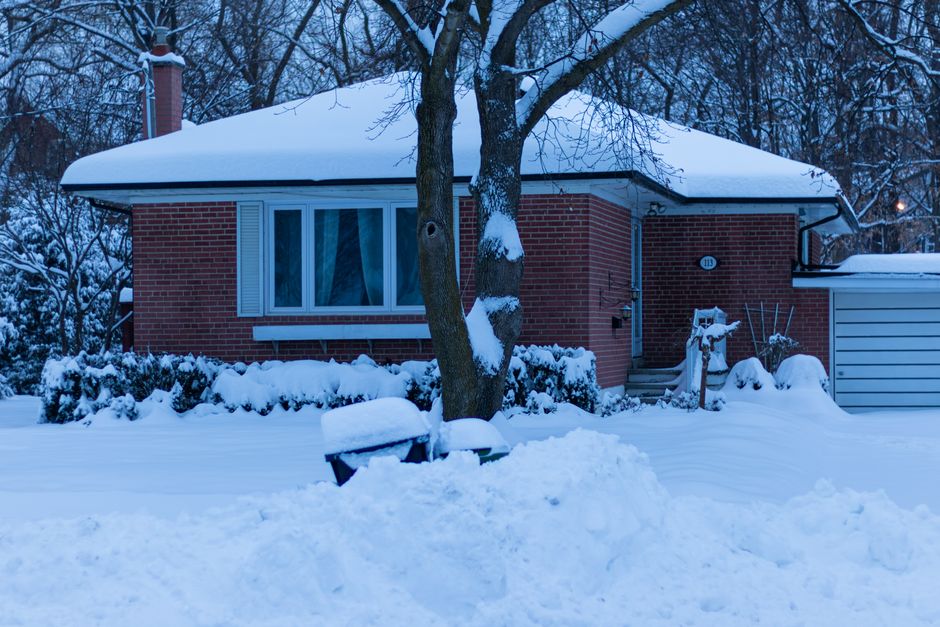
Buying a home in winter in Canada can give you something rare in real estate: time and leverage. When the snow falls, many buyers pause until spring, and the sellers still on the market are often motivated. CREA data shows the pattern. The national average sale price was $652,941 in January 2026, compared with $695,412 in April 2026. Part of that gap reflects which homes sell in each season, but the drop in competition is real. Winter also hides problems under snow and ice, from roof damage to poor drainage. This guide explains how to use winter leverage, which inspection risks to watch, and how to protect yourself in your offer.
Quick Answer
- Winter usually brings fewer buyers and fewer bidding wars. CREA’s national average price was $652,941 in January 2026 versus $695,412 in April 2026, about 6.5% higher in spring.
- Some of that gap is mix, not discounts. Pricier detached homes tend to sell in spring. Compare like-for-like homes in your area.
- Snow and cold can hide roof, grading, foundation, deck, and air conditioning problems. Ask your inspector to list in writing what they could not check.
- Use your leverage on terms, not just price: conditions, repair credits, holdbacks for spring checks, and flexible closing dates.
Are Home Prices Lower in Winter in Canada?
Often, yes, but not by as much as the raw numbers suggest. CREA’s non-seasonally adjusted figures show the national average rising from January to April 2026, then easing by August.
| Month (2026) | National average sale price (NSA) | Sales-to-new listings ratio |
|---|---|---|
| January | $652,941 | 45.0% |
| April | $695,412 | 45.6% |
| August | $668,219 | 49.1% |
Source: CREA monthly releases. January to April is a swing of about $42,500.
Two things drive that swing:
- Market mix: Families shopping for detached houses tend to buy in spring and summer, so more high-priced homes sell then. That raises the average even if the same house would sell for about the same price in either season.
- Competition: Fewer buyers in winter means fewer multiple offers and more room to negotiate on price and terms.
CREA reported a national sales-to-new listings ratio of 45% in January 2026, at the low end of the 45% to 65% range CREA generally treats as balanced, and pointed to a historic winter storm that suppressed activity in Central and Southwestern Ontario. In a balanced or buyer’s market, conditional offers and price cuts are more common.
Keep in mind that “winter” means different things across Canada. In Metro Vancouver and Victoria the slow season is shorter and milder, so the inspection limits below matter less. On the Prairies, in Ontario, Quebec, and Atlantic Canada, snow cover can hide the exterior for months.
Why winter sellers may be more motivated
- They may have already bought another home and need to sell.
- They may be facing a job transfer, separation, or estate sale.
- Listings that did not sell in the fall often carry price reductions and longer days on market.
- Few sellers choose to list in December or January unless they need to.
Ask your agent for each home’s full listing history, including earlier listings that were cancelled and relisted, price changes, and total days on market. A home that has been relisted twice since September is a strong negotiating opportunity.
Pro Tip: Look at homes listed in late November and December. Listings that sit through the holidays often reach 60+ days on market by mid-January, just before spring buyers return. That window is often when sellers are most willing to accept conditions, credits, or a lower price.
Interest rates heading into winter 2026
The Bank of Canada held its policy rate at 2.25% on September 2, 2026. Its remaining 2026 decisions are scheduled for October 28 and December 9. The prime rate at the big banks is 4.45%, which sets variable-rate and HELOC pricing. Fixed rates follow Government of Canada bond yields rather than the policy rate, so they can move between announcements. Get a pre-approval with a rate hold, often 90 to 120 days, before you start shopping. You can follow decisions on the Bank of Canada’s policy interest rate page.
What Inspection Risks Come With Buying in Winter?
Winter is a great time to test some parts of a house and a poor time for others. Know the difference before you waive any condition.
| Area | Winter advantage or risk | What to do |
|---|---|---|
| Furnace and heating | Advantage: you see it running under real load | Check every room’s warmth; ask for service records and furnace age |
| Insulation and drafts | Advantage: cold spots, frost, and ice dams reveal heat loss | Ask for an infrared (thermal) scan; check the attic for frost or moisture |
| Roof | Risk: snow hides shingles and flashing | Ask the inspector to note limits; use a drone if possible; request roof age and receipts |
| Grading, drainage, foundation | Risk: snow hides slope and cracks; frozen ground hides water problems | Look for basement water staining or efflorescence; ask for a spring holdback |
| Air conditioning / heat pump cooling | Risk: most units should not be run in cooling mode below about 15°C | Ask for age and service history; negotiate a credit if it is old |
| Decks, pools, landscaping | Risk: often buried or winterized | Ask for photos from other seasons; inspect the structure where possible |
Winter-specific warning signs
- Ice dams and large icicles: Heavy ice along the roof edge often points to poor attic insulation or ventilation, which can damage the roof and walls.
- Frost or heavy condensation on windows: This can signal high indoor humidity, poor ventilation, or failing window seals.
- Frozen or burst pipes: Check pipes in exterior walls, crawl spaces, and garages. Vacant homes are especially risky if the heat was turned down.
- Sewer line problems: A sewer scope camera inspection can usually be done in winter if the cleanout is accessible. It is worth it for older homes or lots with large trees.
Don’t skip the inspection to win a deal
With less competition in winter, you usually do not need to waive your inspection. Keep it as a condition and budget roughly $400 to $700 for a standard inspection, plus extra for a sewer scope or other specialists. Ask the inspector to list clearly which areas they could not see because of snow or cold. That list becomes your negotiating tool.
Vacant homes and insurance
Many winter listings are vacant estates or relocations. Insurers may need to know about vacancy, and many policies limit or exclude freeze damage if a home is left unheated or unchecked. Ask the seller to confirm in writing that the heat stays on and the home is checked regularly until closing, and have your own home insurance in place from the day you take possession. Your lender will require proof of insurance before it advances funds.
How to Negotiate When Buying a Home in Winter
Leverage is not only about price. In winter, you can often win better terms that protect you from hidden problems.
Price
Base your offer on recent sales of similar homes in the neighbourhood, not on the asking price or spring averages. If a home has been on the market for 60 days or more, an offer below asking is reasonable. Your agent can show you the local sale-to-list price ratio.
Conditions
| Condition | Typical length | Why it matters in winter |
|---|---|---|
| Financing | 5 to 10 business days | Confirms your lender approves the specific property |
| Inspection | 5 to 7 days | Lets you bring in roofers, sewer scopes, or HVAC specialists |
| Insurance | A few days | Useful for older homes with knob-and-tube wiring, oil tanks, or past water claims |
| Status certificate / strata documents (condos) | 3 to 5 days | Reveals reserve fund health and upcoming special assessments |
Credits and holdbacks
If the roof, grading, or air conditioning could not be checked, ask for a price credit or a holdback. A holdback is money held in trust by the lawyers or notary at closing until a spring inspection confirms an item is fine, or used to pay for repairs if it is not.
Example: Snow covers a 15-year-old roof. You and the seller agree to a $7,500 holdback held in your lawyer’s trust account until May 31. A roofer inspects in April. If the roof is sound, the full amount is released to the seller. If it needs $4,000 of repairs, $4,000 pays for the work and $3,500 goes to the seller.
Your real estate lawyer or notary should draft the wording, including the deadline, who chooses the inspector, and what happens if the parties disagree. Holdbacks are less common than credits, and some lenders or sellers resist them, but winter is when sellers are most open to them.
Closing date and possession
A flexible closing date can be worth more to a seller than a few thousand dollars. A quick close may suit a seller who already bought elsewhere, while a longer close may help one waiting on their own purchase. Ask your agent what the seller needs most.
Down Payment, Insurance, and Closing Costs
With less than 20% down, your mortgage must be insured. Insured mortgages are available on homes priced under $1.5 million, and first-time buyers and buyers of new builds can choose a 30-year amortization on an insured mortgage. CMHC requires at least one borrower to have a credit score of 600 or higher.
Budget for closing costs on top of the down payment, typically 1.5% to 4% of the price depending on your province’s land transfer tax, plus legal fees, title insurance, and adjustments. First-time buyers may qualify for land transfer tax rebates and the federal First-Time Home Buyers’ Tax Credit. If you have been saving in an FHSA, confirm your withdrawal paperwork early so the funds are ready for closing. If you are new to Canada, review newcomer mortgage down payment rules before making an offer.
Plan for Winter Moving Costs
Moving in winter can be cheaper because movers are less busy, but weather delays happen. Budget for snow removal, a furnace service, and a larger emergency fund for surprises in your first spring thaw. Our guide on building an emergency fund in Canada can help you set it up.
Your Final Walk-Through and Closing Day
Book your final walk-through as close to closing as possible, ideally the day before or the morning of. In winter, check that:
- The heat is on and the furnace is running normally.
- There is no new water staining on ceilings or basement walls, which can appear after a thaw.
- Taps run normally and there are no signs of frozen or cracked pipes.
- The driveway and walkways are clear enough for movers to work safely.
- Any repairs the seller agreed to are done, with receipts.
If you find a problem, tell your lawyer or notary right away, before funds are released. It is far easier to fix a problem with money still in trust than after closing. Arrange utilities, including gas and electricity, to transfer on possession day so the home never goes unheated.
Use the Slow Season to Prepare
Even if you are not ready to buy until spring, winter is the right time to get organized. Check your credit report, gather two years of income documents, confirm the source of your down payment (lenders usually want 90 days of account history), and compare mortgage options. When spring competition returns, you will be ready to move quickly with a firm pre-approval.
Key Takeaways
- CREA’s national average price was about 6% lower in January 2026 ($652,941) than in April 2026 ($695,412), though part of the gap is market mix.
- January’s 45% sales-to-new listings ratio sat at the bottom of CREA’s balanced range, giving buyers more room to negotiate.
- Check each listing’s history; homes with 60+ days on market or price drops give you more leverage.
- Keep your inspection condition, budget $400 to $700, and add a sewer scope for older homes.
- Get a written list of what snow or cold prevented the inspector from checking, then negotiate credits or spring holdbacks for those items.
- Confirm a vacant home stays heated and checked until closing to avoid frozen-pipe damage.
- Get a 90- to 120-day rate hold before shopping; the BoC rate is 2.25% and prime is 4.45%, with decisions on October 28 and December 9, 2026.
Frequently Asked Questions
Is winter a good time to buy a house in Canada?
For many buyers, yes. There are usually fewer buyers and less competition, which can mean lower prices and better terms. The trade-offs are fewer listings to choose from and some parts of the home that are harder to inspect.
Can a home inspection be done in winter?
Yes. Inspectors can check the interior, heating, electrical, plumbing, insulation, and attic well in winter. Snow can block roof and exterior checks, so ask for a written list of anything they could not inspect.
What is a holdback in a real estate deal?
A holdback is money kept in trust at closing until a specific issue is checked or fixed, often after a spring inspection. If the item is fine, the money goes to the seller. If not, it pays for repairs. Have your lawyer or notary draft the terms.
Should I waive conditions in winter to get a better price?
Usually not. Less competition in winter means sellers often accept conditional offers, so you rarely need to take that risk. Keeping financing and inspection conditions protects your deposit if something goes wrong.
Which month has the lowest home prices in Canada?
National averages often dip in the winter months in CREA’s non-seasonally adjusted data. In 2026, January’s average was well below April’s. Local markets vary, and a lower average may partly reflect the types of homes selling, so compare similar homes in your own area.
Can I run the air conditioner during a winter inspection?
Generally no. Running a central air conditioner in cooling mode when it is below about 15°C outside can damage the compressor. Instead, ask for the unit’s age and service records and negotiate a credit or holdback if it is near the end of its life.
Conclusion
Buying a home in winter in Canada can give you real negotiating leverage, with fewer buyers and more motivated sellers. CREA’s 2026 numbers show average prices about 6% lower in January than in April, though you should compare similar homes locally. The key is to protect yourself from what snow hides: keep your inspection condition, document what could not be checked, and negotiate credits or spring holdbacks. Get pre-approved with a rate hold, then have your agent pull listing histories so you know where you have leverage.
Get free Canadian money tips every week
TFSA updates, CRA changes, mortgage strategies — straight to your inbox every Thursday. No spam, unsubscribe anytime.
The GetWealthy editorial team writes plain-English guides to Canadian personal finance, based on official CRA, FINTRAC and government sources and reviewed every year.
Disclaimer: This article is for informational and educational purposes only and does not constitute financial, legal, or real estate advice. Market conditions and rules vary by province and change often. Always consult a licensed real estate professional, lawyer, and home inspector before buying a home.