What’s happening with Bank of Canada interest rates 2026, and should you adjust your cash management strategy? With the policy rate holding steady at 2.25% since October 2025 while US-Canada trade tensions simmer in the background, Canadian savers face an important question about where to park their money. This post breaks down exactly what the Bank of Canada’s rate pause means for your savings accounts, GICs, and investment decisions — using rates verified against current market data rather than inflated figures that circulate elsewhere.
Quick Answer:
- The Bank of Canada has held its policy rate at 2.25% through 2026 — bank forecasts on the next move genuinely diverge, with some institutions expecting continued holds and others projecting modest increases toward 2.50%–3.00% sometime in 2027
- Trade tensions with the US create economic uncertainty that makes the BoC cautious about moving rates in either direction
- Realistic 2026 rates: competitive high-interest savings accounts run 2.5%–3.5% ongoing, non-redeemable GICs run 2.70%–4.00%, and cash ETFs like CASH.TO yield approximately 2.0%–2.15%
- Smart savers should shelter interest income in registered accounts and consider a GIC ladder for medium-term funds, rather than assuming rates you see in some circulating figures
Why Has the Bank of Canada Held Interest Rates at 2.25% in 2026?
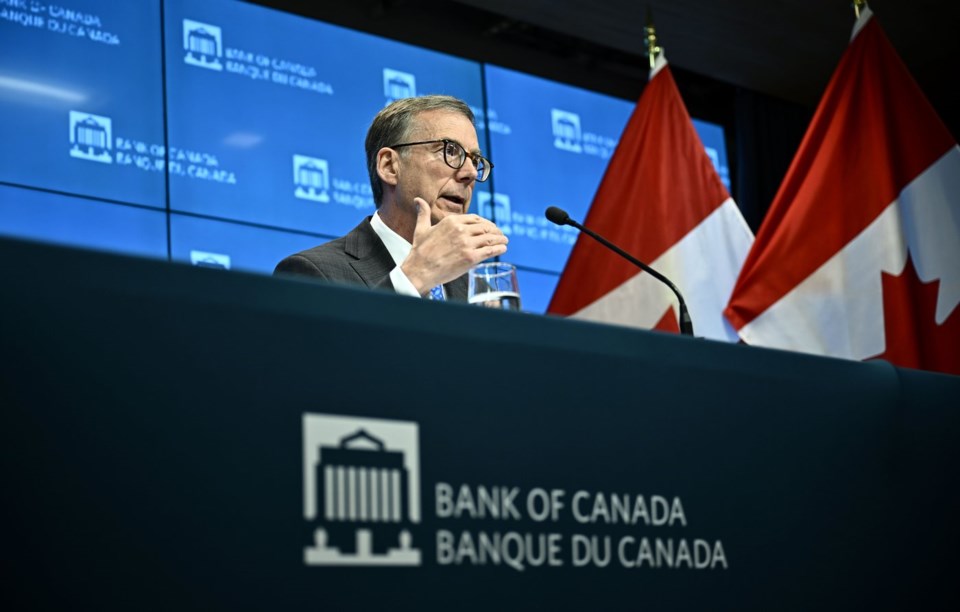
The Bank of Canada’s decision to maintain its overnight rate at 2.25% reflects a delicate balancing act. After a series of rate cuts through 2024 and 2025, the central bank has held steady since October 2025. The current rate sits within what economists call the “neutral range” — where monetary policy neither strongly stimulates nor restricts economic growth.
The Neutral Rate Explained
Think of the neutral rate as the economy’s “Goldilocks zone.” Too low, and you risk overheating inflation. Too high, and you choke off growth and employment. The Bank of Canada’s estimates for the neutral range typically fall somewhere between roughly 2.25% and 3.25%, meaning the current 2.25% sits at or near the lower end of that band.
Economic Conditions Supporting the Pause
Several factors help explain the current rate freeze:
Inflation near target: Inflation has generally moved closer to the Bank’s 2% target range, reducing urgency for aggressive moves in either direction.
Employment stability: The Canadian labour market has softened somewhat but remains broadly resilient, reducing pressure for emergency cuts.
Housing market conditions: After significant cooling from 2022–2023 peaks, further rate hikes could risk tipping vulnerable homeowners into distress at renewal.
Trade uncertainty: This is the wild card. The ongoing tariff situation with the United States — including the 50% tariffs that took effect August 22, 2026, and Canada’s own retaliatory measures effective September 8 — creates unpredictable headwinds that make the Bank hesitant to commit firmly to any direction.
How Do US-Canada Trade Tensions Affect Bank of Canada Interest Rates?
The Canadian trade war impact on monetary policy is significant but indirect. Trade disputes don’t directly set interest rates — but they shape the economic conditions the Bank of Canada responds to.
The Uncertainty Channel
When businesses don’t know what tariffs might hit their products next, they delay investments. When exporters face unpredictable barriers, they hire fewer workers. This uncertainty acts like a drag on economic growth, which normally would push the Bank toward rate cuts to stimulate activity.
However, tariffs also increase the cost of imported goods, which can push inflation higher. This creates a genuine policy dilemma: cut rates to support growth and risk fueling inflation, or hold rates steady and risk deeper economic weakness in trade-exposed sectors.
Why the BoC Has Chosen Caution
The Bank has cited trade-related uncertainty as a relevant factor in its recent decisions. With tariff policies shifting — including the delayed and then implemented August 2026 tariffs — the Bank has generally opted for a “wait and see” approach rather than making large moves before the picture clarifies.
For Canadian savers and investors, this translates to a period of relative rate stability in the near term. You’re unlikely to see dramatic swings in either direction quickly, which creates some planning predictability.
Export Sectors Under Pressure
Industries most exposed to US trade disputes — automotive, dairy, and certain manufactured goods explicitly named in the August 2026 tariff action — face the biggest uncertainty. If you work in these sectors or hold significant investments in them, the trade situation adds another layer of risk to your financial planning. Maintaining a robust emergency fund in a high-yield account becomes even more valuable when job security feels less predictable.
Comparison: High-Interest Savings vs GICs vs Cash ETFs in a 2.25% Rate Environment
Here’s how the main cash options actually compare, using rates verified against current market data as of August 2026:
| Feature | High-Interest Savings Account | 1-Year GIC | 2-Year GIC | Cash ETF (e.g., CASH.TO) |
|---|---|---|---|---|
| Typical Rate (Aug 2026) | 2.5%–3.5% ongoing (promos to ~4%) | 2.70%–3.50% | 2.70%–4.00% | ~2.0%–2.15% |
| Liquidity | Instant access | Locked for 1 year (unless cashable) | Locked for 2 years | Sell anytime (T+1 settlement) |
| CDIC Protection | Yes, up to $100,000 | Yes, up to $100,000 | Yes, up to $100,000 | No (holds Gov’t of Canada T-bills) |
| Rate Risk | Rate can drop anytime | Locked in | Locked in | Adjusts with market/policy rate |
| Best For | Emergency fund, short-term needs | Known 1-year expenses | Medium-term goals | Brokerage cash management |
| Tax Treatment | Fully taxable interest | Fully taxable interest | Fully taxable interest | Fully taxable distributions |
💡 On CASH.TO specifically: this and similar T-bill/high-interest savings ETFs closely track the Bank of Canada’s policy rate since they hold short-term government debt or bank deposits. At a 2.25% policy rate, a yield around 2.0%–2.15% is what you should actually expect — not the higher figures sometimes cited, which typically reflect the 2023 rate peak.
The sweet spot for many Canadians is a combination approach: keep 3–6 months of expenses liquid in a high-interest savings account, then ladder GICs for money you won’t need for 1–3 years. This captures competitive rates while maintaining flexibility. A competitive online HISA may currently match or beat CASH.TO’s yield while also carrying CDIC insurance the ETF lacks.
How to Position Your Cash Strategy for the BoC Rate Outlook
Given the trade-related uncertainty and genuinely divergent bank forecasts, here’s a practical approach to managing your cash in 2026.
Step 1: Audit Your Current Cash Holdings
Start by listing where your cash currently sits. Many Canadians have money scattered across multiple accounts, often earning suboptimal rates. Check:
- Your primary chequing account balance (often earns 0%)
- Savings account rates at your current bank
- Any GICs maturing in the next 12 months
- Cash sitting in investment accounts
Big banks like TD, RBC, BMO, Scotiabank, and CIBC typically offer lower savings rates than digital competitors like EQ Bank or Wealthsimple. The difference can be meaningful — on $50,000, even a 2% rate gap works out to roughly $1,000 per year in lost interest.
Step 2: Match Cash to Time Horizons
Not all cash serves the same purpose. Segment yours:
Immediate access (0–3 months): Emergency fund, upcoming bills. Keep in a high-interest savings account with instant access. Accept a slightly lower rate for liquidity.
Short-term (3–12 months): Planned major purchases, tax payments, tuition. Consider a cashable GIC or keep in high-interest savings.
Medium-term (1–3 years): Down payment savings, car replacement fund. Consider locking in current rates with a GIC ladder.
Step 3: Build a GIC Ladder
A GIC ladder spreads your money across multiple maturity dates. For example, with $30,000 to invest:
- $10,000 in a 1-year GIC
- $10,000 in a 2-year GIC
- $10,000 in a 3-year GIC
Each year, one GIC matures. You can then access the money or reinvest at whatever rates are current at that time. This strategy balances rate-locking with regular access to portions of your funds — and it’s genuinely useful regardless of which direction rates eventually move, since you’re not betting everything on a single forecast.
Step 4: Maximize Registered Accounts
Interest income is taxed at your full marginal rate — the least favourable tax treatment. Holding interest-bearing investments inside registered accounts shields them from tax:
TFSA: Contribute up to $7,000 in 2026 (lifetime room of approximately $109,000 if you’ve been eligible since 2009). All growth is permanently tax-free. A high-interest savings account or GIC inside your TFSA keeps that interest completely sheltered. Confirm your exact room via CRA’s official TFSA calculator.
RRSP: Contributions reduce your taxable income now. The 2026 RRSP contribution limit is $33,810 (18% of your 2025 earned income, whichever is less — an increase from $32,490 for 2025 contributions). See CRA’s official RRSP deduction page for current rules. Cash or GICs in an RRSP grow tax-deferred until withdrawal.
FHSA: First-time homebuyers can contribute $8,000 per year up to $40,000 lifetime. If you’re saving for a down payment, a high-interest FHSA combines tax deductions with tax-free growth.
Common Mistakes Canadians Make When Interest Rates Hold Steady
Rate pauses create a false sense of security. Watch out for these pitfalls:
Mistake 1: Ignoring Rate Erosion
When the BoC holds rates steady, banks often quietly reduce savings account rates anyway. They’re not required to match the policy rate exactly — they set rates based on their own funding needs and competition. Review your savings rate quarterly. If your bank has shaved 0.25% off your rate, consider switching.
Mistake 2: Overreacting to Headlines
Trade war headlines make for dramatic news but rarely require dramatic personal finance changes. The Bank of Canada’s institutional role is to smooth out these shocks, not amplify them. Unless you work directly in a heavily impacted export sector, maintain your regular savings and investment plan rather than making fear-based decisions.
Mistake 3: Trusting Inflated Rate Figures
This is worth calling out directly: circulating figures for HISA, GIC, and cash ETF yields are sometimes significantly higher than what’s actually available in 2026 — often reflecting the 2023 rate peak rather than current conditions. Always verify current rates directly with the provider before making decisions, rather than relying on any single secondhand source.
Mistake 4: Hoarding Too Much Cash
With savings accounts paying a real but modest 2.5%–3.5%, keeping excessive cash can feel productive. But inflation still erodes purchasing power over time, and equities and diversified portfolios have historically outperformed cash over the long term. A reasonable cash allocation covers your emergency fund plus any known expenses in the next 1–3 years. Beyond that, excess cash often represents a missed growth opportunity.
Mistake 5: Ignoring Provincial Differences
The BoC sets policy for all of Canada, but regional economies respond differently. Alberta’s resource sector and Ontario’s manufacturing base have different sensitivities to both interest rates and trade policy. Your personal financial strategy should account for your local job market and housing conditions, not just national averages.
What Happens If Trade Tensions Escalate?
While the base case is relative rate stability through 2026, scenarios exist where the Bank might need to act more decisively. Understanding these helps you prepare without overreacting.
Scenario A: Trade War Intensifies, Growth Weakens Significantly
If tariff pressures expand further and Canadian exports suffer materially, the BoC could cut rates below 2.25% to stimulate the economy. This would reduce savings account rates but potentially create opportunities in rate-sensitive assets like bonds and dividend stocks. Variable-rate mortgage holders would benefit from lower payments in this scenario.
Scenario B: Tariffs Fuel Inflation
If import costs surge due to tariffs and Canada’s own retaliatory measures (effective September 8, 2026) push domestic prices higher, the BoC might need to hold rates longer or even consider increases — a scenario some bank economists (including Scotiabank and CIBC) already factor into their 2027 forecasts, projecting a possible rise toward 2.50%–3.00%. Locking in current GIC rates now provides some insurance against this scenario. Mortgage holders with renewals coming should stress-test their budget against potential rate increases.
Scenario C: Trade Tensions Ease, Uncertainty Lifts
A resolution or de-escalation could boost business confidence and economic growth. The BoC might then have more room to consider its next move with greater confidence. This scenario would favour staying somewhat flexible with shorter-term savings vehicles rather than locking heavily into long-term GICs.
The honest summary: bank forecasts for where rates go next genuinely diverge. Some institutions (BMO, TD, RBC) currently expect the rate to hold closer to current levels through 2027. Others (Scotiabank, CIBC) project a possible rise toward 2.50%–3.00% if inflation pressures persist. Build your cash strategy to work reasonably well under either scenario rather than betting everything on one forecast.
Banking Stability in Uncertain Times
Regulatory measures continue to shape the environment Canadian banks operate in, adjusting periodically based on the Office of the Superintendent of Financial Institutions’ (OSFI) assessment of system-wide risk. For everyday savers, the key protection that matters directly is CDIC insurance, covering deposits up to $100,000 per category at member institutions — your savings at major Canadian banks and credit unions remain well-protected regardless of trade tensions or rate changes, provided you stay within coverage limits and spread larger deposits across institutions or categories as needed.
Key Takeaways
- The Bank of Canada has held its policy rate at 2.25% through 2026 — bank forecasts on the next move genuinely diverge rather than pointing to a single confirmed outcome
- Realistic current rates: high-interest savings accounts run 2.5%–3.5% ongoing, GICs run 2.70%–4.00%, and cash ETFs like CASH.TO yield approximately 2.0%–2.15% — meaningfully lower than some figures still circulating from the 2023 rate peak
- US-Canada trade tensions create genuine economic uncertainty that factors into the BoC’s cautious stance — don’t let headlines alone derail your financial plan
- Shelter interest income in registered accounts: your $7,000 annual TFSA contribution and $33,810 RRSP room (2026) can hold GICs or high-interest savings largely or completely tax-sheltered
- Maintain 3–6 months of expenses in liquid savings regardless of rate environment — this baseline protects you whether rates rise, fall, or hold steady
- Review your savings account rates quarterly; banks often reduce rates during pauses even when the BoC holds steady
- A GIC ladder balances locking in current rates with regular access to your funds, and works reasonably well regardless of which bank’s 2027 forecast proves correct
Frequently Asked Questions
Will the Bank of Canada raise or lower rates in 2026?
The Bank of Canada is generally expected to hold its policy rate at 2.25% for the remainder of 2026, though bank forecasts genuinely diverge on the direction for 2027. Some institutions (BMO, TD, RBC) expect the rate to hold closer to current levels, while others (Scotiabank, CIBC) project a possible modest rise toward 2.50%–3.00% if inflation pressures persist. Barring a major economic shock from trade disputes, significant rate cuts also appear unlikely in the near term, though the trade situation remains a genuine wildcard.
How do US-Canada trade tensions affect Canadian interest rates?
Trade tensions influence interest rates indirectly by creating economic uncertainty. When businesses delay investments and exports face unpredictable barriers, economic growth slows — which normally prompts rate cuts. However, tariffs can also increase import costs and fuel inflation, which would call for rate hikes or holds instead. This conflicting pressure is a key reason the Bank of Canada has generally chosen a cautious, wait-and-see approach rather than moving decisively in either direction.
What does a 2.25% Bank of Canada rate actually mean for my savings?
A 2.25% BoC policy rate translates to realistic high-interest savings account rates of roughly 2.5% to 3.5% at competitive Canadian institutions like EQ Bank or Wealthsimple, with some promotional offers reaching closer to 4% for a limited period. Non-redeemable GICs typically run 2.70% to 4.00% depending on term. Cash ETFs like CASH.TO, which closely track the policy rate, yield approximately 2.0% to 2.15% — always verify current figures directly, since inflated rate claims from the 2023 peak still circulate in some sources.
Bank of Canada interest rates in 2026 remain at 2.25%, creating a relatively stable — if not dramatically generous — foundation for Canadian savers to work with. The pause gives you time to review your holdings, verify actual current rates rather than assuming outdated or inflated figures, and ensure your registered accounts are working efficiently. Whether trade tensions escalate or ease, maintaining a diversified approach with appropriate liquidity and accurate rate expectations protects your financial position. Ready to put your cash to work more effectively? Explore more cash management strategies and savings insights at Getwealthy.
Get free Canadian money tips every week
TFSA updates, CRA changes, mortgage strategies — straight to your inbox every Thursday. No spam, unsubscribe anytime.
Certified Financial Planner (CFP) and Chartered Investment Manager (CIM) with over 17 years of experience in Canadian personal finance. Spent 10+ years at one of Canada's Big Five banks, the last 7 focused exclusively on high-net-worth clients. Every guide is written with the same depth I bring to real client work — Canada-specific, CRA-verified, and always free.
Disclaimer: This article is for informational and educational purposes only and does not constitute financial, tax, or legal advice. Always consult a qualified financial advisor or tax professional for personalized advice.