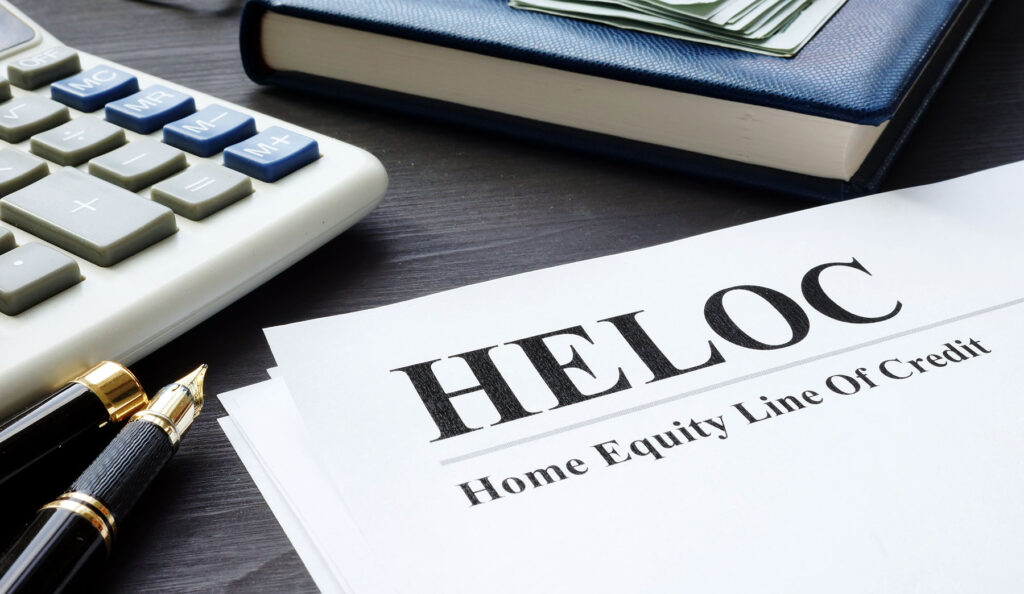
HELOC debt consolidation in Canada means using a home equity line of credit to pay off higher-interest debt such as credit cards. It can cut your interest costs, but it also ties that debt to your home. If you’re choosing between a HELOC and a debt consolidation loan, the better option depends on your equity, your rate and how steadily you can pay down the balance. This guide explains how each option works, how the Bank of Canada’s October 28, 2026 rate increase affects HELOC costs, what the federal lending limits are, and how to compare the total cost before you apply.
Quick Answer
- HELOC rates are usually variable: prime plus a spread set by the lender. The Big Six banks’ prime rate is 4.70% after the Bank of Canada raised its policy rate to 2.50% on October 28, 2026.
- A HELOC is secured by your home, so missed payments put your property at risk, not just your credit score.
- A HELOC suits borrowers who will make fixed payments well above the minimum; a consolidation loan suits people who want fixed payments and a set payoff date.
- Compare total interest and fees, not just the rate.
How Does a HELOC Consolidate Debt?
A home equity line of credit lets you borrow against the equity in your home, which is the difference between its market value and what you still owe on your mortgage. Federally regulated lenders follow OSFI Guideline B-20, which limits the revolving, non-amortizing HELOC portion to a maximum loan-to-value (LTV) ratio of 65%. A conventional (uninsured) mortgage can’t exceed 80% LTV, and any combined borrowing above the 65% HELOC limit has to be paid down on a regular schedule.
When you use a HELOC to consolidate debt, you swap unsecured balances, such as credit cards, personal loans or car financing, for a line of credit secured by your home. Because the home backs the debt, the rate is usually lower. According to the Financial Consumer Agency of Canada, HELOCs often have lower interest rates than other types of credit, such as unsecured loans and credit cards.
The basic steps are:
- Apply and get approved. The lender assesses your home’s value, income, credit and existing debts.
- Get your credit limit. Once approved, you can draw funds up to your limit.
- Pay off the high-interest debts. Use the HELOC to clear credit cards and other balances.
- Repay the HELOC. Minimum payments are often interest-only, so paying down principal is up to you.
What the October 2026 rate increase means
Most HELOCs have variable rates set at prime plus a spread. On October 28, 2026, the Bank of Canada raised its policy rate by 0.25 percentage points to 2.50%, its first increase since July 2023, after holding at 2.25% for seven straight decisions. RBC, TD, BMO, Scotiabank, CIBC and National Bank then raised their prime rate from 4.45% to 4.70%.
On a $40,000 HELOC balance, a 0.25-point increase adds about $100 a year in interest. Your rate is prime plus your lender’s spread, so ask for the exact figure in writing. The Bank of Canada’s next decision is December 9, 2026.
HELOC or Consolidation Loan?
The choice comes down to four things: rate, repayment structure, risk and your own habits.
| Factor | HELOC | Debt consolidation loan (unsecured) |
|---|---|---|
| Interest rate | Prime plus a lender spread | Set by the lender based on your credit; usually higher than a HELOC |
| Rate type | Variable; moves with prime | Often fixed for the term |
| Collateral | Yes, your home | No |
| Repayment | Flexible; interest-only minimums are common | Fixed monthly payments of principal and interest |
| Re-borrowing | Easy, because the credit revolves | Not possible once the loan is repaid |
| Setup costs | Possible appraisal and legal fees | Usually few or none, but check for fees |
| Best for | Disciplined borrowers with good equity | Borrowers who want a set payoff date |
An example of the interest math
Say you owe $40,000 on credit cards at 19.99% and can pay $1,000 a month. These rates are for illustration only; your actual rates will differ.
| Option | Example rate | Time to pay off | Total interest |
|---|---|---|---|
| Credit cards | 19.99% | About 67 months | About $26,400 |
| Consolidation loan | 10% | About 49 months | About $8,900 |
| HELOC | 6.7% | About 46 months | About $5,400 |
In this example, the HELOC saves about $3,500 compared with the loan and about $21,000 compared with leaving the debt on credit cards. That only works if you keep paying $1,000 a month. The interest-only minimum on $40,000 at 6.7% is about $223 a month, and paying only that never reduces the balance. Setup costs, such as an appraisal or legal fees, also reduce the savings.
If you’re also weighing a mortgage refinance, see our guide on refinancing to consolidate debt in Canada.
What Are the Risks of a HELOC?
A HELOC’s lower rate comes with risks that an unsecured loan doesn’t carry.
| Risk | What can happen | How to limit it |
|---|---|---|
| Your home secures the debt | Falling far behind can lead the lender to recover the money from the property | Borrow only what you can repay on a steady income |
| Variable rates | Your interest cost rises whenever prime rises, as it did in October 2026 | Budget for higher rates, or choose a fixed-rate loan |
| Easy re-borrowing | You can end up with a HELOC balance and new card balances | Treat the HELOC like a loan and limit access to paid-off cards |
| Long timelines | Interest-only minimums can keep the debt alive for years | Set an automatic payment that includes principal |
Your home secures the debt
Credit card debt is unsecured. If you default, you face collections, credit damage and possible legal action. A HELOC is secured by your home, so if you fall far enough behind, the lender can take steps to recover the money from the property. If your income is unsteady, that risk may outweigh the savings.
Variable rates can rise
HELOC rates move with prime. The October 2026 increase shows how quickly that can happen: prime rose 0.25 percentage points within a day of the Bank of Canada’s decision. If prime rises further while you’re repaying, your interest cost goes up with it. A fixed-rate consolidation loan doesn’t change during its term.
Revolving credit makes re-borrowing easy
A consolidation loan closes once you repay it. A HELOC is revolving credit, so every dollar you pay back can be borrowed again. If you also keep your paid-off credit cards open, you could end up with a HELOC balance and new card balances at the same time. If spending has been a problem in the past, a loan with fixed payments may be the safer choice.
Longer timelines can cost more
Because minimum payments are often interest-only, a HELOC balance can last for many years. A lower rate over a much longer time can cost more in total than a higher rate paid off quickly. The rate advantage only becomes savings if you keep making principal payments.
Learn more about how HELOCs work in Canada before you apply.
How to Choose the Right Option
There’s no single winner. Use these checklists to see which fits you.
| A HELOC often fits when | A consolidation loan often fits when | A mortgage refinance may fit when |
|---|---|---|
| You have plenty of home equity after your mortgage | You want fixed, predictable payments | Current mortgage rates are close to or below your existing rate |
| Your credit qualifies you for a small spread over prime | You want a set payoff date | You can add your debts and stay within 80% of your home’s value |
| You haven’t usually carried card balances | Revolving credit has been hard to manage | You want one payment |
| You’ll commit to fixed payments well above the minimum | You don’t want your home at risk | Your debt is large enough to justify legal, appraisal and prepayment costs |
| You’re comfortable with your home securing the debt | You rent or have limited equity |
A refinance can lock in a fixed rate, but it spreads the debt over your full amortization unless you make extra payments.
Related reading: what Canadian lenders look for before approving a loan.
Steps to Consolidate With a HELOC
Step 1: Estimate your equity
Estimate your home’s value using recent nearby sales, then work out your room. For a home worth $650,000 with $350,000 left on the mortgage:
| Calculation | Amount |
|---|---|
| 80% of home value | $520,000 |
| Minus mortgage balance | −$350,000 |
| Maximum total new borrowing room | $170,000 |
| 65% cap on the revolving HELOC part | $422,500 of total revolving credit |
Your lender decides how much of that you can actually borrow.
Pro Tip: Ask for a HELOC limit that matches the debt you’re consolidating, not the maximum you qualify for. A smaller limit keeps the setup honest: once the balance is paid down, there’s less room to slide back into debt.
Step 2: List your debts
Write down every balance you want to consolidate, with its interest rate and minimum payment. The total needs to fit within your approved limit.
Step 3: Compare lenders
Big banks, credit unions and other lenders all offer HELOCs, and their spreads and fees differ. Get written quotes from at least three lenders and compare the rate and all setup costs.
Step 4: Apply
Expect income verification, a credit check and usually an appraisal. If the HELOC needs a new charge registered on your property, there may be legal fees. Ask each lender for a full list of costs.
Step 5: Pay off debts and automate payments
Use the HELOC to pay off your high-interest balances right away. Then set up automatic payments that include principal, and treat the HELOC like a loan with a fixed payment.
Step 6: Limit access to paid-off cards
Consider closing paid-off cards, or at least removing them from your wallet and online shopping accounts. Closing accounts can lower your credit score slightly, but avoiding new debt usually matters more.
Key Takeaways
- HELOC rates are prime plus a lender spread; Big Six prime is 4.70% after the October 28, 2026 rate increase.
- The Bank of Canada raised its policy rate to 2.50% on October 28, 2026, so variable HELOC costs went up.
- OSFI Guideline B-20 limits the revolving HELOC portion to 65% loan-to-value and conventional mortgages to 80%.
- A HELOC puts your home at risk if you default; an unsecured loan doesn’t.
- Savings appear only if you pay down principal; interest-only minimums keep the debt alive.
- Compare total interest and fees, not just the rate.
Frequently Asked Questions
Is using a HELOC to consolidate debt a good idea in Canada?
It can be, if you have solid home equity, qualify for a small spread over prime and will pay down principal every month. The interest savings over credit cards can be large. It’s a poor fit if you’re likely to borrow again on the line or don’t want your home securing the debt.
What are the risks of consolidating credit card debt into a HELOC?
The main risk is that your home secures the debt, so a default could put your property at risk. HELOC rates are also variable and rise when prime rises, as they did in October 2026. And because the credit revolves, it’s easy to borrow again and end up with more debt than before.
How do I calculate if a HELOC saves me money over a loan?
Compare the total cost of each option, not just the rate. Use the same monthly payment for both, work out how long each takes to repay and the total interest, then add setup costs such as appraisal and legal fees. The option with the lower total cost wins, as long as you’ll really keep up that payment.
Will HELOC rates keep rising?
No one knows. The Bank of Canada raised rates in October 2026 to keep high energy prices from spreading into broader inflation, and its next decision is December 9, 2026. If you can’t handle further increases, a fixed-rate consolidation loan removes that uncertainty.
Conclusion
HELOC debt consolidation in Canada works best for borrowers with solid equity and a clear repayment plan. A HELOC’s rate is usually lower than an unsecured loan’s, but it’s variable, it’s secured by your home, and it saves money only if you keep paying down principal. With prime now at 4.70%, get written quotes, compare total costs with a fixed-rate consolidation loan or a refinance, and be honest about your habits. The right choice is the one you can stick to until the debt is gone.
Canadian Money Planner 2026 Edition (free) Budget, savings, debt and goals in one place. Get the free planner.
Official sources: Bank of Canada: Policy interest rate; OSFI: Guideline B-20; FCAC: Home equity lines of credit.
Get plain-English money tips for Canadians
Join the GetWealthy newsletter and get the free Canadian Money Planner 2026 Edition (PDF). No spam, unsubscribe anytime.
Your one-stop guide to everything Canadians need to know about money. Written by the GetWealthy editorial team, based on official CRA, FINTRAC and government sources and reviewed every year.
Turn what you just read into a plan
The Canadian Money Planner keeps your budget, savings, debt and goals in one place. It's free.
Get the free 2026 Planner
Disclaimer: This article is for informational and educational purposes only and does not constitute financial, tax, or legal advice. Always consult a qualified financial advisor or tax professional for personalized advice.