If you’re a homeowner in Canada, understanding home insurance Canada 2026 has never been more important—especially as premiums continue to rise due to inflation and an increase in weather-related claims. Did you know that standard home insurance policies typically include $1 million to $2 million in liability coverage, yet many Canadians don’t fully understand what’s actually protected? In this guide, you’ll learn exactly what your policy covers, what it doesn’t, and 15 proven strategies to save money without sacrificing protection. Whether you’re a first-time buyer or a long-time homeowner, this is your complete roadmap to smarter coverage in 2026.
What Does Home Insurance Cover in Canada in 2026?

Before you can save money on your policy, you need to understand what you’re actually paying for. A standard home insurance policy in Canada protects you in four core areas—and knowing these inside and out will help you make informed decisions about your coverage levels.
Dwelling Coverage
This is the foundation of your policy. Dwelling coverage pays to repair or rebuild your home if it’s damaged by a covered peril. In 2026, standard covered perils include fire, lightning, windstorm, hail, explosion, vandalism, and certain types of water damage. If a tree falls on your roof during a storm or a kitchen fire damages your walls, dwelling coverage kicks in to cover repair costs.
The key here is ensuring your dwelling coverage matches your home’s replacement cost—not its market value. Replacement cost is what it would actually cost to rebuild your home from scratch at today’s construction prices. With building material costs still elevated in 2026, many Canadians are underinsured without realizing it.
Personal Property Coverage
Your belongings matter too. Personal property coverage protects your furniture, appliances, electronics, clothing, and other possessions if they’re stolen or damaged by a covered peril. This coverage typically extends beyond your home—so if your laptop is stolen from your car, you may still be covered.
Most policies cover personal property at 50-70% of your dwelling coverage amount. If your home is insured for $500,000, you might have $250,000-$350,000 in personal property coverage. However, high-value items like jewelry, art, or collectibles often have sub-limits (sometimes just $1,000-$2,000), so you may need additional riders for full protection.
Liability Coverage
Liability coverage protects you if someone is injured on your property or if you accidentally damage someone else’s property. Standard policies in Canada typically include $1 million to $2 million in liability coverage. This covers legal fees, medical expenses, and settlements if you’re found responsible.
For example, if a guest slips on your icy driveway and breaks their arm, your liability coverage would pay for their medical bills and any legal costs if they decide to sue. Given the potential for lawsuits to exceed $1 million, many financial advisors recommend increasing your liability coverage to $2 million—especially if you have significant assets to protect. If you’re thinking about building long-term wealth, check out our guide on protecting your assets against rising costs in Canada 2026.
Additional Living Expenses (ALE)
If your home becomes uninhabitable due to a covered loss, ALE coverage pays for temporary housing, meals, and other extra costs while your home is being repaired. This might include hotel stays, restaurant meals beyond your normal food budget, and even pet boarding fees.
ALE coverage typically has a limit (often 20-30% of your dwelling coverage) and a time cap. Make sure you understand both limits—rebuilding a home can take 12-18 months in some cases.
How Much Does Home Insurance Cost in Canada in 2026?
Home insurance premiums vary significantly across Canada based on several factors. Understanding what drives your costs helps you find the best home insurance rates Canada has to offer.
Average Premiums by Province
In 2026, Canadian homeowners can expect to pay anywhere from $800 to over $2,500 annually for home insurance, depending on their location and coverage level. Provinces with higher risks of natural disasters—like Alberta (hail) and British Columbia (wildfires)—typically see higher premiums. Ontario homeowners generally pay between $1,400 and $2,400 per year for comprehensive coverage (Toronto specifically: $1,300-$1,800; some sources show provincial averages as high as $2,235 in Q2 2026).
Factors That Affect Your Premium
Insurance companies consider multiple factors when calculating your premium:
- Location: Proximity to fire stations, flood zones, and crime rates
- Home age and construction: Newer homes with updated electrical and plumbing cost less to insure
- Claims history: Previous claims can increase your premiums for 3-7 years
- Coverage amounts: Higher limits mean higher premiums
- Deductible level: Higher deductibles lower your premium
- Credit history: Some insurers use credit-based insurance scores (where permitted)
If you’re currently in the market to buy a home, understanding insurance costs should factor into your budget. Our guide on how much mortgage you can actually afford in 2026 can help you plan for all homeownership costs.
💡 Real-World Impact: Alberta’s 2020 Calgary hailstorm alone generated $1.3 billion in insured losses — one event. This is why Alberta premiums have risen so sharply. In high-risk areas like Medicine Hat, some homeowners now pay $3,875/year — roughly 19% of a typical mortgage payment.
Comprehensive vs. Basic Home Insurance: Which Policy Type Is Right for You?

Not all home insurance policies are created equal. In Canada, you’ll generally choose between three main policy types, each offering different levels of protection at different price points.
| Feature | Basic/Named Perils | Broad Coverage | Comprehensive/All-Risk |
|---|---|---|---|
| Dwelling Protection | Named perils only | All-risk (most perils covered) | All-risk (most perils covered) |
| Personal Property | Named perils only | Named perils only | All-risk (most perils covered) |
| Fire & Lightning | ✓ Covered | ✓ Covered | ✓ Covered |
| Theft & Vandalism | ✓ Covered | ✓ Covered | ✓ Covered |
| Accidental Damage | ✗ Not covered | Dwelling only | ✓ Covered |
| Average Annual Cost | $800 – $1,200 | $1,200 – $1,600 | $1,500 – $2,500+ |
| Best For | Budget-conscious, older homes | Most homeowners | Newer homes, valuable contents |
Named perils policies only cover specific risks listed in your policy (like fire, theft, and windstorm). If something happens that isn’t on the list, you’re not covered. All-risk policies cover everything except what’s specifically excluded—offering much broader protection.
For most Canadian homeowners, broad coverage offers the best balance of protection and affordability. However, if you have a newer home with valuable contents, comprehensive coverage provides extra peace of mind.
How Can You Save on Home Insurance in Canada?
Finding cheap home insurance Canada doesn’t mean sacrificing quality coverage. Here are 15 proven strategies to lower your premiums while maintaining solid protection.
Bundle Your Policies
One of the easiest ways to save is bundling your home and auto insurance with the same provider. Most major Canadian insurers—including TD Insurance, Intact, Desjardins, and Aviva—offer multi-policy discounts of 10-20%. If you’re already shopping for auto coverage, see our breakdown of Ontario auto insurance optional benefits in 2026 to maximize your savings across both policies.
Increase Your Deductible
Your deductible is the amount you pay out of pocket before insurance kicks in. Raising it from $500 to $1,000 or even $2,500 can reduce your premium by 15-25%. Just make sure you have enough in your emergency fund to cover the higher deductible if you need to make a claim.
Install Security and Safety Features
Insurance companies reward homeowners who reduce risk. Consider installing:
- Monitored alarm system: 5-15% discount
- Smoke and carbon monoxide detectors: 2-5% discount
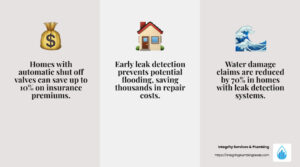
- Water leak detection systems: 5-10% discount
- Deadbolt locks: 2-5% discount
- Fire extinguishers: Modest discount
A professionally monitored alarm system can save you $100-$300 per year on premiums—often enough to offset the monitoring costs.
Pay Annually Instead of Monthly
Many insurers charge administrative fees for monthly payments. Paying your annual premium in full can save you 3-5%—that’s $50-$100 on a typical policy.
Shop Around and Compare Quotes
Insurance rates vary dramatically between companies. Get quotes from at least three to five insurers before renewing. Use comparison tools like Ratehub.ca, WOWA.ca, or rates.ca to quickly compare options. Even if you’re happy with your current insurer, a competing quote gives you negotiating leverage.
💡 Pro Tip: Don’t just compare your renewal to last year’s quote — compare it to TODAY’S market rate. Insurers count on renewal inertia. Some Canadian cities have seen rate
spikes of nearly 98% in 2 years (Kamloops, BC, due to wildfire risk) — if you haven’t shopped your policy in over a year, you could be significantly overpaying even if your renewal “only” went up 5-10%.
Maintain a Claims-Free Record
Every claim you make can increase your premiums for years. Before filing a small claim, calculate whether it makes financial sense. If the damage is only slightly more than your deductible, paying out of pocket might save you money long-term through claims-free discounts.
Review and Update Your Coverage Annually
Your coverage needs change over time. If you’ve paid off your mortgage, sold expensive items, or made home improvements, your coverage should reflect that. Annual reviews ensure you’re not overpaying for coverage you don’t need—or underinsured for what you do.
Common Home Insurance Mistakes to Avoid in 2026
Even savvy homeowners make costly errors with their insurance. Here are the biggest mistakes to watch out for.
Underinsuring Your Home
With construction costs rising, many Canadians haven’t updated their dwelling coverage to match current rebuilding costs. If your home would cost $600,000 to rebuild but you’re only insured for $450,000, you’ll face a significant shortfall after a major loss. Review your dwelling limit annually and adjust for inflation.
💡 Why Replacement Costs Keep Rising: Construction costs rose 61% between 2019 and 2024 alone. Combined with 25,000-28,000 construction workers retiring annually through 2033, rebuilding costs aren’t just elevated — they’re on a structural upward trajectory. Review your dwelling coverage every single year, not just when you remember.
Ignoring Policy Exclusions
Standard home insurance policies don’t cover everything. Common exclusions include flood damage, sewer backup, earthquake damage, and gradual wear and tear. In 2026, with extreme weather events becoming more frequent, many Canadian homeowners need separate endorsements for overland water and sewer backup coverage—often costing just $50-$150 per year.
Forgetting to Document Belongings
If you need to make a claim, you’ll need to prove what you owned. Create a home inventory with photos, receipts, and serial numbers. Store this documentation in the cloud or a safety deposit box—not just in your home where it could be destroyed.
Not Reporting Home Improvements
Major renovations increase your home’s value and replacement cost. If you’ve finished your basement, added a deck, or renovated your kitchen, notify your insurer. Failing to do so could leave you underinsured and might even void your coverage in some cases.
Key Takeaways
- Standard home insurance in Canada covers your dwelling, personal property, liability (typically $1-2 million), and additional living expenses—but not floods, earthquakes, or sewer backup without extra endorsements.
- Canadian homeowners pay between $800 and $2,500+ annually for home insurance in 2026, depending on location, coverage type, and risk factors.
- Bundling home and auto insurance can save you 10-20% on premiums with major Canadian insurers like TD, Intact, and Desjardins.
- Raising your deductible from $500 to $2,500 can cut your premium by up to 25%—just ensure you have emergency savings to cover it.
- Installing a monitored alarm system can save $100-$300 per year on premiums while providing better security.
- Review your policy annually to ensure your dwelling coverage matches current rebuilding costs, which continue to rise with inflation.
Frequently Asked Questions
What does standard home insurance cover in Canada?
Standard home insurance in Canada covers four main areas: dwelling coverage (repairs or rebuilding after fire, windstorm, theft, vandalism, and other covered perils), personal property coverage (your belongings), liability coverage (typically $1-2 million if someone is injured on your property), and additional living expenses if your home becomes uninhabitable. However, you’ll need additional endorsements for flood, earthquake, and sewer backup coverage.
How much does home insurance cost in Canada in 2026?
Home insurance costs in Canada range from approximately $800 to $2,500+ per year in 2026, depending on your province, home value, coverage type, and risk factors. Ontario homeowners typically pay $1,200-$1,800 annually for comprehensive coverage. Premiums have increased due to inflation, higher construction costs, and more frequent weather-related claims across the country.
💡 2026 Inflation Update: Home insurance rose 5.7% nationally in the year to April 2026. The biggest increases hit:
– Newfoundland: +11.7%
– Nova Scotia: +11.4%
– Alberta: +11.1%
BC was the only province where rates actually fell, reflecting some stabilization after years of wildfire-driven increases.
What is not covered by home insurance in Canada?
Standard home insurance policies in Canada exclude flood damage (overland water), sewer and drain backup, earthquake damage, gradual wear and tear, pest infestations, intentional damage, and home business equipment. Most insurers offer optional endorsements for flood and sewer backup coverage at additional cost. Normal maintenance issues like a worn roof or old plumbing are also not covered.
Understanding home insurance Canada 2026 is essential for protecting your biggest investment while keeping more money in your pocket. By knowing what’s covered, avoiding common mistakes, and using proven savings strategies like bundling and higher deductibles, you can secure comprehensive protection without overpaying. Whether you’re buying your first home or reviewing your existing policy, take time this year to shop around, update your coverage, and ensure you’re properly protected. Explore more money-saving guides and Canadian financial tips here on Getwealthy to build a stronger financial future.
Get free Canadian money tips every week
TFSA updates, CRA changes, mortgage strategies — straight to your inbox every Thursday. No spam, unsubscribe anytime.
Certified Financial Planner (CFP) and Chartered Investment Manager (CIM) with over 17 years of experience in Canadian personal finance. Spent 10+ years at one of Canada's Big Five banks, the last 7 focused exclusively on high-net-worth clients. Every guide is written with the same depth I bring to real client work — Canada-specific, CRA-verified, and always free.
Disclaimer: This article is for informational and educational purposes only and does not constitute financial, tax, or legal advice. Always consult a qualified financial advisor or tax professional for personalized advice.