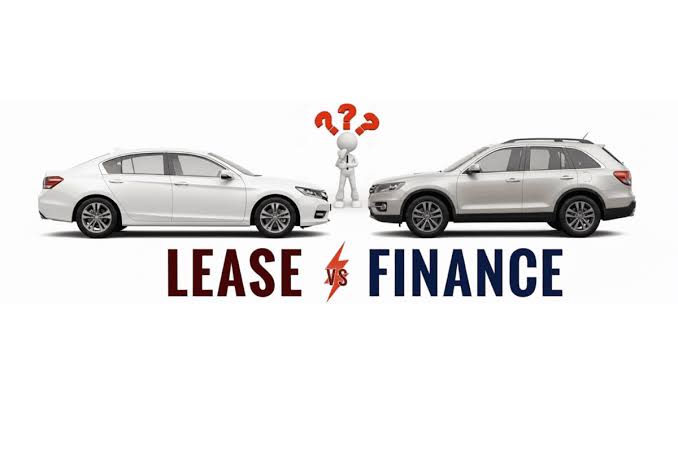
Car loan vs lease is one of the biggest money decisions most Canadian households make outside of housing, and the monthly payment is a poor way to compare them. A lease almost always has a lower payment. A loan almost always costs less if you keep the vehicle for many years. The right answer depends on how long you keep cars, how far you drive, and whether you value a new vehicle every few years. Below, we run the full 2026 math on a $40,000 mid-size vehicle, so you can see the total cost, not just the monthly bill.
Quick Answer
- Monthly payments: On a $40,000 mid-size vehicle in Ontario, a 36-month lease at 5.99% costs about $706 a month, and a 60-month loan at 6.66% costs about $888 a month.
- Switching every three years: The lease is cheaper in this example, about $25,400 vs a net $28,700 for buying and selling, mainly because you pay HST on the full price when you buy.
- Keeping the car eight years: Owning is far cheaper, about $41,300 net vs about $67,700 for rolling leases.
- Rule of thumb: Lease if you want a new car every three to four years and stay under your kilometre limit; buy if you keep cars six years or more or drive a lot.
How Do Car Loans and Leases Work in Canada?
Both let you drive a car without paying the full price up front, but they work very differently.
Car loan basics
With a car loan, you borrow the purchase price plus sales tax, minus any down payment, and repay it over a set term, often 60 to 84 months. You own the car from day one, and the lender holds a lien until the loan is repaid. After that, you have no payments and an asset you can keep or sell.
Bank of Canada data shows chartered banks’ average auto loan rates ran between roughly 6.4% and 6.7% through the first half of 2026 (6.57% in April). Your rate could be lower with strong credit or a manufacturer promotion, which can be 0% to 3.99% on select models. Used car loans and borrowers with weaker credit usually pay more. The Bank of Canada’s policy rate is 2.25% and big-bank prime is 4.45% in October 2026.
Lease basics
With a lease, you pay for the vehicle’s expected depreciation during the term, plus a finance charge, plus tax. At the end, you return the car or buy it for a set price called the residual value. You never own the car unless you buy it out.
Leases come with rules loans don’t have:
- Kilometre limits: Often 16,000 to 24,000 km a year. Extra kilometres usually cost about $0.10 to $0.25 each.
- Wear-and-tear charges: Dents, scratches, and worn tires can add fees when you return the car.
- Early exit costs: Breaking a lease early can be expensive.
- Insurance requirements: Lessors often require higher liability limits.
How sales tax differs
This is the part many people miss. When you buy, you pay sales tax on the full price at purchase. In Ontario, 13% HST on a $40,000 car is $5,200, usually rolled into the loan. When you lease, you pay tax only on each monthly payment, so over a three-year lease you pay tax on the depreciation and finance charge, not the whole car. That’s one reason leases look cheaper in the short run.
One offset: in many provinces, including Ontario, trading in your old vehicle at a dealer reduces the tax on your next purchase, because tax applies only to the price difference. Selling privately doesn’t give you that credit. Tax rules vary by province, so check yours.
What Does a $40,000 Mid-Size Vehicle Cost to Finance vs Lease?
Here are the assumptions. These are illustrations, not quotes; your dealer’s numbers will differ.
| Assumption | Value |
|---|---|
| Vehicle price | $40,000 before tax (a typical mid-size sedan or compact SUV) |
| Province | Ontario, 13% HST |
| Loan | $45,200 financed (price plus HST), 6.66% for 60 months, $0 down |
| Lease | 36 months, 5.99% lease rate, 58% residual ($23,200), $0 down |
| Resale value | 58% after three years, 30% ($12,000) after eight years |
| Excluded | Freight, PDI, licensing, lease acquisition fees, and insurance |
Monthly payments and three-year snapshot
| Item | 60-month loan | 36-month lease |
|---|---|---|
| Monthly payment (with tax) | About $888 | About $706 |
| Total paid in first 3 years | About $31,960 | About $25,400 |
| What you have after 3 years | A car worth about $23,200, with about $19,900 left on the loan | Nothing, or the option to buy for $23,200 plus tax |
| Interest or finance charge | About $8,070 over 5 years | About $5,680 over 3 years |
| Kilometre limits | None | Yes; overage fees apply |
Scenario 1: You switch cars after three years
If you finance and sell after three years, you’ve paid about $31,960. Selling for $23,200 and paying off the $19,900 balance leaves about $3,300 of equity, for a net cost of roughly $28,700. The lease costs about $25,400 over the same period, so the lease wins by about $3,300, mostly because you paid HST on the full price when you bought. Trading the financed car in at a dealer, rather than selling privately, could narrow that gap in provinces with a trade-in tax credit.
Scenario 2: You keep the car for eight years
If you finance and keep the car for eight years, you pay about $53,270 over the five-year loan, then three more years with no payments. If the car is worth about $12,000 after eight years, your net cost is roughly $41,300. If you lease similar cars at similar payments for eight years instead, you’d pay about $67,700. Owning saves about $26,000 in this example, even before considering that lease payments on new cars in 2029 and 2032 will likely be higher.
| Scenario | Buy with a loan | Lease |
|---|---|---|
| Switch after 3 years | ~$28,700 net | ~$25,400 |
| Keep for 8 years | ~$41,300 net | ~$67,700 (rolling leases) |
Scenario 3: You lease, then buy out the car
Some drivers lease and then buy the car at the end. Here, the buyout is the $23,200 residual plus 13% HST, about $26,200. Add about $25,400 of lease payments, and the total is about $51,600, before any financing cost on the buyout. That’s close to the roughly $53,300 you’d pay over the 60-month loan, so a buyout isn’t a disaster, but it’s rarely much cheaper than buying at the start, unless the car is worth more than its residual when the lease ends.
Costs not in the math
Owning an older car brings repair bills once the warranty ends. Budget for tires, brakes, and other maintenance, which can add a few thousand dollars over years six to eight. Leasing usually keeps you under warranty, but can add overage and wear charges. Insurance may cost more on a lease because of higher required coverage.
Pro Tip: Before signing either deal, calculate the cost per year of driving, not the monthly payment. Take everything you’ll pay over the period you’ll have the car (payments, down payment, fees, buyout if any), subtract what the car will be worth at the end, and divide by the years. It’s the only number that lets you compare a 36-month lease, a 60-month loan, and an 84-month loan fairly.
When Does Leasing Make Sense, and When Does Buying Win?
The math points to a simple rule: leasing is a premium you pay for always driving a newer car. Buying and keeping is cheaper over time.
Lease if:
- You want a new car every three to four years and would trade in a financed car anyway.
- You drive less than about 20,000 km a year and keep the car in good shape.
- You want lower payments and predictable costs under warranty.
- You use the car for business. Self-employed people can often deduct the business-use portion of lease payments, up to CRA limits.
Buy if:
- You keep cars for six years or longer.
- You drive a lot, so kilometre limits would cost you.
- You want the freedom to modify or sell the car whenever you like.
- You can get a low rate or make a meaningful down payment.
Watch out for long loans
Loans of 84 or 96 months lower the payment but raise total interest and increase the risk of negative equity, when you owe more than the car is worth. If you need a long term to afford the payment, consider a less expensive vehicle. A shorter loan, such as 48 or 60 months, keeps interest lower and gets you to payment-free driving sooner.
Use the business deduction rules carefully
If you drive for work, as an employee or self-employed, keep a mileage log. Only business use counts; personal driving and regular commuting generally don’t. Our guide to hybrid work expense deductions explains how to keep records the CRA will accept.
How Can You Lower the Cost Either Way?
Negotiate the price, not the payment
Dealers often focus on the monthly payment because it’s easy to stretch. Negotiate the vehicle’s selling price first, then discuss financing. On a lease, a lower selling price (the capitalized cost) lowers your payment just as it lowers a loan.
Compare financing offers
Get a pre-approval from your bank or credit union before visiting the dealer. If the dealer’s rate is higher, you have leverage. Manufacturer promotions can beat bank rates, but sometimes they replace a cash rebate. Ask whether you can choose the low rate or the rebate, and run the numbers both ways.
Read the fees
Ask for a full cost breakdown, including freight, PDI, dealer fees, lease acquisition fees, and add-ons such as extended warranties or paint protection. Federally regulated lenders must disclose the total cost of borrowing before you sign, and the Financial Consumer Agency of Canada has plain-language guidance on car loans and leases.
Keep a buffer
A car payment is one more fixed cost in your budget. Keep separate cash for repairs, insurance deductibles, and surprise costs. Our guide to building an emergency fund in Canada can help you set a target.
Key Takeaways
- Chartered banks’ average auto loan rates were roughly 6.4% to 6.7% in the first half of 2026; manufacturer promotions can be much lower.
- On a $40,000 vehicle in Ontario, a 36-month lease at 5.99% runs about $706 a month, versus about $888 for a 60-month loan at 6.66%.
- Switching cars every three years, the lease was about $3,300 cheaper in this example; keeping a car eight years, owning saved about $26,000.
- Buying means paying sales tax on the full price up front ($5,200 at 13% HST on $40,000), while leasing spreads tax over payments; trade-ins can reduce tax on your next purchase in many provinces.
- Check kilometre limits, wear charges, and early exit fees before signing a lease.
- Negotiate the selling price first, get a bank pre-approval, and keep loans to 60 months or less when you can.
Frequently Asked Questions
Is it cheaper to lease or finance a car in Canada?
Financing is usually cheaper if you keep the car six years or more. Leasing can be cheaper if you’d replace the car every three years anyway. Compare the total cost over the same period, not the monthly payments.
What is a good car loan rate in Canada in 2026?
Bank of Canada data put chartered banks’ average auto loan rate at about 6.4% to 6.7% in early 2026. A rate below that is good for most borrowers, and manufacturer promotions can go much lower. Used car and lower-credit rates are usually higher.
Can I buy my car at the end of a lease?
Yes. Most leases let you buy the car for the residual value in your contract, plus tax. It can make sense if the car is worth more than the residual, or if you’ve driven well over your kilometre limit and would otherwise pay overage fees.
Do I pay HST on a lease buyout?
Generally, yes. Sales tax applies to the buyout price in most provinces. Check your province’s rules and the dealer’s quote before deciding.
What happens if I want out of a lease early?
You’ll usually owe the remaining payments or an early termination charge, which can be expensive. Alternatives include buying the car out, or using a lease takeover service where someone else assumes your lease, if your leasing company allows it. Check the contract’s early termination terms before you sign.
Conclusion
In the car loan vs lease debate, the winner depends on how long you keep the vehicle. Leasing buys you lower payments and a newer car every few years, but the payments never end. Financing costs more each month at first, but once the loan is paid off, every year of driving gets cheaper. Run your own numbers with your real price, rate, province, and kilometres, then choose the option that fits how you drive. Explore more borrowing guides on GetWealthy before your next visit to the dealer.
Get plain-English money tips for Canadians
Join the GetWealthy newsletter and get the free Canadian Money Planner 2026 Edition (PDF). No spam, unsubscribe anytime.
Your one-stop guide to everything Canadians need to know about money. Written by the GetWealthy editorial team, based on official CRA, FINTRAC and government sources and reviewed every year.
Turn what you just read into a plan
The Canadian Money Planner keeps your budget, savings, debt and goals in one place. It's free.
Get the free 2026 Planner
Disclaimer: This article is for informational and educational purposes only and does not constitute financial, tax, or legal advice. Examples use assumed prices, rates, and resale values; your results will differ. Always consult a qualified financial advisor for personalized advice.